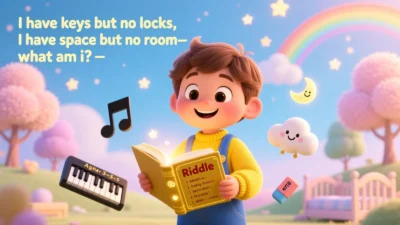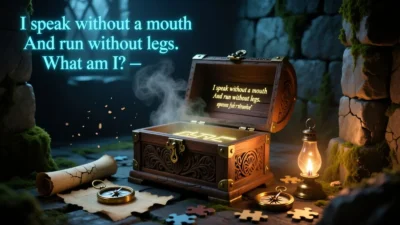
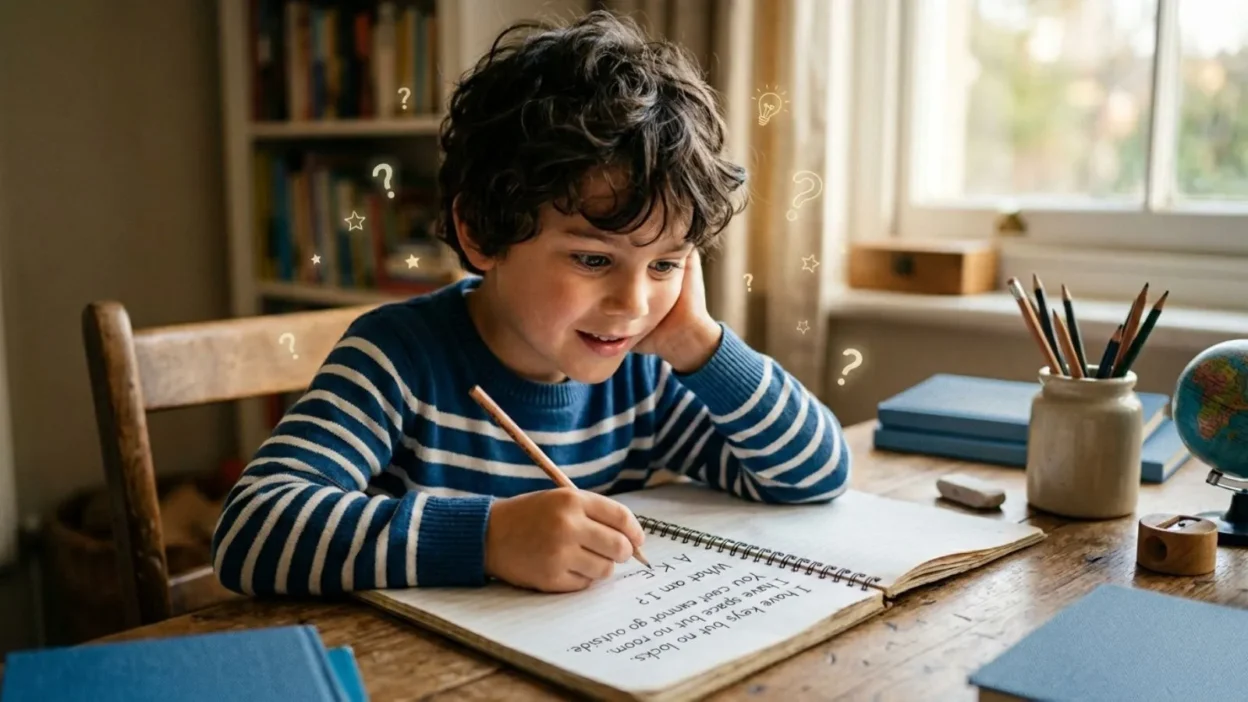
Can your child solve a riddle that stumps even some adults?
Riddles are a fun and exciting way to challenge young minds while improving creativity, problem solving skills, and vocabulary.
Recently, I was looking for entertaining activities for children when I came across some interesting Riddles for Children in English.
At first, I thought they were just simple questions, but I quickly realized how much kids enjoy the challenge of finding clever answers.
These riddles encourage critical thinking, boost confidence, and make learning more enjoyable.
If you’re a parent, teacher, or simply looking for a fun activity, this collection of riddles can keep children engaged while helping them learn. In this article, you’ll discover some of the best Riddles for Children in English along with their answers, making it easy for kids to have fun and learn at the same time.
Fun Riddles for Children in English
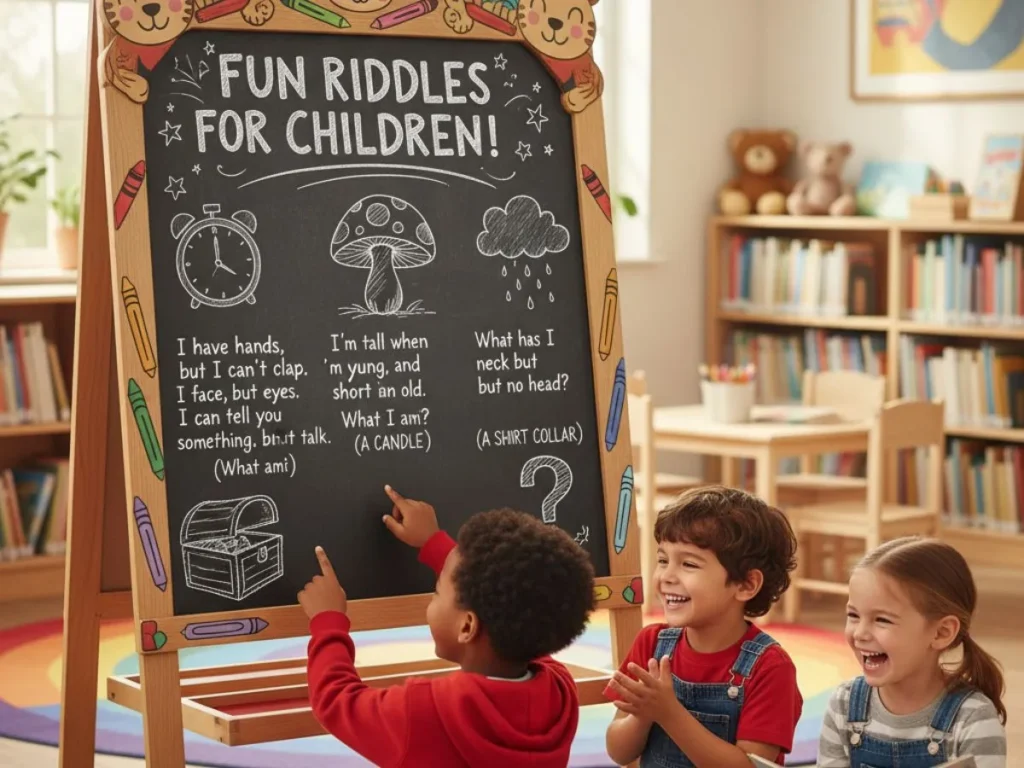
- 🧒 I have hands but cannot clap.
Answer: A clock - 🐦 What has wings but cannot fly?
Answer: A building - 🌧️ What falls but never hits the ground?
Answer: The temperature - 🥚 What has a shell but is not alive?
Answer: An egg - 🌙 I come out at night but I’m not alive.
Answer: The moon - 🐾 What has four legs but cannot walk?
Answer: A table - 📚 What has many stories but cannot tell one?
Answer: A library - 💧 What has a face and two hands but no body?
Answer: A clock - 🎈 What goes up but never comes down?
Answer: Your age - 🐟 What lives in water but breathes air?
Answer: A dolphin - 🍎 What fruit can you never cheer up?
Answer: A blueberry - 🎤 What speaks without a mouth?
Answer: An echo - 🧊 What melts but never gets wet?
Answer: A shadow - 🚪 What has a knob but no lock?
Answer: A radio - 🌲 What has bark but doesn’t bite?
Answer: A tree
Easy Riddles for Children in English
- 🧃 What has a neck but no head?
Answer: A bottle - 🧼 What gets wetter the more it dries?
Answer: A towel - 🕯️ I melt to give you light.
Answer: A candle - 🎒 What has straps but isn’t worn?
Answer: A backpack - 🧩 What has pieces but isn’t broken?
Answer: A puzzle - 🐾 What animal wears shoes but never walks?
Answer: A horse (horseshoes) - 🚗 What has wheels and flies?
Answer: A garbage truck - 📷 What captures moments but never moves?
Answer: A camera - 🌪️ What can run but never walks?
Answer: Water - 🔔 What rings but has no finger?
Answer: A telephone - 🪑 What sits in the corner but travels the world?
Answer: A stamp - 🍬 What tastes sweet but never eats?
Answer: A candy - 🌟 What shines in the dark but isn’t a light?
Answer: A star - 🔑 What opens many things but cannot open itself?
Answer: A key - ☁️ What’s white and fluffy but isn’t a pillow?
Answer: A cloud
Short Riddles for Children in English
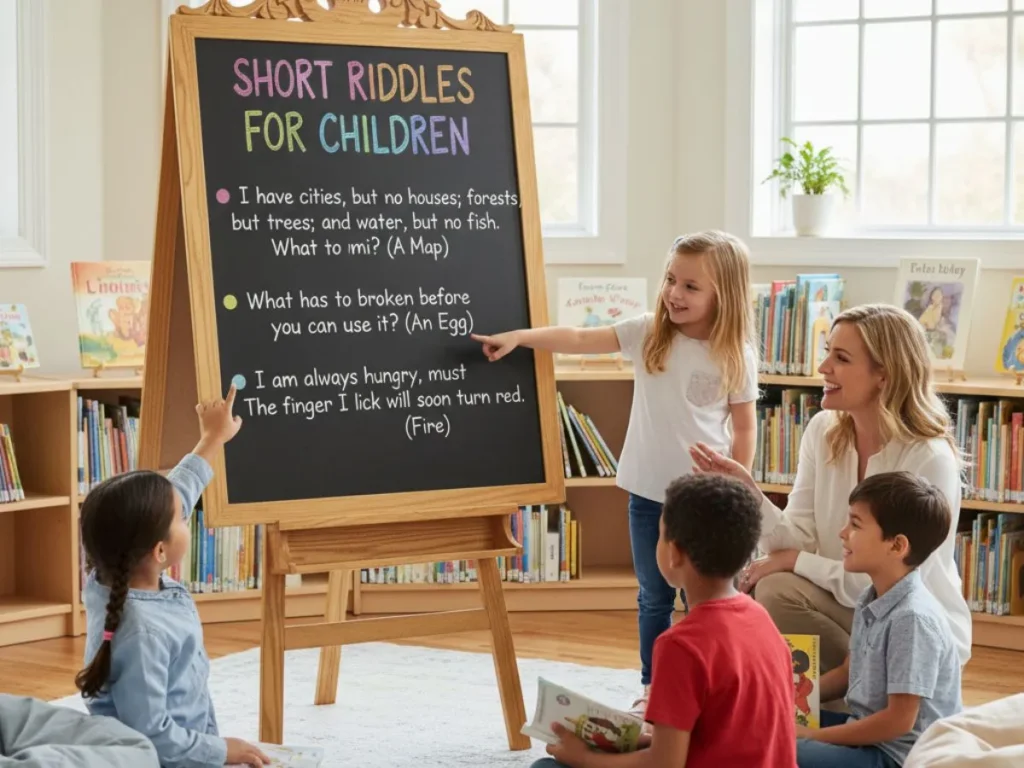
- 📝 What has words but cannot speak?
Answer: A book - 🌡️ What rises but never falls?
Answer: Hot air - 🐚 What can you catch but not throw?
Answer: A cold - 🐘 What’s big, grey, and doesn’t move?
Answer: A mountain - 🐰 What hops but isn’t alive?
Answer: A pogo stick - 🧦 What has a pair but isn’t alive?
Answer: Socks - 🏠 What has windows but no glass?
Answer: A computer - 🌍 What has oceans but no water?
Answer: A map - 🧃 What has a lid but no box?
Answer: A pot - 🛏️ What has springs but isn’t a river?
Answer: A mattress - 🌻 What grows but never moves?
Answer: A plant - 🛎️ What makes a sound but never talks?
Answer: A bell - 🕶️ What’s dark but helps you see?
Answer: Sunglasses - 🪞 What reflects but has no thoughts?
Answer: A mirror - 🔄 What turns but never moves?
Answer: Time
Tricky Riddles for Children in English
- 🧊 I’m solid, liquid, and gas.
Answer: Water - 🐓 What came first: the chicken or the egg?
Answer: The egg (dinosaurs) - 🧠 What thinks but has no brain?
Answer: A computer - 🌄 What starts tall but ends short?
Answer: A candle - 📦 What gets bigger the more you take away?
Answer: A hole - 👶 What grows up but never gets older?
Answer: A balloon - 💨 What can you feel but not see?
Answer: The wind - 🎈 What gets higher the more you lose?
Answer: A balloon - 💼 What’s full of holes but still holds water?
Answer: A sponge - 🔦 The more you take away, the brighter I become.
Answer: A hole in a lampshade - 🧵 What has a tail but is not an animal?
Answer: A coin - 🐢 What moves slowly but leaves quickly?
Answer: Time - 🎐 What dances in the wind but has no legs?
Answer: A leaf - 🧩 What’s complete when broken?
Answer: An egg - 🌬️ What blows but has no mouth?
Answer: A fan
Animal Riddles for Children in English
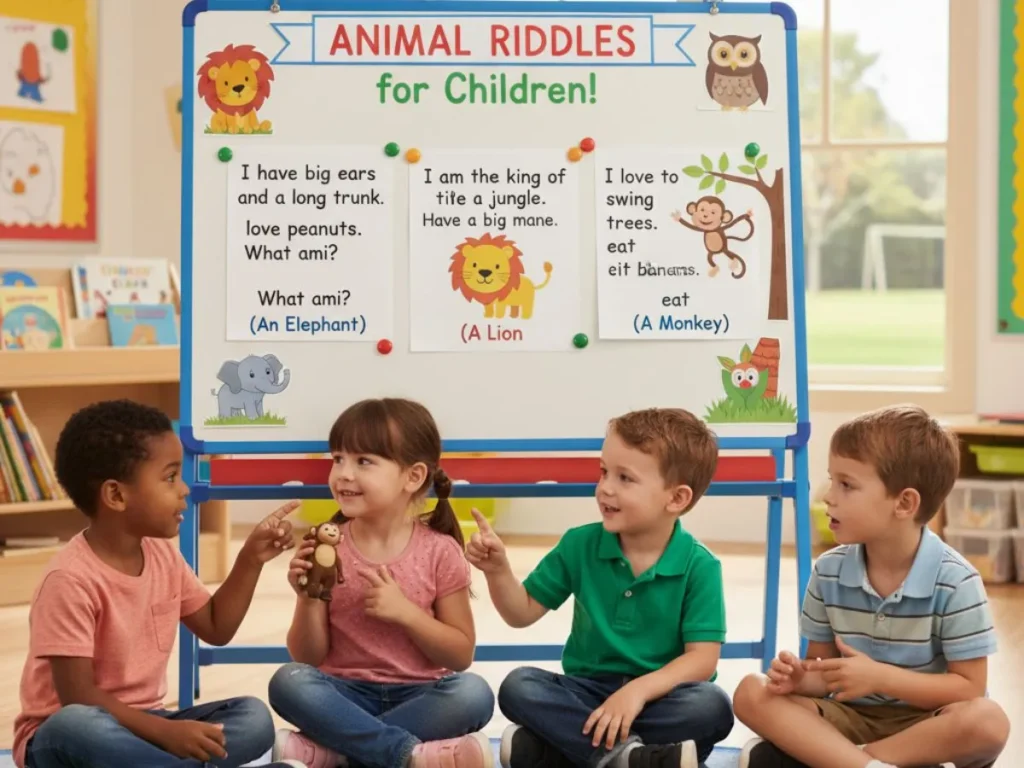
- 🦁 I’m the king of the jungle.
Answer: A lion - 🐧 I wear a tuxedo every day.
Answer: A penguin - 🐘 I have a trunk but I’m not a car.
Answer: An elephant - 🐇 I hop all day but never get tired.
Answer: A rabbit - 🐢 I carry my home on my back.
Answer: A turtle - 🐳 I’m the biggest creature in the ocean.
Answer: A blue whale - 🦉 I stay awake at night.
Answer: An owl - 🐍 I hiss but don’t speak.
Answer: A snake - 🐒 I love bananas and climb trees.
Answer: A monkey - 🐎 I wear shoes but never walk in them.
Answer: A horse - 🐝 I make honey.
Answer: A bee - 🐦 I can fly but I’m not an airplane.
Answer: A bird - 🐊 I have big teeth and live in rivers.
Answer: A crocodile - 🐛 I crawl before I fly.
Answer: A caterpillar - 🐕 I’m man’s best friend.
Answer: A dog
Holiday Riddles for Children in English
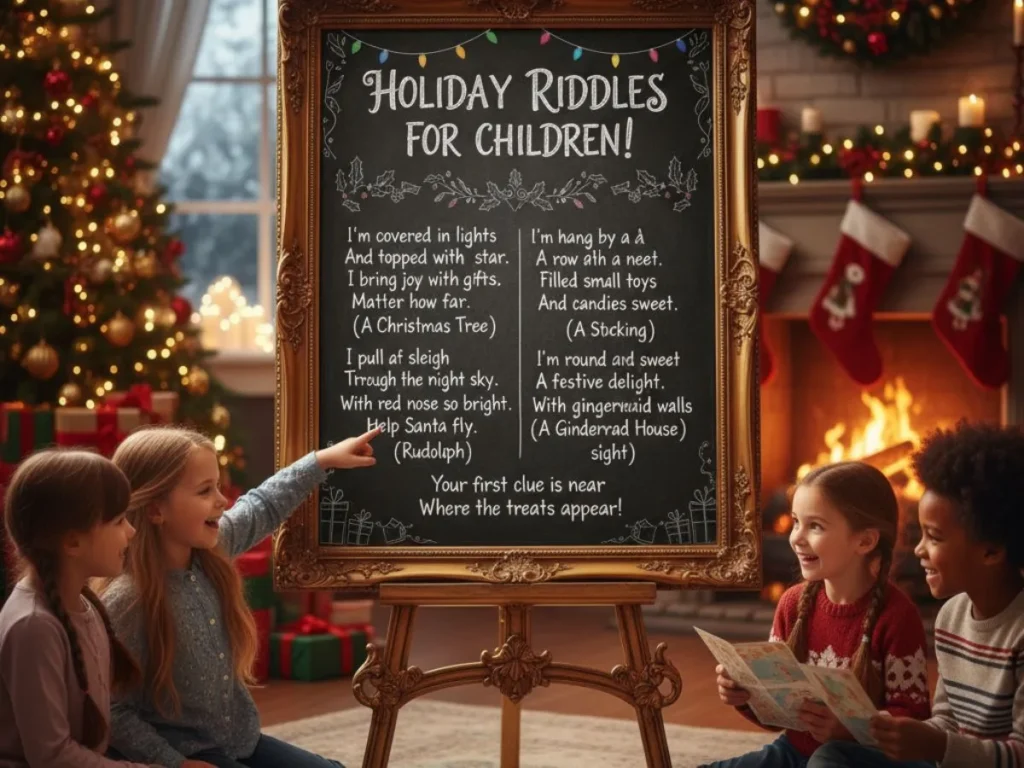
- 🎄 I’m green, tall, and dressed in lights.
Answer: A Christmas tree - 🎅 I come only once a year and wear red.
Answer: Santa Claus - 🦃 I’m eaten in November.
Answer: A turkey - 🎃 I glow in the dark and have a face.
Answer: A jack-o’-lantern - 🎁 I’m wrapped but not a mummy.
Answer: A gift - ❄️ I fall from the sky but melt in your hand.
Answer: Snow - 🔔 I jingle but have no legs.
Answer: A bell - 🧨 I explode in the sky for celebration.
Answer: Fireworks - 🐣 I hide in grass on Easter.
Answer: Easter eggs - 🕯️ I light up the menorah.
Answer: A candle - 🎉 I celebrate a new beginning.
Answer: New Year - 🎭 I’m worn on Halloween.
Answer: A costume - 🐇 I bring candy in spring.
Answer: The Easter Bunny - 🌟 I shone over Bethlehem.
Answer: The Christmas star - 🍬 I fill Halloween bags.
Answer: Candy
Daily Life Riddles for Children in English
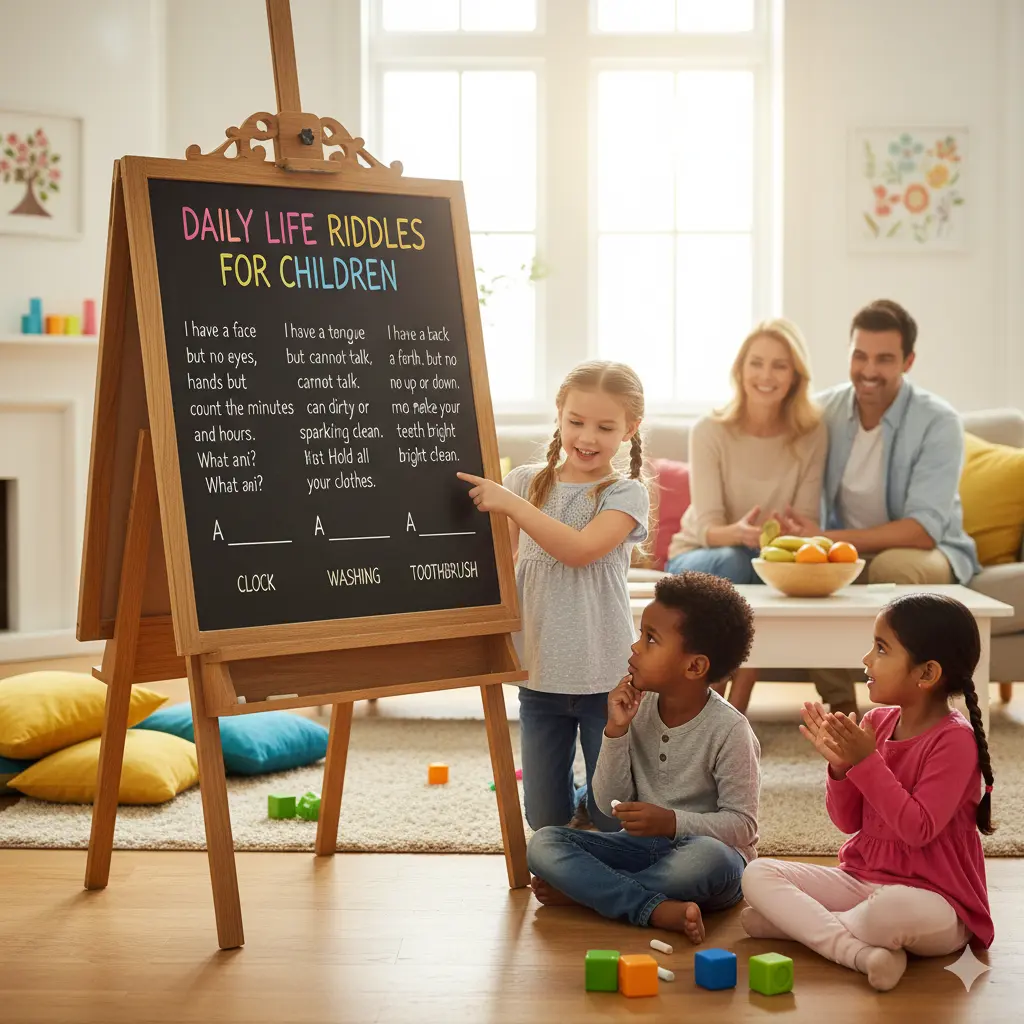
- 📱 I ring and vibrate but I’m not alive.
Answer: A phone - 🛏️ You sleep on me every night.
Answer: A bed - 🍽️ I hold your food but don’t eat.
Answer: A plate - 🚪 I open and close but never leave.
Answer: A door - 💧 You drink me but I’m not food.
Answer: Water - 🕰️ I tick but have no heart.
Answer: A clock - 🧹 I sweep but have no arms.
Answer: A broom - 🧃 I’m sweet but not a candy.
Answer: Juice - 🖊️ I write without speaking.
Answer: A pen - 🖥️ I show things but cannot see.
Answer: A computer - 🎒 You carry me to school.
Answer: A backpack - 🚗 I take you places but can’t walk.
Answer: A car - 🪟 I let light in but don’t move.
Answer: A window - 📦 I store things but I’m not a fridge.
Answer: A box - 🧼 I clean but never get clean myself.
Answer: Soap
Conclusion:
Riddles for Children in English are more than just a source of entertainment they are a fantastic way to encourage learning, creativity, and critical thinking.
By solving riddles, children can improve their vocabulary, strengthen their problem solving skills, and develop the confidence to think independently.
If used at home, in the classroom, or during family gatherings, riddles create fun and engaging learning experiences that children genuinely enjoy.
The best part about riddles is that they turn learning into a game. Kids stay curious, excited, and motivated as they search for the correct answers.
From easy riddles for beginners to more challenging brain teasers, there is something for every age group and skill level.
Regularly introducing riddles can help children build sharper minds while having fun at the same time.
We hope this collection of Riddles for Children in English has inspired you to challenge young minds and create memorable moments filled with laughter, learning, and discovery.
Discover More Articles:
- 129+ Best Riddles for Elf on the Shelf with Answers for 2026
- 144+ Riddles for Adults with Answers for 2026
- 215+ Flirty Riddles for Her with Answers for 2025