

In the digital age, emojis have become a universal language, helping us convey emotions, tone, and personality in ways words sometimes can’t.
Among the countless emojis we use daily, the Blue Heart Emoji (💙) has gained popularity for its unique charm and subtle meaning.
What does Blue Heart Mean?
👉 The blue heart emoji 💙 represents trust, loyalty, peace, and deep friendship.
Unlike the classic red heart, which instantly signals romantic love, the blue heart carries a different emotional weight, often representing trust, loyalty, and calm affection.
People send it to friends, family, or even online communities to express care, support, or solidarity. But its meaning can vary depending on the context, platform, or the relationship between sender and receiver.
Understanding the nuances of the blue heart emoji is essential if you want your messages to be interpreted correctly.
In this article, we’ll explore everything about the 💙 emoji from its meanings and cultural significance to tips for using it in texts and social media.
What Does a Blue Heart Emoji Mean 💙
The blue heart emoji 💙 is widely used to express feelings of trust, loyalty, and calm emotional connection. Unlike the red heart, which usually represents intense romantic love, the blue heart carries a more stable and peaceful meaning. It is often associated with deep friendship, emotional support, and genuine care without romantic intent.
People use the 💙 emoji when they want to show that their feelings are sincere, steady, and dependable. It is commonly sent to close friends, family members, or someone they deeply respect. In many cases, it also symbolizes emotional safety—meaning the relationship is built on honesty and trust rather than drama or passion.
On social media, the blue heart is also used to show support for causes, teams, or communities, giving it a broader meaning beyond personal relationships. Its calm color reinforces ideas of peace, stability, and understanding, making it a powerful yet subtle way to express meaningful emotions.
Blue Love Meaning 💙
The blue love meaning 💙 represents trust, loyalty, peace, and deep emotional connection. It is often used to express a calm and stable kind of love that feels honest, supportive, and long-lasting.
Unlike red hearts that usually symbolize romantic passion, the blue heart is more connected with friendship, understanding, and emotional security. People commonly use it to show care for close friends, family members, or someone they truly respect and trust.
The color blue is strongly associated with calmness, wisdom, confidence, and positivity. Because of this, the 💙 emoji is frequently used in comforting conversations to offer support, encouragement, and kindness without being overly emotional.
On social media platforms like WhatsApp, Instagram, Facebook, and Snapchat, the blue heart is also used to represent unity, loyalty, and support for communities or important causes.
Overall, the blue love meaning 💙 is about faithful love, emotional trust, and peaceful relationships that remain strong over time.
What Is the Meaning of Blue Heart? 💙
The blue heart emoji 💙 is a symbol of trust, loyalty, peace, and strong emotional support. It is commonly used to show a deep emotional connection that feels calm, stable, and sincere rather than overly romantic. This heart usually represents dependable love, honest friendship, and feelings that are pure and meaningful.
People often send a blue heart when they want to express care, understanding, or silent support. It can mean “I trust you,” “I value our bond,” or “I am here for you.” Unlike hearts that show passion or excitement, the blue heart carries a softer and more peaceful emotion.
The blue heart is also strongly linked with friendship and loyalty. Many people use it with close friends, family members, or someone they deeply respect. It reflects a relationship built on honesty, mutual respect, and long-term connection.
Because blue is the color of calmness, stability, and peace, the 💙 emoji is often used in comforting messages. When someone wants to send love in a gentle and mature way, the blue heart becomes a perfect choice. It shows affection without being too dramatic or too romantic.
On social media apps like WhatsApp, Instagram, Facebook, and Snapchat, the blue heart is also used to show support, unity, and encouragement. People include it in captions, comments, and chats to represent emotional strength and standing by someone.
Blue Heart Meaning 💙

The blue heart emoji 💙 represents trust, loyalty, peace, and deep friendship. It is often used to show a calm and stable type of love that is not romantic but still very meaningful and genuine.
It is commonly sent to express strong emotional connection, support, and honesty between friends, family members, or people you deeply respect. The blue heart shows that the bond is reliable and built on trust rather than passion.
The color blue is also linked with calmness, stability, and positivity, which is why this emoji is often used in soothing or supportive conversations. People use it when they want to show care in a peaceful and non-expressive way.
On social media, the 💙 emoji is also used to show solidarity, unity, and support for causes or communities, making it a symbol of both emotional and social connection.
Overall, the blue heart meaning 💙 is about loyalty, trust, and calm love that stays strong over time.
The Basic Meaning of the Blue Heart Emoji 💙
The blue heart emoji is more than just a colorful symbol; it carries a unique set of emotions and meanings that differentiate it from other heart emojis. At its core, the 💙 emoji represents love, trust, loyalty, and stability. While the classic red heart is often associated with intense romantic passion, the blue heart conveys a sense of calm affection and dependable care. This makes it a perfect choice for expressing platonic love, deep friendship, or supportive feelings.
In addition to emotional undertones, the color blue itself influences the emoji’s symbolism. Psychologically, blue is linked to peace, serenity, and reliability, which explains why sending a blue heart can feel soothing and reassuring to the recipient. Many people use it to show that their love or care is steady, loyal, and trustworthy rather than fleeting or passionate.
Examples of casual usage include texting a close friend after a tough day, posting a supportive comment on social media, or signaling solidarity with a community or cause. Unlike the red heart, which can be misinterpreted as romantic, the blue heart maintains a friendly, inclusive vibe.
Understanding the basic meaning of the blue heart emoji is the first step to using it effectively. By knowing what it represents emotionally, you can ensure your messages communicate the right sentiment—whether it’s love, support, or friendship.
What Does the Blue Heart Emoji Mean? 💙
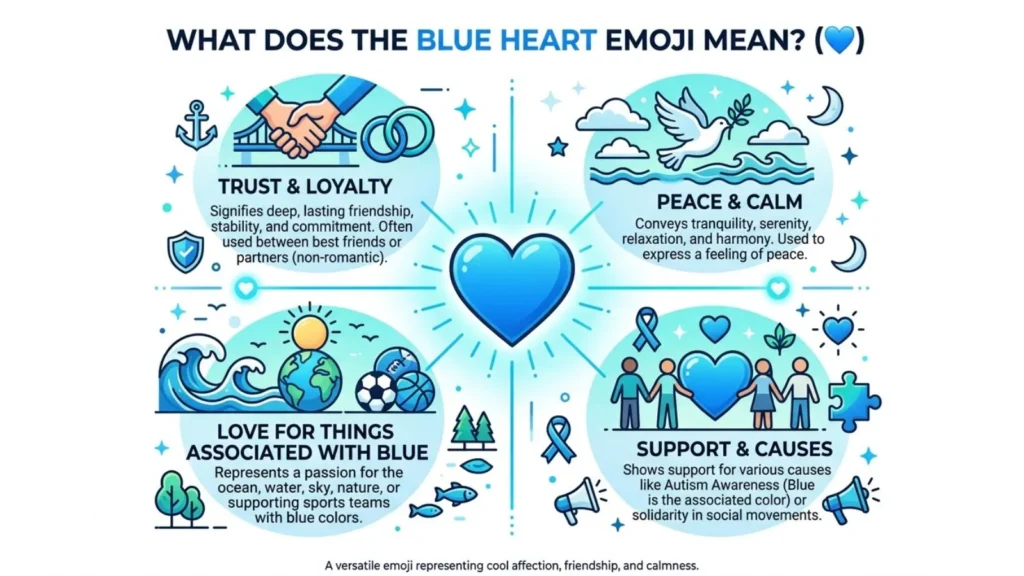
The blue heart emoji 💙 represents trust, loyalty, peace, and deep friendship. It is commonly used to show a calm and stable kind of love that isn’t romantic but still feels meaningful and genuine.
It is often sent to express strong emotional connection, support, and honesty between friends, family members, or people you truly respect. The blue heart shows a bond that is dependable and built on trust rather than passion.
The color blue is strongly associated with calmness, stability, and positivity. Because of this, the 💙 emoji is frequently used in comforting or supportive messages. People use it when they want to show care in a peaceful and gentle way without being overly emotional.
On social media, the 💙 emoji is also used to represent unity, loyalty, and support for different causes, communities, or teams. It can symbolize standing together and showing silent strength.
Overall, the meaning of the blue heart emoji 💙 is about loyalty, trust, and calm, lasting love that remains strong over time.
Different Contexts for Using the Blue Heart Emoji 💙
The blue heart emoji is versatile and its meaning can shift depending on the context in which it’s used. One of the most common uses is in platonic relationships. Friends often send 💙 to show loyalty, appreciation, or care without implying romantic feelings. It’s a gentle way to let someone know you value them or are thinking of them.
In romantic relationships, the blue heart can indicate love that is calm, steady, and dependable rather than fiery or intense. Couples might use it to express trust, long-term commitment, or a sense of peaceful connection. Unlike the red heart, it’s subtle, making it suitable for early stages of dating or for relationships where a softer touch is preferred.
Family members also use the blue heart to express affection and care. Whether it’s a parent sending 💙 to a child or siblings sharing it in a message, the emoji conveys warmth and support while maintaining a friendly tone.
On social media, the blue heart often transcends personal relationships. It is used to show support for causes, fandoms, or communities. For example, sports fans might use 💙 to show loyalty to a team with blue colors, or followers might use it in tribute to a favorite celebrity or online campaign.
The context determines the nuance of the message. By understanding the intended setting—whether friendship, romance, family, or public support—you can use the blue heart emoji to communicate your feelings accurately and avoid misunderstandings.
What Does a Blue Heart Mean? 💙
The blue heart emoji 💙 is a symbol of trust, loyalty, and deep emotional connection. It is often used to represent a calm and steady kind of love that is more about care and understanding rather than romantic feelings.
People usually send a blue heart to show strong friendship, support, and honesty. It reflects a bond that is reliable, meaningful, and built on mutual respect. Unlike a red heart, which is more passionate, the blue heart represents peaceful and stable emotions.
The color blue is linked with calmness, peace, and stability. Because of this, the 💙 emoji is commonly used in comforting conversations or when someone wants to show quiet support without being overly expressive.
On social media, the blue heart is also used to show unity, solidarity, and encouragement for different communities, causes, or groups. It often represents standing together and offering emotional support.
Overall, the meaning of a blue heart 💙 is simple but powerful—it stands for trust, loyalty, calm love, and a strong emotional bond that lasts over time.
How the Blue Heart Emoji Differs from Other Heart Emojis 💙
While all heart emojis represent love or affection in some form, each color carries its own unique meaning and emotional nuance. The blue heart emoji stands out for its calm, loyal, and supportive connotations, whereas other heart colors convey very different messages.
The red heart ❤️ is the most recognized and universally associated with romantic love, passion, and deep emotional connection. It’s often used between partners or in messages expressing strong affection. In contrast, the blue heart 💙 is less intense and better suited for platonic love, steady relationships, or showing trust and loyalty.
The yellow heart 💛 symbolizes friendship, happiness, and positivity. People send it to express joy, cheerfulness, or support without any romantic undertones. Meanwhile, the green heart 💚 often represents growth, health, or environmental awareness, and in some contexts, can even suggest jealousy or possessiveness.
The purple heart 💜 conveys compassion, creativity, or admiration and is sometimes used by fandoms or communities to show solidarity. The black heart 🖤 tends to represent grief, dark humor, or sorrow, often in a more serious or sarcastic tone. Lastly, the white heart 🤍 symbolizes purity, peace, and neutrality.
Understanding these differences ensures that your messages are interpreted correctly. For example, sending a red heart instead of a blue one to a friend could unintentionally signal romantic interest, while the blue heart maintains a friendly, trustworthy, and calm vibe. Choosing the right heart emoji allows you to communicate emotions accurately and enrich your digital conversations.
Cultural and Social Significance of the Blue Heart Emoji 💙
Beyond personal messaging, the blue heart emoji has taken on a wider cultural and social significance in the digital world. Emojis have become a universal language, allowing people from different countries, ages, and backgrounds to express emotions quickly and visually. The blue heart, in particular, is often associated with trust, loyalty, and calm solidarity, which makes it popular in both online communities and public campaigns.
On social media, the blue heart is frequently used to show support for causes or communities. For example, it may appear in posts about mental health awareness, environmental campaigns, or sports teams whose colors include blue. Fans often use 💙 to signal loyalty to their favorite celebrities, influencers, or fandoms, creating a sense of belonging and shared identity.
Culturally, the meaning of the blue heart can vary slightly depending on the region or platform. In Western cultures, it’s often seen as friendly and supportive, while in some Asian contexts, blue can also symbolize peace and harmony. Its neutral yet affectionate nature allows it to be used in diverse settings, from casual texting to professional social media engagement.
The blue heart emoji’s adaptability makes it a subtle but powerful tool for expressing feelings online. Unlike the red heart, which can carry strong romantic connotations, the blue heart maintains a safe and inclusive vibe, allowing people to show care, encouragement, or solidarity without risk of misinterpretation. Understanding its cultural and social significance helps users communicate more thoughtfully in digital spaces.
Tips for Using the Blue Heart Emoji 💙
The blue heart emoji is versatile, but using it effectively requires understanding its nuances. Here are some practical tips to ensure your messages convey the right emotion and avoid misunderstandings.
1. Consider the Relationship:
Before sending a blue heart, think about your relationship with the recipient. 💙 is ideal for friends, family, or supportive acquaintances, as it conveys loyalty, trust, and care without romantic overtones. In romantic contexts, it can express calm, stable love rather than passionate affection.
2. Pair with Other Emojis for Context:
Sometimes a single blue heart may be ambiguous. Pair it with other emojis to clarify your intent. For example, 💙😊 emphasizes friendship and positivity, while 💙🌊 could express calm, peaceful emotions or a shared love for the ocean.
3. Use Appropriately on Social Media:
The blue heart is often used to show support for communities, fandoms, or causes. Adding it to comments, posts, or hashtags can help signal solidarity and connection without implying personal or romantic feelings.
4. Avoid Misinterpretation:
Because the blue heart can symbolize affection, loyalty, or calm love, make sure it aligns with your message. Sending it to someone who expects a red heart may cause confusion about your intentions.
5. Professional Settings:
In work-related messages, the blue heart can be used sparingly to show support, appreciation, or encouragement, especially in teams or projects with a friendly culture. Avoid overuse, and pair it with clear professional language to maintain appropriateness.
Fun Facts About the Blue Heart Emoji 💙
The blue heart emoji is not just a symbol of emotion—it also has an interesting history and cultural footprint. Introduced as part of the Unicode 6.0 update in 2010, the 💙 emoji quickly became a favorite for expressing loyalty, calm affection, and support. Unlike the red heart, which is often used in romantic contexts, the blue heart gained popularity for its friendly, supportive, and inclusive vibe.
On social media platforms, the blue heart has been widely embraced for various purposes. Fans use it to show allegiance to sports teams with blue colors, or as part of fan campaigns supporting celebrities, influencers, or online communities. Its versatility also makes it a staple in hashtags, comment sections, and viral challenges.
The blue heart is also frequently used in digital campaigns and awareness movements. For example, it can symbolize trust, peace, or solidarity, making it suitable for mental health, environmental, or charitable campaigns. Its neutral yet caring tone ensures that it communicates positive emotions without misinterpretation.
Another fun fact is that the meaning of the blue heart can slightly vary across cultures and platforms. Some see it as calming and peaceful, while others interpret it as a symbol of loyalty or platonic love. Its appearance may also differ slightly depending on whether it’s on iOS, Android, or social media platforms, adding subtle nuances to its usage.
These little details show that the blue heart emoji is not just a cute symbol—it’s a versatile and culturally rich icon in modern digital communication.
FAQs About the Blue Heart Emoji 💙
1. Can the blue heart emoji mean romantic love?
Yes, it can, but in a more calm, stable, and trustworthy sense compared to the red heart ❤️, which signifies passionate love. The blue heart is often used in relationships where the emphasis is on loyalty and emotional steadiness rather than intensity.
2. Is it appropriate to send a blue heart to a friend?
Absolutely. The blue heart is perfect for friendships, family, and platonic relationships. It communicates care, loyalty, and support without implying romantic interest, making it a safe and thoughtful choice.
3. How does the blue heart differ from other heart emojis?
Each heart emoji has its own meaning: red ❤️ for romantic love, yellow 💛 for friendship, green 💚 for growth or jealousy, purple 💜 for compassion or fandoms, black 🖤 for grief or dark humor, and white 🤍 for purity or peace. The blue heart 💙 stands out as calm, trustworthy, and supportive.
4. Can the blue heart emoji be used professionally?
Yes, but sparingly. In professional or team messages, 💙 can convey support, encouragement, or appreciation. Pair it with clear language to ensure the context remains professional and appropriate.
5. Does the meaning of the blue heart vary across cultures or platforms?
Slightly. While it universally conveys loyalty, care, and calm affection, some cultures may associate it with peace, tranquility, or harmony. Its design can also vary slightly across platforms like iOS, Android, or social media, adding subtle nuances.
Conclusion:
The blue heart emoji 💙 is a versatile and meaningful symbol in digital communication. Unlike the red heart, which conveys passionate love, the blue heart represents trust, loyalty, calm affection, and support.
Its subtle yet powerful nature makes it ideal for friends, family, online communities, and even professional settings.
From texting and social media posts to awareness campaigns and fandoms, the blue heart can express a wide range of emotions without being misinterpreted.
Understanding its context, cultural significance, and comparison with other heart emojis ensures that your messages are received as intended.
Pairing it thoughtfully with other emojis or words can enhance clarity, while using it in the right setting allows you to convey care, support, or solidarity effectively.
Continue Reading:
- What Does a Blue Heart Emoji Mean? Hidden Meanings Explained 💙
- What Does a Blue Heart Mean in Text Messages and Social Media