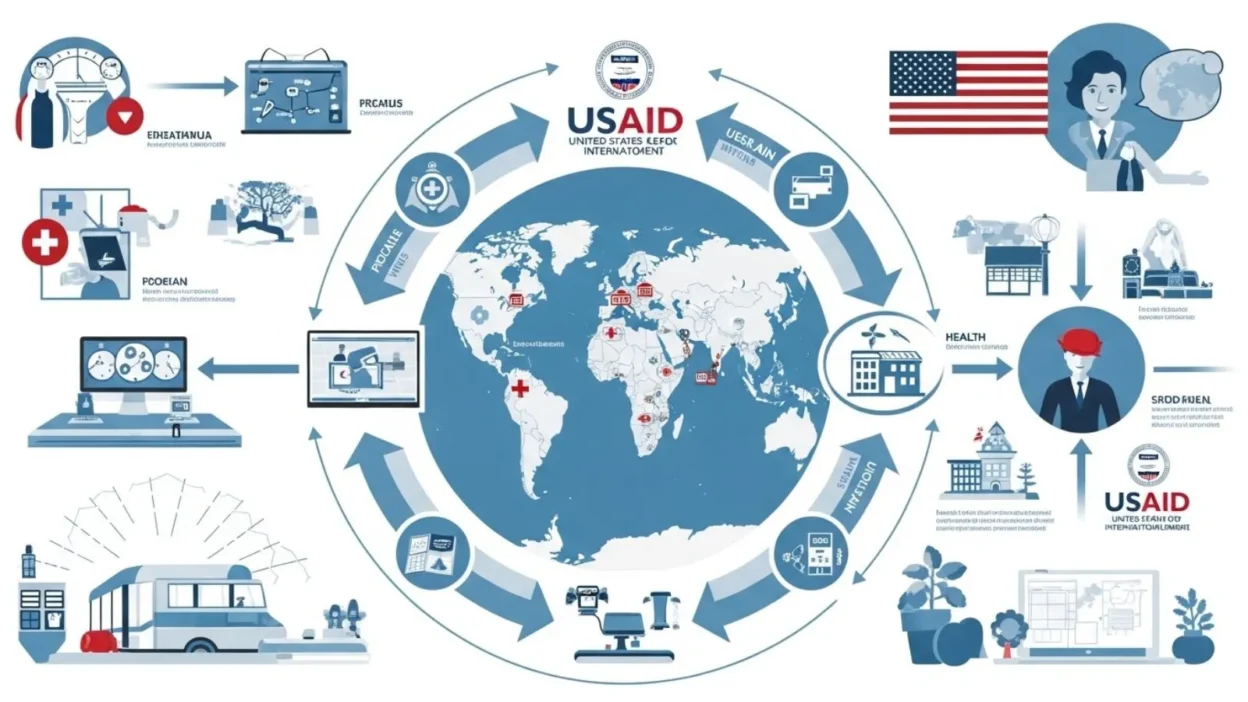
The United States Agency for International Development (USAID) is the U.S. government’s leading agency for international development and foreign aid. Established in 1961, USAID works to improve lives worldwide by promoting economic growth, health, education, democracy, and humanitarian assistance.
From responding to natural disasters and conflicts to supporting long-term development projects, USAID plays a vital role in creating sustainable change in communities globally.
Its programs cover diverse sectors, including healthcare, clean water, education, climate resilience, and governance, impacting millions of people in dozens of countries.
By partnering with local governments, non governmental organizations, and international institutions, USAID ensures aid reaches those who need it most.
Understanding what USAID does and how it operates is essential for anyone interested in global development, humanitarian work, or U.S. foreign aid initiatives.
This article explores its mission, programs, and worldwide impact in detail.
What is USAID?
The United States Agency for International Development (USAID) is the primary U.S. government agency responsible for foreign aid and international development. Established in 1961 under President John F. Kennedy, USAID was created to centralize and coordinate U.S. efforts to provide humanitarian assistance, promote global stability, and support sustainable development worldwide. Its mission is to reduce poverty, expand economic opportunities, strengthen democratic institutions, and improve the quality of life in developing countries.
USAID operates in over 100 countries, working closely with local governments, non-governmental organizations (NGOs), international agencies, and the private sector to implement programs in areas such as healthcare, education, economic growth, governance, and environmental sustainability. The agency also provides humanitarian aid, responding rapidly to crises caused by natural disasters, conflict, or disease outbreaks.
The organization is structured into specialized bureaus and offices that focus on sectors like global health, food security, climate change, and democracy promotion, allowing for targeted and effective interventions. USAID’s work is guided by both U.S. foreign policy priorities and evidence-based research, ensuring that development programs are efficient, impactful, and measurable.
By understanding what USAID does, it becomes clear how the agency not only delivers aid but also fosters long-term development, empowering communities to build resilience and achieve self-sufficiency. Its global programs reflect a balance between immediate humanitarian relief and sustainable growth, making it a cornerstone of U.S. international engagement.
Core Functions and Programs of USAID
USAID carries out a wide range of programs designed to address global challenges and improve the lives of millions. Its work focuses on economic development, health, education, governance, humanitarian aid, and environmental sustainability. By implementing these programs, USAID supports communities in building long-term resilience and achieving sustainable growth.
In the area of economic development, USAID promotes entrepreneurship, trade, agriculture, and infrastructure projects that help communities increase productivity and create jobs. Its health programs tackle critical issues such as HIV/AIDS, malaria, maternal and child health, nutrition, and pandemic preparedness. These initiatives improve access to healthcare and reduce preventable diseases in vulnerable populations.
Education programs focus on increasing literacy, improving school quality, and providing vocational training to empower youth and adults with the skills needed for economic opportunity. Meanwhile, USAID strengthens democracy and governance by supporting transparent institutions, human rights, anti-corruption measures, and fair electoral processes.
In times of crisis, USAID provides humanitarian assistance and disaster relief, responding to natural disasters, conflicts, and refugee emergencies with food, medical care, and shelter. Additionally, the agency addresses environmental and climate challenges through programs promoting sustainable agriculture, clean energy, and conservation, helping communities adapt to climate change.
Through these diverse programs, USAID demonstrates its global impact, reaching millions while partnering with local organizations, NGOs, and governments. Its approach balances immediate humanitarian relief with long-term development, making it a pivotal agency in international aid and global development initiatives.
Global Impact and Success Stories
The work of USAID has left a lasting impact on communities worldwide, improving lives and fostering sustainable development. Operating in over 100 countries, the agency reaches millions of people through programs in health, education, economic growth, humanitarian aid, and governance. Its initiatives have helped reduce poverty, improve public health, and strengthen democratic institutions in some of the world’s most vulnerable regions.
One of USAID’s major achievements is in global health. Programs targeting HIV/AIDS, malaria, and maternal and child health have significantly lowered disease rates and improved access to medical services in Africa, Asia, and Latin America. In education, USAID has helped build schools, train teachers, and provide learning resources to underserved communities, giving thousands of children the opportunity for a brighter future.
USAID’s economic development programs have supported small businesses, agricultural improvements, and infrastructure projects, helping communities increase income and food security. Its humanitarian relief efforts have responded to crises such as earthquakes, floods, and conflicts, providing emergency food, shelter, and medical care to millions.
Success stories also highlight partnerships with local governments and NGOs, where collaborative efforts have strengthened governance, promoted human rights, and encouraged community-led development. These programs demonstrate USAID’s ability to combine immediate assistance with long-term solutions, ensuring that aid translates into measurable progress.
Overall, USAID’s global impact reflects its mission to advance international development and humanitarian aid, proving that strategic programs, strong partnerships, and targeted interventions can create meaningful, lasting change around the world.
How USAID Operates
USAID operates through a well-structured system designed to maximize the effectiveness of its foreign aid and international development programs. Its operations combine strategic planning, partnerships, funding allocation, and rigorous monitoring to ensure that resources reach those who need them most.
The agency’s funding and budget are determined annually by the U.S. Congress, with billions of dollars allocated to support programs across health, education, economic growth, democracy, and humanitarian relief. Each program is carefully planned to address specific local needs and is guided by data-driven research and evidence-based practices to maximize impact.
Partnerships play a central role in USAID’s operations. The agency collaborates with local governments, non-governmental organizations (NGOs), international institutions, and private-sector partners to implement projects efficiently and effectively. These collaborations allow USAID to leverage local expertise, cultural knowledge, and community networks, increasing the sustainability of its programs.
To ensure accountability, USAID uses monitoring and evaluation systems that track progress, measure results, and adjust programs as needed. This includes assessing outcomes in healthcare, education, disaster relief, and environmental sustainability initiatives. Additionally, the agency incorporates innovative technologies and research solutions to improve program delivery, such as digital health tools, climate-resilient farming techniques, and online education platforms.
By combining strategic planning, partnerships, funding oversight, and innovation, USAID ensures that its global development initiatives and humanitarian aid programs are not only responsive but also sustainable, creating lasting benefits for communities worldwide.
Challenges and Criticisms
While USAID has achieved significant global impact, it faces a variety of challenges and criticisms in its efforts to provide foreign aid and support international development. One of the main challenges is navigating complex political, social, and cultural environments in the countries where it operates. Programs often require coordination with multiple stakeholders, including local governments, NGOs, and international organizations, which can slow implementation and create logistical hurdles.
Critics sometimes argue that USAID’s programs may unintentionally foster dependency or fail to produce long-term sustainable outcomes. Others highlight concerns about the agency’s budget allocation, suggesting that political priorities in Washington, D.C., can influence where and how funds are distributed. Additionally, the agency occasionally faces scrutiny over administrative inefficiencies, delays, or the limited reach of certain programs in highly unstable regions.
Despite these challenges, USAID actively works to address criticisms through transparency, accountability, and continuous evaluation. Monitoring and evaluation systems allow the agency to track program effectiveness, identify gaps, and make improvements. USAID also emphasizes collaboration with local communities, ensuring that projects are culturally appropriate and locally owned, which increases the likelihood of sustainable success.
By acknowledging its challenges and learning from past experiences, USAID strives to balance immediate humanitarian aid with long-term development goals. These efforts demonstrate the agency’s commitment to creating meaningful impact while continuously improving its approach to global development initiatives and international assistance.
Frequently Asked Questions About USAID
1. How is USAID different from the United Nations or other NGOs?
While the UN and various NGOs provide humanitarian aid and development programs, USAID is a U.S. government agency that implements foreign aid as part of U.S. policy. Unlike independent organizations, USAID programs often align with broader diplomatic and strategic goals while maintaining a focus on sustainable development and humanitarian impact.
2. How does USAID measure success?
USAID relies on monitoring, evaluation, and data-driven analysis to track program outcomes. Each initiative is assessed based on its impact on health, education, economic growth, governance, or environmental sustainability. Metrics such as lives improved, schools built, and communities empowered help ensure accountability and program effectiveness.
3. Can individuals or organizations get involved with USAID?
Yes. USAID partners with local NGOs, community organizations, universities, and private-sector entities to implement programs. Additionally, individuals can engage by collaborating with USAID-funded projects, applying for fellowships, or supporting initiatives through partner organizations.
4. What sectors does USAID focus on?
USAID operates in multiple sectors, including global health, education, economic development, democracy and governance, humanitarian aid, and environmental sustainability. This multi-sector approach allows the agency to address both immediate needs and long-term development challenges.
5. Why is USAID important for global development?
USAID plays a critical role in advancing international development initiatives, reducing poverty, responding to crises, and supporting resilient communities worldwide. Its programs demonstrate how targeted foreign aid and partnerships can create lasting positive change.
Conclusion:
The United States Agency for International Development (USAID) plays a vital role in advancing global development and providing humanitarian aid to communities in need.
Through its diverse programs in health, education, economic growth, governance, disaster relief, and environmental sustainability, USAID addresses both immediate challenges and long term development goals.
Its work demonstrates the importance of strategic planning, strong partnerships with local governments, NGOs, and international organizations, and rigorous monitoring to ensure effective outcomes.
While USAID faces challenges, including political, logistical, and operational hurdles, its commitment to transparency, accountability, and community-centered development ensures programs remain impactful and sustainable.
By combining short term assistance with initiatives that empower communities, USAID continues to improve lives, foster resilience, and promote stability around the world.
Understanding what USAID does highlights the agency’s indispensable role in international development initiatives and underscores its lasting contribution to global humanitarian efforts.

The author behind RiddleBurst.com loves creating fun, clever, and unique riddles for all ages. Their goal is to challenge minds, bring smiles, and make learning through riddles both engaging and enjoyable.