
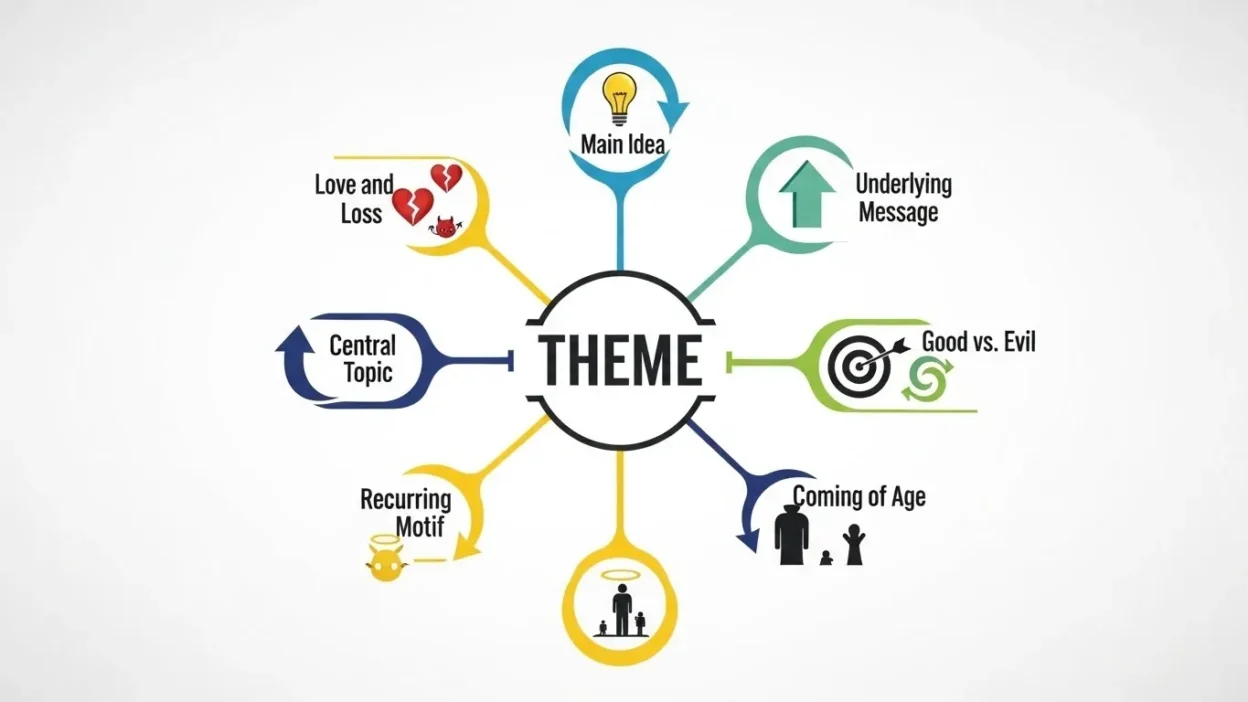
The word theme is commonly used in books, movies, classrooms, art, and even everyday conversations, yet many people are not completely sure what it actually means.
Simply put, a theme is the central idea, message, or underlying meaning behind a piece of writing, artwork, film, or event.
It goes beyond what is happening on the surface and focuses on what the creator is trying to communicate.
For example, a story may be about a journey, but its theme could be friendship, courage, or self-discovery.
Themes help audiences understand the deeper purpose of a story and connect emotionally with it.
They also give structure and unity, guiding how ideas are presented and interpreted.
Understanding what theme means is especially important for students, writers, and creative professionals.
If you are analyzing literature, watching a movie, designing a website, or planning an event, recognizing the theme allows you to see meaning more clearly and appreciate the message being shared.
What Does Theme Mean? (Clear Definition)
The term theme refers to the central idea, message, or underlying meaning that runs throughout a piece of work. It explains what the work is really about, beyond the plot, characters, or surface details. While the plot tells us what happens, the theme tells us why it matters. A theme is usually not stated directly; instead, it is revealed through actions, events, dialogue, and outcomes.
Theme is often confused with the topic, but the two are different. A topic is a general subject, such as love, war, or friendship. A theme, on the other hand, expresses a deeper idea about that subject. For example, if the topic is “friendship,” the theme might be “true friendship requires sacrifice” or “loyalty strengthens relationships during difficult times.” This shows how theme adds meaning and insight rather than simply naming a subject.
Themes can be found in many forms of expression, including literature, films, music, art, and design. In a novel, the theme may reflect the author’s perspective on life or human nature. In a movie, it may shape the emotional journey of the characters. Even in everyday contexts, such as website design or events, a theme creates consistency and focus.
Overall, theme serves as the foundation that connects ideas, emotions, and messages. By understanding what theme means, readers and viewers can better interpret content and appreciate the deeper purpose behind creative works.
Origin and Etymology of the Word Theme
The word theme has its roots in ancient language and philosophy, which helps explain its deeper meaning today. It comes from the Greek word “thema,” meaning “something laid down” or “a subject placed for discussion.” This original meaning suggests that a theme is a foundation or central point around which ideas are built. Over time, the word passed into Latin and later into Middle English, where it began to be used more widely in writing, education, and the arts.
Historically, theme was closely linked to rhetoric and philosophy. Scholars used it to describe the main idea or proposition that a speaker or writer was presenting. As literature developed, authors began using theme to convey moral lessons, social criticism, and reflections on human nature. Classic stories, myths, and religious texts often revolved around strong themes such as good versus evil, justice, loyalty, and fate.
In modern usage, the meaning of theme has expanded across many fields. During literature and film, it refers to the underlying message or insight the creator wants the audience to understand. In music and art, theme describes a recurring idea or emotional focus. In design and technology, such as website or app themes, it represents a consistent style, mood, or visual structure.
Despite these different applications, the core meaning of theme has remained the same: it is the central idea that gives unity and purpose. Understanding the origin of the word helps clarify why theme plays such a vital role in communication, creativity, and interpretation across cultures and time.
Theme vs Topic vs Subject (Key Differences Explained)
Many people confuse theme, topic, and subject, but these terms have different meanings and serve different purposes. Understanding the difference is essential for correctly analyzing stories, essays, movies, and other creative works. While they are closely related, they operate at different levels of depth.
A subject is the broad area being discussed. It is the most general term and answers the question, “What is this work about at a basic level?” For example, a story may involve subjects such as family, school, war, or love. The subject does not express any opinion or message; it simply identifies the area of focus.
A topic is more specific than a subject. It narrows the focus and highlights a particular aspect of the subject. For instance, within the subject of love, the topic might be long-distance relationships or unrequited love. Like the subject, the topic still does not explain the deeper meaning or lesson of the work.
A theme, however, goes beyond both subject and topic. It expresses the underlying message, insight, or idea the creator wants to communicate. Using the same example, the theme might be “true love requires patience and trust” or “love can endure even through separation.” Themes are usually complete thoughts and often reflect universal truths about life or human behavior.
In short, the subject tells what the work is about, the topic narrows it down, and the theme explains what the work is saying. Recognizing this difference allows readers and viewers to understand content more deeply and interpret it more accurately.
Theme in Literature
In literature, theme is the backbone of a story. It represents the central idea or message that the author wants to convey to the reader. While the plot focuses on events and actions, the theme provides meaning and insight, helping readers understand the deeper significance of the story. Themes are often universal, reflecting truths about life, human nature, or society.
Authors develop themes in various ways. Characters’ choices, conflicts, and growth often reveal the theme, as do recurring motifs, symbols, and settings. For example, in a story about a young hero overcoming challenges, the plot may describe the adventures and obstacles, but the theme could be courage, resilience, or self-discovery. Sometimes themes are explicit, stated directly in dialogue or narration, but more often, they are implicit, requiring readers to interpret the deeper meaning themselves.
Themes can also be single or multiple. A story might explore one primary theme, like friendship, while also addressing secondary themes, such as loyalty, forgiveness, or personal growth. Understanding themes allows readers to connect emotionally with the story, appreciate the author’s perspective, and apply its lessons to real life.
Some of the most common literary themes include love, power, justice, identity, good versus evil, and the journey of self-discovery. By identifying the theme, readers gain a richer, more meaningful experience and can see beyond the surface events to the universal ideas that make literature timeless. Recognizing themes also improves critical thinking and analytical skills, especially in educational settings.
Theme in Poetry
In poetry, the theme serves as the central idea or underlying message that the poet wants to communicate. Unlike prose, poetry often relies on imagery, symbolism, and concise language to convey themes, making them sometimes more subtle but no less powerful. A poem’s theme gives it emotional depth and intellectual significance, helping readers connect with the poet’s intended meaning on a personal or universal level.
Poets often use repetition, metaphors, and symbolism to emphasize the theme. For example, a poem about a river may explore themes of time, change, or the journey of life. Though the river itself is the subject, the theme lies in what it represents and the emotions it evokes. Similarly, nature, love, death, or social issues are common subjects in poetry, but the theme transforms these subjects into a broader message or insight.
Poetic themes can be universal—touching on experiences or emotions common to all humans—or personal, reflecting the poet’s own thoughts and struggles. For example, Emily Dickinson often explored themes of mortality and existence, while Langston Hughes addressed themes of freedom, identity, and equality. Identifying the theme in poetry requires careful reading, paying attention to word choice, tone, and underlying ideas.
Understanding the theme in poetry allows readers to appreciate both the beauty of the language and the depth of meaning. It transforms reading from a simple interpretation of words to an exploration of ideas, emotions, and philosophical reflections, making poetry a uniquely rich and enduring form of expression.
Theme in Movies and TV Shows
In movies and TV shows, the theme is the central idea or underlying message that shapes the story, characters, and emotional experience for the audience. While the plot focuses on what happens and the characters show who they are, the theme answers the question, “What is this story really about?” It is often the emotional or philosophical thread that connects every scene and decision in the narrative.
Themes in film and television can be explicit, stated through dialogue or narration, or implicit, revealed through visual storytelling, character arcs, and recurring motifs. For example, a movie about a hero on a dangerous quest might have the theme of courage and self-discovery, while a story about a family struggling during difficult times could explore themes of love, loyalty, and resilience. Symbols, music, and cinematography often reinforce the theme, creating a stronger emotional impact on viewers.
Movies and shows frequently include multiple themes, addressing complex ideas like identity, justice, freedom, or the human condition. For instance, a science fiction film might combine themes of technology’s dangers with personal responsibility, while a drama series may explore themes of betrayal and redemption simultaneously. Recognizing the theme helps viewers understand the deeper purpose behind the story, giving it meaning beyond entertainment.
Identifying the theme in movies and TV shows enhances the viewing experience by encouraging reflection and discussion. It allows audiences to connect emotionally with characters, recognize universal truths, and appreciate the careful craftsmanship behind storytelling, making the story more memorable and meaningful.
Theme in Art and Visual Media
In art and visual media, a theme represents the central idea, message, or emotion that an artist wants to communicate through their work. Unlike literature or film, visual media relies primarily on images, colors, shapes, and composition to convey its themes, making them often more interpretive and open to personal understanding. A theme gives artwork coherence and purpose, guiding both the creation and interpretation of the piece.
Artists use various techniques to express themes. Symbolism is common, where objects, colors, or forms represent larger ideas—like a dove symbolizing peace or dark colors suggesting sorrow. Repetition and patterns can reinforce a theme, while contrast and perspective may highlight tension or conflict. For example, a painting depicting a solitary figure in a vast landscape might explore themes of isolation, self-reflection, or humanity’s relationship with nature.
Themes in visual media can be universal, addressing ideas such as love, struggle, freedom, or mortality, or personal, reflecting the artist’s own experiences and perspectives. In photography, the theme might emerge through subject matter, lighting, and framing. In sculpture or installations, spatial relationships and material choice can emphasize the theme.
Theme in Music
In music, the theme refers to the central idea, message, or recurring motif that gives a piece its emotional and conceptual cohesion. Unlike literature or film, where themes are communicated through words or images, music expresses themes primarily through melody, harmony, rhythm, and lyrics. The theme is what allows listeners to connect emotionally and intellectually with a song or composition.
Musicians often develop themes by repeating certain musical phrases, chord progressions, or motifs throughout a piece. For example, a classical symphony may introduce a main theme in the opening movement and then vary it in later movements, creating a sense of unity and progression. In songs, lyrics often directly communicate the theme, such as love, heartbreak, empowerment, or social justice, while the music reinforces the emotion and mood.
Themes in music can be universal, reflecting ideas like freedom, hope, struggle, or celebration, or personal, reflecting the artist’s experiences and emotions. For example, protest songs often explore themes of equality and justice, while ballads may focus on themes of love and loss. Instrumental music, even without words, can convey themes through tonal shifts, tempo changes, and dynamics, evoking feelings that communicate meaning without explicit language.
Understanding the theme in music enhances the listening experience, allowing audiences to interpret the message, appreciate the structure, and feel the emotional journey. Recognizing musical themes also helps in analyzing composition and performance, providing insight into the artist’s intent and the universal ideas or emotions that make music a powerful form of expression.
Theme in Design and Branding
In design and branding, a theme represents the consistent style, mood, and visual identity that guides a project or brand. Whether it’s a website, mobile app, graphic design, or product packaging, a theme ensures that all elements work together to communicate a clear message and create a memorable experience. In this context, a theme is not just decorative—it reflects the brand’s personality, values, and goals.
Design themes involve color schemes, typography, layout, and imagery. For instance, a modern technology brand may use sleek lines, minimalistic layouts, and bold fonts to convey innovation and professionalism. In contrast, a children’s brand might employ bright colors, playful fonts, and cartoonish illustrations to create a fun and approachable vibe. Consistency across these elements strengthens recognition and helps audiences immediately understand the brand’s message.
Themes in branding also extend to tone of voice, messaging, and content strategy. A theme ensures that whether a user interacts with a website, social media page, or marketing material, the experience feels cohesive. For example, an eco-friendly brand may use natural colors, organic shapes, and sustainable imagery to reinforce its environmental values across all platforms.
Understanding themes in design allows creators to deliver a unified experience, evoke specific emotions, and communicate meaning beyond words. For audiences, recognizing the theme improves comprehension and creates stronger connections with the brand. In short, a well-executed theme transforms design from a collection of visuals into a powerful narrative and identity that resonates with users and reinforces purpose.
Theme in Events and Daily Life
The concept of theme is not limited to literature, art, or media—it also plays a vital role in events and daily life. In these contexts, a theme provides focus, unity, and coherence, helping organizers communicate a specific mood or purpose and giving participants a shared experience. From birthday parties and weddings to corporate events and classrooms, themes guide decoration, attire, activities, and overall atmosphere.
For example, a birthday party with a superhero theme might feature themed decorations, costumes, and games, creating a fun and immersive experience for attendees. Similarly, a wedding might have a romantic or vintage theme, influencing floral arrangements, colors, and music to evoke a consistent emotional tone. Even in classrooms, teachers use themes—like space, oceans, or historical periods—to structure lessons, activities, and displays, making learning more engaging and meaningful.
In daily life, themes can also be seen in personal projects, home décor, and even websites. A kitchen decorated with a rustic theme might feature wooden furniture, earthy colors, and vintage accessories, while a blog with a minimalist theme uses clean lines, neutral tones, and simple layouts to communicate clarity and organization. These applications show that themes are a way to organize ideas visually and conceptually, creating coherence and enhancing the overall experience.
Types of Themes
Themes come in many forms, and understanding the different types can help readers, viewers, and creators identify the deeper messages in various works. Broadly, themes can be universal, moral, social, psychological, cultural, or personal, each serving a unique purpose in communication and storytelling.
Universal themes:
These ideas that resonate with people across time, culture, and geography. Examples include love, friendship, courage, and the struggle between good and evil. These themes are timeless and often appear in literature, film, music, and art because they connect with fundamental human experiences.
Moral themes:
These themes focus on lessons or ethical guidance, often showing the consequences of actions and encouraging reflection on right and wrong. Stories teaching honesty, responsibility, or kindness are classic examples.
Social themes:
These themes explore societal issues such as inequality, justice, racism, or environmental concerns. They provide commentary on the world around us, prompting discussion and awareness.
Psychological themes:
Delve into the mind, emotions, and personal struggles of characters or subjects. Examples include identity, fear, ambition, and self-discovery, offering insights into human behavior.
Cultural themes:
Reflect traditions, beliefs, and norms of a particular society, helping audiences understand different perspectives and experiences.
Personal themes:
Arise from an individual creator’s experiences, emotions, or reflections. These themes are often unique and intimate, giving the audience insight into the creator’s world.
Recognizing these types of themes enhances interpretation and analysis. It allows audiences to see how creators convey meaning, whether through a novel, painting, film, song, or daily-life project. Understanding theme types also improves creativity, critical thinking, and emotional connection, making any experience richer and more meaningful.
How to Identify a Theme (Step-by-Step Guide)
Step 1: Look at the Subject and Topic
Begin by identifying what the work is about on the surface. Ask yourself, “What is the story or work mainly about?” This helps narrow down potential themes, distinguishing them from the general subject.
Step 2: Examine Character Actions and Decisions
Themes are often reflected in how characters respond to challenges or make choices. Consider what the characters learn, struggle with, or achieve. For instance, a character overcoming obstacles may point to themes of perseverance or courage.
Step 3: Identify Patterns and Recurring Elements
Pay attention to repeated ideas, symbols, phrases, or events. Repetition often signals an important concept the creator wants to emphasize, which can indicate the theme.
Step 4: Consider the Outcome
Look at the resolution or ending of the work. What message does it convey? What lesson can be drawn from how events unfold?
Step 5: Ask What the Work Says About Life or Human Nature
Themes usually reveal universal truths, insights, or reflections on humanity. Try to express the theme as a complete thought or statement, not just a single word.
By following these steps, identifying a theme becomes a structured process. It allows readers, viewers, and analysts to go beyond surface details and understand the deeper meaning, enhancing appreciation, critical thinking, and emotional connection with the work.
How Theme Is Developed
A theme does not appear randomly in a story, song, or artwork—it is carefully developed through various creative elements. Understanding how a theme is crafted helps audiences recognize the underlying message and appreciate the creator’s intentions. Writers, filmmakers, musicians, and artists use multiple techniques to build and reinforce a theme throughout their work.
1. Plot Development:
The sequence of events in a story often highlights the theme. Conflicts, challenges, and resolutions are designed to reveal underlying messages. For example, a story about a character facing injustice may develop the theme of resilience or the fight for fairness.
2. Character Arcs:
Characters are central to theme development. Their choices, growth, successes, and failures often illustrate key ideas. A character who learns to forgive might reflect a theme of redemption, while a stubborn character’s downfall could highlight the dangers of pride.
3. Setting and Atmosphere:
Settings are more than just backdrops—they can reinforce the theme. A desolate landscape might emphasize isolation, while a bustling city could symbolize ambition or social tension. Mood, tone, and environment all support the theme subtly but effectively.
4. Symbolism and Motifs:
Repeated symbols, objects, or events often carry thematic significance. For instance, storms might represent chaos, while light can symbolize hope. Motifs reinforce the theme by appearing throughout the work in various forms.
5. Dialogue and Narration:
The words characters speak or the perspective of a narrator can hint at or explicitly communicate the theme. Philosophical statements, moral reflections, or repeated expressions often signal the deeper message.
By combining these elements, creators weave the theme seamlessly into the fabric of the work, making it resonate with audiences and leaving a lasting impression. Recognizing these techniques allows viewers and readers to interpret the message more fully and appreciate the craftsmanship behind storytelling.
Theme vs Moral vs Message
Many people confuse the terms theme, moral, and message, but they are distinct concepts in storytelling and creative works. Understanding the differences is essential for accurate analysis and deeper appreciation of literature, movies, art, and music.
The theme is the central idea or underlying meaning of a work. It reflects a universal truth or insight about life, human nature, or society. Themes are often broad and abstract, such as love, courage, betrayal, or identity. For example, a story about a hero’s journey might explore the theme of perseverance or self-discovery. Themes are not necessarily prescriptive—they highlight ideas rather than instruct directly.
The moral, on the other hand, is a lesson the work intends to teach. It is often more specific and prescriptive, telling the audience how they should behave or what they should value. For instance, the moral of a fable about honesty might be, “Always tell the truth, even when it is difficult.” While the theme may explore honesty as a concept, the moral explicitly instructs a behavior or choice.
The message is the broader takeaway or point that the creator wants the audience to understand. It can be practical, philosophical, or emotional. Unlike the theme, which is abstract, or the moral, which is instructive, the message can be a combination of both, conveyed through characters, plot, and symbolism. For example, a movie might deliver the message that true happiness comes from relationships, reflecting a theme of love and a moral of valuing people over material wealth.
Recognizing these distinctions helps readers and audiences interpret works more accurately, appreciate nuance, and connect with the deeper meanings that creators embed in their art. Understanding theme, moral, and message ensures a richer, more insightful experience across all forms of storytelling.
Why Theme Is Important
Understanding theme is essential for fully appreciating any creative work, whether it’s a story, poem, film, piece of music, or artwork. The theme gives a work depth and meaning, connecting its events, characters, and ideas to a larger message about life, human nature, or society. Without a clear theme, a story or creative project may feel shallow or disjointed, leaving the audience with little to reflect on or remember.
Themes also help audiences connect emotionally and intellectually with a work. When a reader, viewer, or listener recognizes a theme, they can relate the story to their own experiences, values, or beliefs. For example, a movie exploring themes of resilience and hope can inspire viewers facing challenges, while a poem addressing themes of love or loss can evoke empathy and self-reflection. In this way, themes provide universality, allowing works to resonate across cultures and generations.
In education and personal development, understanding themes enhances critical thinking and analytical skills. Students analyzing literature learn to look beyond surface events to uncover deeper messages, improving interpretation and comprehension. Creators also rely on themes to structure their work, ensuring that every element—plot, character, dialogue, and imagery—supports the central idea.
Finally, themes give coherence and unity to creative projects. Whether in design, branding, or event planning, a clear theme guides choices and ensures that all elements align with the intended message. By recognizing and appreciating themes, audiences and creators alike can experience work on a more meaningful, lasting level.
Common Examples of Themes
Recognizing common themes helps readers, viewers, and audiences quickly identify the underlying messages in stories, films, music, and art. These themes are often universal, resonating across cultures, time periods, and media. They address fundamental aspects of human experience, making works relatable and meaningful.
One of the most frequent themes is love, which can take many forms: romantic, familial, or platonic. Stories with this theme often explore loyalty, sacrifice, heartbreak, or personal growth. Another prevalent theme is friendship, highlighting trust, support, and camaraderie in the face of challenges.
The theme of courage appears in countless narratives, from classic literature to modern films. Characters overcoming obstacles, facing fears, or standing up for what is right demonstrate this theme, inspiring audiences with lessons about perseverance. Similarly, good versus evil is a timeless theme, showing the struggle between opposing forces, moral choices, and the consequences of actions.
Other common themes include identity and self-discovery, where characters explore who they are, their values, and their place in the world. Hope and resilience often appear in stories about survival, loss, or adversity, teaching the importance of optimism and determination. Family and loyalty are also central, reflecting human connections and responsibilities.
Even when expressed differently across genres or cultures, these themes provide a universal thread connecting audiences to the work. Understanding common themes allows readers and viewers to see beyond the plot or surface details, uncovering the deeper meaning that makes stories, music, and art timeless and impactful.
Common Misunderstandings About Theme
Despite its frequent use in literature, media, and education, the concept of theme is often misunderstood. Many people confuse it with plot, topic, or even a single word, which can lead to misinterpretation and shallow analysis. Clarifying these misconceptions helps readers and creators engage more deeply with a work.
One common misunderstanding is that a theme is the same as the plot. While the plot describes what happens, the theme explains why it matters. For example, a story about a hero’s adventures may have an exciting plot, but the theme could focus on courage, friendship, or personal growth. Without recognizing the theme, one might only enjoy the surface story without understanding its deeper message.
Another misconception is that a theme can be expressed in just one word, like “love” or “war.” While these words describe the general subject, they do not convey the full meaning or insight the creator intends. A theme is usually expressed as a complete thought, such as “true love requires sacrifice” or “war has lasting consequences on society.”
Some people also believe that a story can only have one theme, but most works contain multiple themes. A novel may explore love, identity, and resilience simultaneously, each adding layers of meaning.
Finally, themes are not always obvious. Many are implicit, revealed through character choices, repeated symbols, or the resolution of conflicts. Recognizing the theme requires careful observation and reflection.
By understanding these common misunderstandings, audiences can better identify the central idea, appreciate the creator’s intentions, and engage more meaningfully with literature, films, art, and other forms of storytelling.
FAQs About Theme Mean
Many readers and creators have questions about the concept of theme, especially because it is often confused with plot, topic, or moral. Here are some of the most frequently asked questions about theme, along with clear answers to help deepen understanding.
1. What is a theme in one sentence?
A theme is the central idea, message, or underlying meaning of a work, often revealing universal truths about life, human nature, or society.
2. Can a story have more than one theme?
Yes. Most works contain multiple themes. For example, a novel could explore love, friendship, and identity simultaneously, with each theme contributing to the overall meaning.
3. Is theme the same as the main idea?
Not exactly. The main idea often refers to the topic or subject, while the theme expresses the deeper insight or message the creator wants to communicate.
4. How do teachers identify theme?
Teachers look at recurring ideas, character actions, conflicts, symbols, and the resolution of the work. They ask what the work says about life, society, or human behavior to determine the theme.
5. How do I write a strong theme?
To create a theme, start with a central idea and express it as a complete thought or statement. Make sure it reflects a universal truth or insight, and ensure all elements of the work—plot, characters, setting, and symbolism—support it.
6. Can themes appear in art, music, or events?
Absolutely. Themes are not limited to literature. During music, they are expressed through lyrics, melody, and motifs. In art, themes appear through imagery, color, and composition. In events or daily life, themes provide focus and unity, like a wedding or party theme.
Conclusion:
In summary, understanding theme is essential for fully appreciating literature, art, music, films, and even everyday experiences.
A theme is the central idea, message, or underlying meaning that connects characters, events, and creative elements, providing depth and purpose.
Unlike the plot, which tells what happens, the theme explains why it matters, offering insights into life, human behavior, and universal truths.
Themes appear in many forms, from universal concepts like love, courage, and friendship, to moral lessons, social commentary, psychological exploration, or personal reflections.
They can be explicit or implicit, single or multiple, and are often developed through plot, character arcs, setting, symbols, and dialogue.
Recognizing themes requires careful observation and analysis, but it allows audiences to connect emotionally and intellectually with the work.
Themes are also present beyond creative works. In design, branding, events, and daily life, themes provide coherence, focus, and unity, helping communicate messages effectively and creating memorable experiences.
From a student analyzing a story to a designer planning a website, understanding theme enhances critical thinking, creativity, and interpretation skills.
Ultimately, themes transform a collection of events, images, or sounds into something meaningful.
They allow creators to communicate deeper messages and help audiences gain insight, reflect, and relate.
By identifying and appreciating themes, we move beyond surface-level understanding, discovering the purpose, emotion, and universal truth that make any work enduring, impactful, and memorable.
Recognizing themes is not just an academic skill it is a way to see the world more thoughtfully and meaningfully.
Discover More Articles:
- What Does E.g Mean? A Simple Explanation You Need
- What Does It Mean to Gaslight Someone in Relationships?
- What Does a Rebuilt Title Mean? Avoid Costly Mistakes