The heart is one of the most vital organs in the human body, yet many people may not fully understand what the heart does or how it keeps us alive.
At its core, the heart functions as a powerful pump, circulating blood throughout the body to deliver oxygen and essential nutrients to every cell. This continuous flow of blood also removes waste products, supporting overall health and maintaining the body’s balance.
Understanding how the heart works is not just fascinating it’s essential for recognizing the importance of heart health.
From its intricate chambers and valves to its electrical system that regulates heartbeat, the human heart performs a complex and life sustaining role.
By exploring the structure, function, and care of this remarkable organ, we can appreciate its critical contribution to our wellbeing and learn effective ways to keep it healthy for a lifetime.
Anatomy of the Heart
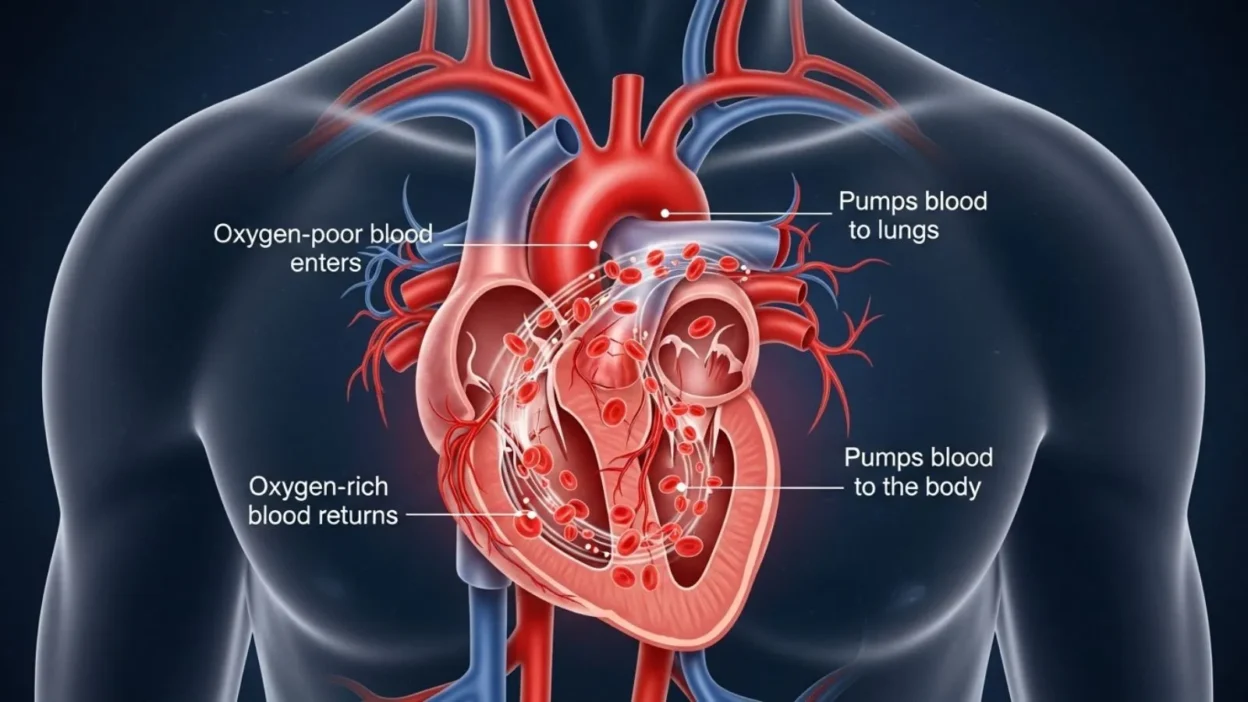
The human heart is a remarkable organ, roughly the size of a clenched fist, located in the chest between the lungs. Its structure is specifically designed to perform the critical job of pumping blood efficiently throughout the body. The heart consists of four chambers: two upper chambers called the atria and two lower chambers called the ventricles. The right atrium receives deoxygenated blood from the body and passes it to the right ventricle, which pumps it to the lungs for oxygenation. Meanwhile, the left atrium receives oxygen-rich blood from the lungs and delivers it to the left ventricle, the strongest chamber that pumps blood to the rest of the body.
Heart valves ensure that blood flows in one direction, preventing backflow. These include the tricuspid, pulmonary, mitral, and aortic valves, each playing a critical role in maintaining proper circulation. The heart is primarily made of cardiac muscle (myocardium), a type of muscle tissue uniquely adapted for continuous, rhythmic contraction without fatigue. Surrounding the heart are protective layers: the pericardium (outer sac), myocardium (muscle), and endocardium (inner lining).
Understanding the heart’s anatomy provides the foundation for grasping how the heart works. Its coordinated structure allows blood to circulate efficiently, supporting life by delivering oxygen and nutrients while removing waste products. This intricate design makes the heart not just a pump but a marvel of biological engineering.
How the Heart Works
The heart works tirelessly as the body’s central pump, following a precise rhythm to circulate blood. This process is known as the cardiac cycle, which consists of two main phases: systole and diastole. During systole, the heart contracts, pushing blood out of the ventricles—deoxygenated blood to the lungs and oxygenated blood to the rest of the body. Diastole is the relaxation phase, allowing the chambers to refill with blood in preparation for the next contraction.
Blood flow through the heart is carefully directed. Deoxygenated blood enters the right atrium from the body, moves into the right ventricle, and is pumped through the pulmonary artery to the lungs. After picking up oxygen, blood returns via the left atrium, passes into the left ventricle, and is propelled through the aorta to nourish every part of the body.
The heart’s rhythm is controlled by an electrical conduction system. The sinoatrial (SA) node, often called the natural pacemaker, initiates each heartbeat. Electrical impulses travel to the atrioventricular (AV) node and through specialized fibers, coordinating the contraction of atria and ventricles. This system ensures the heart beats in a consistent, organized manner, typically 60–100 times per minute in a resting adult.
By understanding these processes, it becomes clear that the heart is more than a simple pump—it is a finely tuned organ whose coordinated contractions and electrical signals maintain continuous blood circulation, delivering oxygen and nutrients vital for life.
Role of the Heart in Circulation
The heart plays a central role in the body’s circulatory system, ensuring that blood continuously moves through the lungs and the rest of the body. This circulation is divided into two main pathways: pulmonary circulation and systemic circulation.
Pulmonary circulation involves the movement of deoxygenated blood from the right side of the heart to the lungs. In the lungs, blood releases carbon dioxide and picks up oxygen before returning to the left side of the heart. This process is essential for maintaining the oxygen levels needed for all body tissues and organs.
Systemic circulation carries oxygen-rich blood from the left ventricle through the aorta and branching arteries to all parts of the body. Once oxygen and nutrients are delivered to cells, blood collects waste products like carbon dioxide and returns through veins to the right atrium, completing the cycle.
The heart works in close partnership with arteries, veins, and capillaries to maintain proper blood flow. Arteries transport blood away from the heart under high pressure, while veins return blood under lower pressure, aided by valves to prevent backflow. Capillaries, the smallest vessels, allow the exchange of oxygen, nutrients, and waste at the cellular level.
This continuous circulation is vital for homeostasis, regulating body temperature, pH balance, and nutrient delivery. Without the heart’s coordinated pumping action, tissues would quickly become deprived of oxygen and nutrients, underscoring why the heart is often called the engine of life.
Common Heart Problems
While the heart is a remarkably resilient organ, it can still be affected by various cardiovascular diseases that impact its ability to function properly. One of the most serious conditions is a heart attack, which occurs when blood flow to a part of the heart muscle is blocked, often due to a buildup of plaque in the coronary arteries. Heart failure is another major concern, in which the heart cannot pump blood efficiently, leading to fatigue, swelling, and shortness of breath. Arrhythmias, or irregular heartbeats, can also disrupt normal circulation and, in severe cases, be life-threatening.
Several risk factors increase the likelihood of developing heart problems. Genetics play a role, but lifestyle choices such as poor diet, lack of exercise, smoking, and excessive stress can significantly raise the risk. High blood pressure, high cholesterol, and diabetes are also major contributors.
Recognizing warning signs early is crucial for prevention and treatment. Common symptoms include chest pain or tightness, shortness of breath, unusual fatigue, rapid or irregular heartbeat, and swelling in the legs or ankles. Timely medical intervention can save lives and prevent long-term damage.
Understanding these common heart problems highlights the importance of maintaining heart health. By being aware of the risks and recognizing early signs, individuals can take proactive steps—through lifestyle changes and regular medical checkups—to protect the heart and ensure it continues performing its vital role in blood circulation and overall body health.
Maintaining a Healthy Heart
Keeping the heart healthy is essential for overall well-being, as it ensures efficient blood circulation and reduces the risk of cardiovascular diseases. A heart-healthy lifestyle begins with balanced nutrition. Eating a diet rich in fruits, vegetables, whole grains, lean proteins, and healthy fats can help maintain proper cholesterol levels and blood pressure. Reducing salt, sugar, and processed foods is equally important to prevent strain on the heart.
Regular physical activity is another key factor. Exercises such as walking, jogging, swimming, or cycling strengthen the heart muscle, improve circulation, and help maintain a healthy weight. Even moderate activity for at least 30 minutes a day can significantly lower the risk of heart disease.
Stress management also plays a crucial role in heart health. Chronic stress can increase heart rate and blood pressure, which over time may damage the cardiovascular system. Techniques such as meditation, deep breathing, yoga, or hobbies can help reduce stress and promote heart health.
Preventive measures, including routine check-ups, monitoring blood pressure and cholesterol, and avoiding smoking and excessive alcohol consumption, are vital for early detection and prevention of heart problems. Understanding personal risk factors, like family history or chronic health conditions, allows individuals to take proactive steps to protect their heart.
By adopting these habits, individuals not only reduce the likelihood of heart disease but also enhance overall energy, stamina, and longevity. A well-maintained heart continues to perform its life-sustaining functions efficiently, supporting every aspect of daily living.
Fun Facts About the Heart
The human heart is not only vital but also full of fascinating features that highlight its complexity and endurance. For starters, the heart beats approximately 100,000 times per day, pumping around 2,000 gallons of blood daily. Over an average lifetime, this adds up to more than 3 billion heartbeats, demonstrating the incredible stamina of this organ.
Despite its powerful function, the heart is about the size of a fist, weighing roughly 10–12 ounces in adults. Its small size belies its critical role in maintaining life. The heart also adjusts its rate based on activity levels, emotional state, and even body temperature. For instance, during exercise, the heart rate can rise significantly to supply muscles with oxygen, while during rest, it slows to conserve energy.
Another fascinating fact is that the heart has its own electrical system, allowing it to beat independently of the brain. The SA node, often called the natural pacemaker, generates electrical impulses that keep the heart in rhythm, while the AV node coordinates the timing of contractions for efficient blood flow.
The heart also exhibits a phenomenon known as cardiac synchronization, where the left and right sides beat in perfect harmony to maintain continuous circulation. Interestingly, in some animals and even humans under certain conditions, the heart can continue to beat for a few minutes even after being removed from the body, highlighting its remarkable autonomous function.
These fun facts emphasize that the heart is not just a pump—it is a resilient, self-regulating, and indispensable organ that keeps life moving in every sense.
Frequently Asked Questions (FAQs) About the Heart
1. What is the main function of the heart?
The heart’s primary role is to pump blood throughout the body. This circulation delivers oxygen and essential nutrients to cells and removes waste products like carbon dioxide, supporting overall health and energy levels.
2. How does the heart pump blood?
Blood is pumped through a coordinated cycle called the cardiac cycle, which includes contraction (systole) and relaxation (diastole). The right side of the heart sends deoxygenated blood to the lungs for oxygen, while the left side pumps oxygen-rich blood to the rest of the body.
3. What can damage the heart?
Several factors can harm the heart, including high blood pressure, high cholesterol, smoking, diabetes, obesity, and excessive stress. Genetic predisposition and certain lifestyle choices can also increase the risk of heart disease.
4. How can I keep my heart healthy?
Maintaining a heart-healthy lifestyle is crucial. Eat a balanced diet rich in fruits, vegetables, and lean proteins, exercise regularly, manage stress, avoid smoking, and monitor your blood pressure and cholesterol levels. Regular check-ups can help detect potential problems early.
5. How many times does the heart beat in a day?
On average, the human heart beats around 100,000 times per day, pumping roughly 2,000 gallons of blood. Over a lifetime, this amounts to billions of heartbeats, highlighting the organ’s remarkable endurance.
Conclusion:
The heart is much more than just a pump it is the life-sustaining engine of the human body. Through its intricate anatomy, coordinated contractions, and electrical rhythm, it continuously circulates blood, delivering oxygen and nutrients while removing waste.
Understanding what the heart does highlights not only its vital role in maintaining life but also the importance of caring for it.
Maintaining heart health involves adopting a balanced diet, staying physically active, managing stress, and monitoring key health indicators like blood pressure and cholesterol.
Being aware of common heart problems and recognizing early warning signs can prevent serious complications and promote longevity.
By appreciating the heart’s remarkable structure, functions, and resilience, we can better prioritize habits that support its efficiency and endurance. A healthy heart is central to overall well being, enabling us to live active, vibrant, and longer lives.