
Goal setting is one of the most powerful ways to turn ideas into real achievements, yet many people struggle because their goals are too vague or unrealistic.
This is where the SMART framework comes in. If you’ve ever wondered what SMART stands for, you’re not alone students, professionals, business leaders, and self improvement enthusiasts frequently use this method to create clear and achievable objectives.
SMART is a structured goal setting approach that helps individuals define exactly what they want to accomplish and how they will measure success.
Instead of setting broad intentions like I want to be successful, SMART goals focus on clarity, practicality, and timelines.
This framework has become widely popular in workplaces, education, project management, and personal development because it improves focus and increases the chances of success.
In this guide, you’ll learn the meaning of SMART, how each part works, and how you can apply it to achieve better results in any area of life.
What Does SMART Stand For? (Quick Definition)
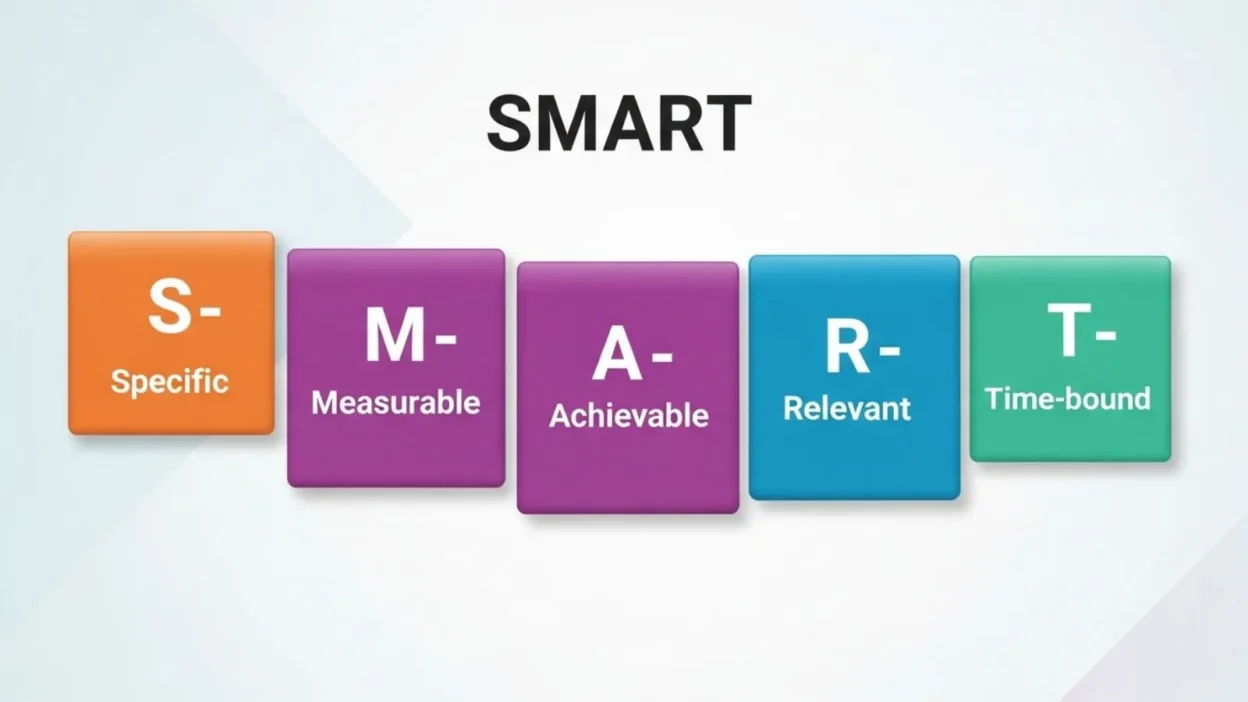
The SMART acronym is a widely used goal-setting framework designed to help individuals and organizations create clear, realistic, and achievable objectives. When people ask what does SMART stand for, they are referring to a structured method that breaks goals into five essential elements: Specific, Measurable, Achievable, Relevant, and Time-Bound. Each component works together to transform a general idea into a well-defined plan of action.
A Specific goal clearly states what you want to accomplish instead of leaving room for confusion. A Measurable goal includes criteria that allow you to track progress and determine success. Achievable means the goal is realistic based on available resources, skills, and time. Relevant ensures the objective aligns with your broader priorities or long-term ambitions. Finally, Time-Bound goals include a deadline, creating urgency and accountability.
The SMART framework was originally developed for business and management environments, but it quickly expanded into education, personal development, fitness planning, and productivity coaching. Its popularity comes from its simplicity and effectiveness — anyone can apply it regardless of experience level.
For example, instead of saying, “I want to get better at studying,” a SMART goal would be: I will study math for one hour every weekday for the next two months to improve my exam score by 15%. This version clearly defines what to do, how success will be measured, and when the goal should be completed, making success far more achievable.
Breakdown of the SMART Acronym (Letter by Letter Guide)
To fully understand how SMART goals work, it’s important to examine each letter of the acronym individually. Every component plays a specific role in transforming a general intention into a structured and actionable objective. When all five elements are combined, goals become clearer, easier to manage, and more likely to succeed.
The first element, Specific, focuses on clarity. A goal should clearly define what you want to achieve, why it matters, and what steps are required. Vague goals often lead to confusion and lack of direction, while specific goals provide a clear starting point.
The second element, Measurable, ensures progress can be tracked. Without measurable criteria, it becomes difficult to know whether you are improving or moving closer to success. Measurements may include numbers, percentages, milestones, or performance indicators.
Next is Achievable, which emphasizes realism. Goals should challenge you but still remain attainable based on your current resources, skills, and time. Setting overly ambitious goals can lead to frustration, while achievable goals build confidence and momentum.
The fourth component, Relevant, connects your goal to larger priorities. A goal should support your long-term vision or personal values so that your effort feels meaningful and worthwhile.
S — Specific: Creating Clear and Focused Goals
The first and most important part of the SMART framework is Specific, because clarity is the foundation of effective goal setting. A specific goal clearly defines what you want to achieve, leaving no room for confusion or misinterpretation. Many people fail to reach their objectives simply because their goals are too broad or unclear. Statements like “I want to improve my skills” or “I want to be successful” sound motivating, but they lack direction and actionable detail.
A specific goal answers key questions such as: What exactly do I want to accomplish? Why is this goal important? Who is involved? Where will it happen? By addressing these questions, you create a focused objective that guides your actions and decisions. Specific goals help you concentrate your energy on one clear outcome rather than spreading effort across multiple vague intentions.
For example, instead of saying, “I want to get fit,” a specific goal would be, “I will go to the gym three times a week to improve my cardiovascular health.” The revised version clearly identifies the activity, frequency, and purpose, making it easier to follow through.
Being specific also improves motivation because you know exactly what success looks like. When goals are clear, planning becomes easier, progress becomes visible, and distractions are reduced. In short, specificity transforms an idea into a practical starting point, setting the stage for the remaining SMART elements to build a strong and achievable goal.
M — Measurable: Tracking Progress and Success
The second element of the SMART framework is Measurable, which focuses on tracking progress and determining whether a goal has been successfully achieved. A measurable goal includes clear criteria or indicators that allow you to evaluate improvement over time. Without measurement, it becomes difficult to know if your efforts are producing real results or if adjustments are needed along the way.
Measurable goals typically involve numbers, data, or observable milestones. These may include percentages, deadlines, quantities, scores, or frequency of actions. For example, instead of setting a goal like “I want to save money,” a measurable version would be, “I will save $200 every month for six months.” The measurable element provides a concrete way to monitor progress and stay accountable.
Measurement also plays an important psychological role. When people can see their progress, they feel more motivated to continue. Small wins and visible improvements build confidence and reinforce positive habits. Additionally, measurable goals help identify challenges early, allowing you to modify your strategy before falling too far behind.
In professional environments, measurable goals are often connected to performance indicators or key metrics, ensuring that outcomes can be evaluated objectively. Whether applied to business, education, fitness, or personal development, measurement turns effort into visible achievement. By defining how success will be measured, you create clarity, maintain focus, and increase the likelihood of reaching your desired outcome.
A — Achievable: Setting Realistic and Attainable Goals
The third element of the SMART framework is Achievable, which ensures that the goals you set are realistic and attainable given your current resources, skills, and circumstances. While it’s important to challenge yourself, setting goals that are too ambitious or unrealistic can lead to frustration, disappointment, and even abandonment of the goal altogether. Achievable goals strike a balance between challenge and realism, motivating you to take consistent action without feeling overwhelmed.
To determine if a goal is achievable, consider the following questions: Do you have the necessary skills or knowledge to complete it? Are sufficient resources, such as time, money, or support, available? Is the goal realistic within the timeline you have set? By evaluating these factors before committing, you increase your chances of success and maintain motivation throughout the process.
For example, instead of setting a goal like “I will run a marathon next month” when you have never trained before, an achievable SMART goal would be: “I will complete a 5K run within eight weeks by training three times per week.” This version is realistic, actionable, and attainable, while still challenging you to improve.
Achievable goals also build confidence. Every time you accomplish a realistic target, you reinforce your abilities and create momentum toward larger objectives. In essence, the “Achievable” component ensures that your SMART goals are not just aspirational, but practical, sustainable, and within reach, making success far more likely in any area of life, from personal development to professional growth.
R — Relevant: Aligning Goals with Priorities
The fourth element of the SMART framework is Relevant, which ensures that your goals are meaningful and aligned with your broader priorities, values, and long-term objectives. A goal can be specific, measurable, and achievable, but if it doesn’t serve a purpose or connect to what truly matters, it’s unlikely to motivate sustained effort. Relevance helps maintain focus and ensures that your energy is directed toward outcomes that genuinely impact your life or work.
To determine if a goal is relevant, ask yourself questions like: Does this goal align with my personal values or career objectives? Will achieving this goal help me move closer to my larger ambitions? Is this goal the right priority at this time? Goals that meet these criteria are more likely to be pursued consistently and completed successfully.
For example, if your long-term aim is to advance in your career, a relevant SMART goal might be: “I will complete a professional certification in project management within six months to enhance my promotion prospects.” This goal directly supports your broader objective and provides practical benefits.
Relevance also prevents wasted effort on objectives that may feel good in the short term but do not contribute to your ultimate vision. It keeps motivation high because you understand the “why” behind your goal. Whether applied in personal development, education, fitness, or business, ensuring relevance means every step you take is purposeful. By aligning your goals with your priorities, the “Relevant” element of SMART helps create meaningful progress that truly matters in the bigger picture.
T —Time Bound: Setting Deadlines for Accountability
The final element of the SMART framework is Time-Bound, which emphasizes the importance of setting a clear deadline for achieving your goal. A goal without a timeframe can easily be postponed or forgotten, reducing motivation and focus. Deadlines create a sense of urgency, helping you prioritize tasks and maintain consistent progress toward your objectives.
A time-bound goal answers questions like: When will this goal be achieved? What is the timeframe for completion? Are there intermediate milestones to track progress? Establishing a deadline encourages structured planning and helps prevent procrastination. It also allows you to measure progress at specific intervals, making it easier to adjust your approach if necessary.
For example, instead of saying, “I want to learn a new language,” a time-bound SMART goal would be: “I will complete 30 lessons of a Spanish course over the next three months, practicing at least 30 minutes daily.” This version specifies not only the action but also the timeframe, creating accountability and a clear path toward completion.
Time-bound goals are essential in both personal and professional contexts. In workplaces, deadlines ensure projects stay on schedule. For personal development, deadlines create momentum and help you celebrate milestones along the way. By including a clear timeframe, the “Time-Bound” component ensures that your SMART goals are actionable and results-oriented. Combined with the other SMART elements, time-bound goals transform ideas into practical, achievable plans that keep you focused, motivated, and on track to succeed.
History and Origin of SMART Goals
The concept of SMART goals has its roots in business management and organizational development, dating back to the early 1980s. The framework was first popularized by George T. Doran, a consultant and former director of corporate planning for a large company. In his 1981 article, Doran introduced the idea of setting objectives that were Specific, Measurable, Assignable, Realistic, and Time-related, aiming to provide managers with a clear and practical method for goal setting. Over time, this model was adapted and refined, eventually evolving into the version we use today: Specific, Measurable, Achievable, Relevant, and Time-Bound.
SMART goals quickly gained popularity because they offered a simple yet effective way to improve productivity and accountability in both professional and personal contexts. Organizations began using SMART goals to align team objectives with broader business strategies, monitor performance, and enhance employee motivation. Educators and trainers also adopted the framework, recognizing its value in helping students set clear learning targets and track progress effectively.
As the concept spread beyond corporate settings, SMART goals became widely used in personal development, fitness, and even mental health practices. Its universal appeal lies in its simplicity and adaptability — anyone, regardless of profession or background, can apply the framework to structure goals, increase focus, and achieve meaningful results. Today, SMART goals are considered a cornerstone of effective planning and performance management, and they remain one of the most widely recognized goal-setting methods in the world.
Why SMART Goals Are Important
SMART goals are important because they transform vague intentions into clear, actionable plans, increasing the likelihood of achieving meaningful results. Many people fail to reach their objectives not because they lack motivation or effort, but because their goals are undefined or unrealistic. By using the SMART framework, individuals and organizations can create goals that are structured, measurable, and practical, which helps maintain focus and accountability throughout the process.
One key reason SMART goals are important is that they provide clarity. When a goal is specific and time-bound, you know exactly what you are working toward and when it needs to be accomplished. This prevents wasted effort and ensures that every action you take moves you closer to your objective.
SMART goals are also motivating. Achievable goals that align with personal values or long-term priorities give individuals a sense of purpose. Measurable milestones allow you to track progress and celebrate small wins, which reinforces positive habits and keeps momentum high.
In professional settings, SMART goals improve performance and accountability. Teams and employees can align their objectives with organizational priorities, ensuring everyone is working toward the same outcomes. In personal life, SMART goals help people manage time effectively, develop new skills, and maintain consistent progress toward self-improvement.
How to Write SMART Goals (Step by Step Guide)
Writing SMART goals may seem simple, but following a structured approach ensures they are effective and actionable. By breaking goals down into Specific, Measurable, Achievable, Relevant, and Time-Bound components, you create a roadmap that guides every step of your progress. Here’s a step-by-step method to write your own SMART goals:
Step 1: Define Your Objective
Start by identifying what you want to achieve. Be clear about your desired outcome and why it matters. For example, instead of saying “I want to improve my health,” specify the area you want to focus on, such as fitness, nutrition, or sleep.
Step 2: Make It Specific
Add details to your goal. Answer questions like: What exactly do I want to accomplish? Who is involved? Where will this take place? Clear goals reduce confusion and provide direction.
Step 3: Make It Measurable
Determine how progress will be tracked. Decide on numerical indicators, milestones, or performance metrics that allow you to measure success. This could be percentages, numbers, or completion of specific tasks.
Step 4: Ensure Achievability
Check if the goal is realistic. Do you have the resources, skills, and time needed to accomplish it? An achievable goal challenges you but remains attainable.
Step 5: Confirm Relevance
Ensure your goal aligns with larger priorities or long-term objectives. Goals that are relevant are more motivating and purposeful.
Step 6: Set a Timeframe
Establish a clear deadline. Time bound goals create accountability, encourage consistent action, and help you stay focused.
SMART Goals Examples (Real Life Applications)
Understanding the SMART framework is easier when you see it applied in real-life scenarios. SMART goals can be used in education, business, personal development, and fitness, helping individuals and organizations create clear, measurable, and achievable objectives.
SMART Goals for Students:
A student might set a goal to improve academic performance. Instead of saying, “I want to get better grades,” a SMART version would be: “I will study mathematics for 45 minutes every weekday for the next eight weeks to increase my exam score by 10%.” This goal is specific, measurable, achievable, relevant, and time-bound.
SMART Goals in Business & Workplace:
In a professional context, a sales team might set a goal: Increase monthly sales by 15% within the next quarter by implementing a new client outreach strategy and weekly progress reviews. This goal ensures accountability and provides clear metrics for success, aligning with the company’s broader objectives.
SMART Goals for Personal Development:
For personal growth, a goal could be: Read one personal development book per month for six months to improve leadership and communication skills. This goal is realistic, measurable, and tied to long-term development.
SMART Goals for Fitness & Health:
A fitness goal might be: Run three kilometers every Monday, Wednesday, and Friday for the next ten weeks to prepare for a 10K charity race. This goal sets a clear timeline and measurable outcome.
Common Mistakes When Using SMART Goals
While the SMART framework is highly effective, many people make mistakes that reduce its impact. Understanding these common errors can help you set more successful goals and avoid unnecessary frustration.
1. Being Too Vague:
A goal that lacks specificity is difficult to achieve. Statements like “I want to get fit” or “I want to improve my career” are too broad. Without clear direction, it’s hard to measure progress or take actionable steps.
2. Setting Unrealistic Goals:
Goals should challenge you but remain attainable. Overly ambitious goals can lead to burnout and disappointment. For example, expecting to run a marathon in one month without prior training is unrealistic.
3. Ignoring Measurement:
Without measurable criteria, it’s impossible to track progress. Goals need clear indicators, such as numbers, percentages, or milestones. Saying “I want to save money” is not enough; specifying “I will save $200 per month for six months” makes it measurable.
4. Missing Deadlines:
Goals without timeframes often get postponed indefinitely. Deadlines create accountability and urgency, motivating you to stay on track.
5. Focusing on Irrelevant Goals:
A goal should align with your priorities and values. Pursuing irrelevant objectives wastes time and effort and reduces motivation.
6. Overcomplicating Goals:
Adding too many layers or metrics can make goals confusing and overwhelming. SMART goals work best when they are clear and focused.
By avoiding these mistakes, you can make your SMART goals more effective and achievable. Focusing on clarity, realism, relevance, and measurable deadlines ensures that your efforts are productive and aligned with your long-term objectives, increasing the likelihood of success in any area of life.
Variations of SMART Goals
While the original SMART framework is highly effective, over the years, several variations have emerged to make goal-setting even more comprehensive and adaptable. Understanding these variations can help you tailor your goals to specific needs, whether in personal development, business, or education.
One popular adaptation is SMARTER goals, which adds two additional elements: Evaluate and Reassess. After setting your initial SMART goal, evaluating your progress regularly ensures that you stay on track. Reassessing allows you to adjust your strategy or objectives if circumstances change. For example, if a business goal to increase sales by 15% in a quarter is not progressing as expected, reassessing could lead to a revised outreach strategy or new target metrics.
Another variation is the SMARTS framework, where the extra “S” stands for Stretch, encouraging goals that push you slightly beyond your comfort zone while remaining achievable. Stretch goals help foster growth and innovation, motivating individuals or teams to reach higher performance levels.
Additionally, some organizations combine SMART with other frameworks, such as CLEAR goals (Collaborative, Limited, Emotional, Appreciable, Refinable), which emphasizes flexibility and collaboration in dynamic environments. These variations are particularly useful in creative industries, fast-paced workplaces, or long-term personal development plans.
Understanding these variations allows you to adapt the SMART framework to your specific context. While the core principles — Specific, Measurable, Achievable, Relevant, and Time-Bound — remain critical, adding elements like evaluation, stretch, or flexibility ensures that your goals remain practical, motivating, and aligned with changing circumstances. Using these enhanced frameworks increases the likelihood of meaningful success in any area of life.
Tips for Making SMART Goals More Effective
Setting SMART goals is just the first step; making them effective requires intentional planning, consistent effort, and regular evaluation. By following a few practical strategies, you can maximize the impact of your SMART goals and achieve meaningful results.
1. Write Goals Down:
Documenting your goals increases commitment and clarity. Writing them down transforms vague intentions into tangible objectives and makes it easier to track progress over time.
2. Break Goals into Smaller Steps:
Large goals can feel overwhelming. Dividing them into smaller, actionable tasks allows you to make steady progress and reduces the risk of procrastination. For example, instead of “Complete a 10K race,” focus first on running shorter distances and gradually increasing stamina.
3. Review Goals Regularly:
Periodic review helps you stay on track. Assess your progress weekly or monthly, identify obstacles, and adjust your strategies as needed. This ensures your goals remain relevant and achievable.
4. Track Progress:
Use measurable indicators to monitor improvements. Visual tools like charts, calendars, or apps can make progress visible, keeping motivation high.
5. Set Realistic Deadlines:
Deadlines create accountability but must be attainable. Unrealistic timelines can discourage effort, while reasonable ones encourage steady progress.
6. Align Goals with Personal Values:
Goals connected to your priorities and long-term objectives are more motivating and easier to pursue consistently.
7. Celebrate Milestones:
Recognizing small achievements reinforces positive habits, builds confidence, and sustains momentum toward larger objectives.
Frequently Asked Questions (FAQs) About SMART Goals
1. What does SMART stand for?
SMART stands for Specific, Measurable, Achievable, Relevant, and Time-Bound, which are the five key elements of effective goal setting.
2. Who invented SMART goals?
The SMART framework was first introduced by George T. Doran in 1981 to help managers create clear and achievable objectives in business and organizational settings.
3. Are SMART goals still effective today?
Yes, SMART goals remain one of the most widely used goal-setting frameworks because they provide structure, clarity, and measurable outcomes for personal, educational, and professional objectives.
4. Can SMART goals be used personally?
Absolutely. SMART goals can be applied to fitness, personal development, education, finances, and other areas of personal growth, making them versatile for both professional and private life.
5. What is a simple example of a SMART goal?
Instead of saying, I want to get fit, a SMART goal would be: I will exercise for 30 minutes, five days a week, for the next three months to improve my cardiovascular health.
6. What is the difference between SMART and SMARTER goals?
SMARTER goals add two extra elements: Evaluate and Reassess, encouraging regular progress checks and adjustments to improve the likelihood of success.
7. How do I write a SMART goal effectively?
Start by defining a clear objective, make it measurable, ensure it is achievable, align it with your priorities, and set a realistic timeframe. Break large goals into smaller tasks and track progress consistently.
8. Where can SMART goals be applied?
SMART goals can be used in workplaces, schools, personal development, fitness programs, project management, and virtually any context where structured goal achievement is needed.
Conclusion:
SMART goals provide a simple yet powerful framework for turning ideas into actionable, achievable outcomes.
By focusing on being Specific, Measurable, Achievable, Relevant, and Time Bound, individuals and organizations can create clear objectives that increase motivation, improve focus, and enhance accountability.
If applied in business, education, personal development, or fitness, SMART goals offer a structured approach that guides every step of the process.
The key to success lies not only in setting SMART goals but also in applying them effectively breaking larger goals into smaller steps, tracking progress, reviewing regularly, and ensuring alignment with personal values or organizational priorities.
By avoiding common mistakes like vagueness, unrealistic expectations, or missing deadlines, you can make your goals more meaningful and attainable.
Ultimately, SMART goals are more than just a framework they are a roadmap for consistent growth, measurable achievements, and long-term success in any area of life. Applying them thoughtfully transforms ambition into results.