
In today’s mobile driven world, the SIM card is a small but essential component that keeps your phone connected. A SIM card, or Subscriber Identity Module, acts as the bridge between your device and your mobile network, allowing you to make calls, send messages, and access mobile data.
If you are using a traditional physical SIM, a micro or nano SIM, or the modern SIM, its core function remains the same: storing your subscriber information securely and enabling network authentication.
Understanding what a SIM card does is crucial not only for troubleshooting connectivity issues but also for managing multiple devices or switching carriers.
In this guide, we will explore the various SIM card functions, different types of SIMs, how they work, and the emerging role of eSIMs in modern smartphones. By the end, you’ll have a clear picture of this tiny yet powerful piece of technology that keeps your phone running smoothly.
What is a SIM Card?
A SIM card, short for Subscriber Identity Module, is a small, removable chip that connects your mobile device to a cellular network. Essentially, it serves as your phone’s identification card, storing critical information that allows the network to recognize and authenticate your device. Without a SIM card, your smartphone cannot make calls, send text messages, or access mobile data.
SIM cards come in several physical sizes: standard SIM, micro SIM, and nano SIM. While the physical dimensions differ, all SIM cards perform the same basic functions. Recently, eSIMs have become increasingly popular. Unlike traditional SIM cards, an eSIM is embedded into the device and can be programmed digitally without the need for a physical card. This makes switching carriers or using multiple numbers much easier and more convenient.
At its core, a SIM card stores your International Mobile Subscriber Identity (IMSI) and your phone number, enabling your device to connect securely to your mobile network. It also ensures authentication, allowing only authorized devices to access services. Think of the SIM card as your phone’s “passport” to the mobile world—it proves who you are to the network and grants you access to its services.
Understanding what a SIM card is and how it works is essential for anyone using a smartphone, whether you are troubleshooting connection issues, upgrading to a new device, or exploring the benefits of an eSIM.
The Main Functions of a SIM Card
A SIM card may be small, but it plays a big role in keeping your mobile device connected. One of its primary functions is to store subscriber information. This includes your International Mobile Subscriber Identity (IMSI), phone number, and sometimes contacts. This data allows your mobile network to identify your device and provide the services you are subscribed to, such as calls, SMS, and mobile data.
Another key function of a SIM card is network authentication and security. When you insert a SIM card into a phone, it communicates with the carrier’s network to verify your identity. This ensures that only authorized devices can access network services. The SIM card also contains encryption keys that protect your calls, messages, and data from unauthorized access, making it an essential part of mobile security.
SIM cards also enable roaming and network switching. When you travel to a different region or country, your SIM card allows your device to connect to local networks, often automatically, so you can continue using mobile services without interruption.
Lastly, SIM cards support various mobile features, such as storing emergency contacts, providing access to carrier-specific services, and in some cases, even offering a small amount of memory for storing personal data. Whether you are using a traditional SIM, a nano SIM, or a modern eSIM, these core functions ensure that your mobile device remains connected, secure, and functional wherever you go.
SIM Card Components and How They Work
Although a SIM card looks small and simple, it is packed with technology that makes mobile communication possible. The heart of a SIM card is its microchip, which securely stores essential information such as your International Mobile Subscriber Identity (IMSI), authentication keys, and phone number. This microchip allows your mobile network to recognize your device and grant access to calls, messages, and mobile data.
A SIM card also contains memory storage, which can hold contacts, text messages, and other network-related data. While modern smartphones often store contacts on the device or cloud, the SIM card’s memory can still serve as a backup or be useful in older devices.
Another key component is the secure element, a protected area within the chip that ensures sensitive data like encryption keys are safe from hacking or unauthorized access. This secure element is what allows SIM cards to provide secure network authentication and encrypted communication, making your calls and messages private.
The SIM card also has a unique identifier called the ICCID (Integrated Circuit Card Identifier). This number distinguishes every SIM card worldwide and is used by mobile operators to manage accounts and services.
Even with the rise of eSIMs, the core technology remains the same. An eSIM is embedded inside the device, but it still contains a secure microchip and memory that perform the same functions as a traditional SIM card. Understanding these components helps explain how a SIM card works to keep your mobile device connected, secure, and functional across networks.
Types of SIM Cards
SIM cards come in various shapes and sizes, but all serve the same essential purpose: connecting your device to a mobile network. Over the years, as phones have become smaller and slimmer, SIM cards have evolved to fit new designs. The standard SIM card is the largest and was widely used in early mobile phones. It is rarely seen today but still works in older devices.
Next came the micro SIM, which is smaller than the standard SIM but retains the same functionality. Micro SIMs were popular in smartphones released in the early 2010s. As devices continued to shrink, the nano SIM was introduced. Nano SIMs are even smaller, taking up minimal space while still storing subscriber information, encryption keys, and other essential data. Most modern smartphones use nano SIMs today.
In addition to physical SIM cards, there is the eSIM (embedded SIM), a digital SIM built into the phone’s motherboard. Unlike traditional SIM cards, an eSIM can be activated remotely without inserting a physical card. This makes switching carriers or using multiple phone numbers on a single device much easier. eSIMs are becoming increasingly common in smartphones, smartwatches, and IoT devices, reflecting the future trend of fully digital mobile subscriptions.
Understanding these different types of SIM cards helps users choose the right one for their device and see the advantages of new technologies like eSIMs. Whether it’s a standard SIM or an eSIM, all types provide the same core functions of authentication, security, and network connectivity.
How a SIM Card Works in Your Phone
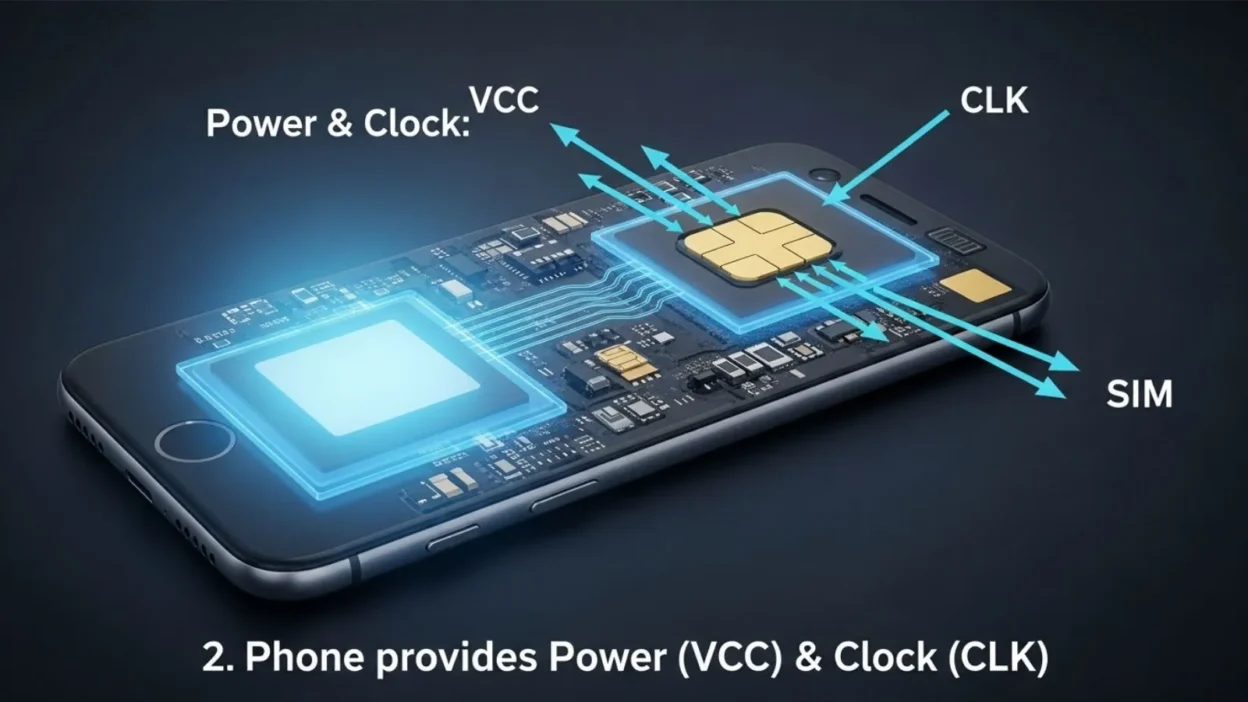
A SIM card acts as the bridge between your mobile device and your carrier’s network, enabling communication and mobile services. When you insert a SIM card into your phone, it contains the information needed to identify and authenticate your device on the network. The key element stored on the SIM is the International Mobile Subscriber Identity (IMSI), which is unique to your account and helps the network recognize you.
Once the SIM card is inserted, your phone sends the IMSI and authentication information to the carrier. The network verifies this data using encryption keys stored on the SIM, ensuring that only authorized users can access mobile services. This authentication process allows your device to make calls, send SMS messages, and use mobile data securely.
The SIM card also manages network connectivity. When you travel or switch networks, the SIM communicates with available towers to establish the best connection, enabling seamless roaming. For example, a SIM card allows your phone to automatically connect to a local network while traveling abroad, without needing to reconfigure your device manually.
Additionally, SIM cards store limited data such as contacts or carrier-specific information, though most modern smartphones rely on cloud storage. Whether it’s a traditional SIM or an eSIM, the card’s secure microchip ensures that all communications remain private and protected. Understanding how a SIM card works highlights its critical role in keeping your phone connected, secure, and functional.
Practical Uses and Tips
Beyond connecting your phone to a mobile network, SIM cards have several practical uses that every smartphone user should know. One common use is switching SIM cards between devices. If you change phones, inserting your SIM card into a new device allows you to retain your phone number, network plan, and in some cases, contacts stored on the SIM. This makes upgrading devices or using multiple phones straightforward.
SIM cards are also essential when traveling or roaming. Your SIM enables your phone to connect to local networks abroad, often automatically, allowing you to continue making calls, sending messages, and using mobile data. Many carriers offer international roaming plans, but the SIM ensures your device can authenticate and access the foreign network securely.
Another important aspect is troubleshooting SIM card issues. Common problems include “SIM not detected” or “no network service.” Often, these issues can be resolved by reinserting the SIM, cleaning the contacts, or contacting your carrier.
SIM card security is equally important. Always protect your SIM from unauthorized access, especially to prevent SIM swapping fraud, which could allow hackers to access your accounts. Modern SIMs, including eSIMs, use encryption to protect your data, but it’s wise to enable PIN codes and avoid sharing your SIM information.
Understanding these practical uses helps you make the most of your SIM card, whether it’s switching devices, traveling, or keeping your mobile communications secure. A small chip like this plays a major role in everyday connectivity.
The Future of SIM Cards
The mobile industry is evolving rapidly, and so is the role of SIM cards. Traditional physical SIMs, such as standard, micro, and nano SIMs, have served us well for decades. However, the rise of eSIM technology is transforming how devices connect to mobile networks. An eSIM is embedded directly into your smartphone, smartwatch, or other connected devices and can be programmed digitally without needing a physical card. This shift allows for more flexibility and convenience in managing mobile subscriptions.
One major advantage of eSIMs is the ability to switch carriers or phone numbers without physically replacing a SIM card. This makes traveling, testing new plans, or managing multiple numbers on a single device much easier. eSIMs also save space in modern devices, enabling manufacturers to design slimmer phones or include larger batteries.
Additionally, as more devices join the Internet of Things (IoT), eSIMs provide a practical solution for connecting multiple devices securely. Wearables, tablets, and smart home gadgets can now maintain constant connectivity without the limitations of physical SIM cards.
The future may even see fully digital mobile subscriptions, where SIM cards, whether physical or embedded, are entirely virtual and managed remotely. This could streamline activation, improve security, and simplify mobile device management globally.
While the physical SIM card will remain in use for some time, the adoption of eSIM technology is a clear sign that SIM cards are evolving to meet the demands of modern connectivity, offering users greater flexibility, security, and convenience.
Frequently Asked Questions (FAQs) About SIM Cards
1. What is a SIM card used for?
A SIM card connects your mobile device to a carrier’s network, allowing you to make calls, send messages, and use mobile data. It also stores your subscriber information securely.
2. Can I use one SIM card in multiple phones?
Yes, you can insert your SIM card into another compatible device to keep your number and network plan. Only one device can use the SIM at a time.
3. What happens if I remove my SIM card?
Without a SIM, your phone cannot access your mobile network. You won’t be able to make calls, send texts, or use mobile data, though emergency calls may still work.
4. How is an eSIM different from a physical SIM?
An eSIM is embedded in your device and can be activated digitally, whereas a physical SIM is removable. eSIMs make it easier to switch carriers or use multiple numbers without changing cards.
5. Can SIM cards store personal data?
Yes, SIMs can store contacts and limited messages, but most modern smartphones store data in the device or cloud instead.
6. How can I protect my SIM card?
Use a PIN code, avoid sharing SIM details, and contact your carrier immediately if your SIM is lost or stolen to prevent unauthorized access.
7. Do SIM cards support roaming?
Yes, SIM cards allow your phone to connect to foreign networks while traveling, often automatically, enabling calls, texts, and mobile data abroad.
Conclusion:
SIM cards may be small, but they play a vital role in keeping our mobile devices connected. From storing subscriber information to authenticating devices on a network, a SIM card ensures that you can make calls, send messages, and access mobile data securely and reliably.
If it’s a traditional physical SIM, a nano SIM, or a modern eSIM, the core functions remain the same: enabling connectivity, protecting your data, and supporting roaming across networks.
Understanding what a SIM card does helps you make better use of your smartphone, troubleshoot common issues, and choose the right SIM type for your needs.
With the rise of eSIM technology, managing multiple numbers, switching carriers, and connecting IoT devices has become easier than ever. Ultimately, this tiny chip is the gateway to mobile communication, and knowing how it works empowers you to stay connected safely, efficiently, and effortlessly.