
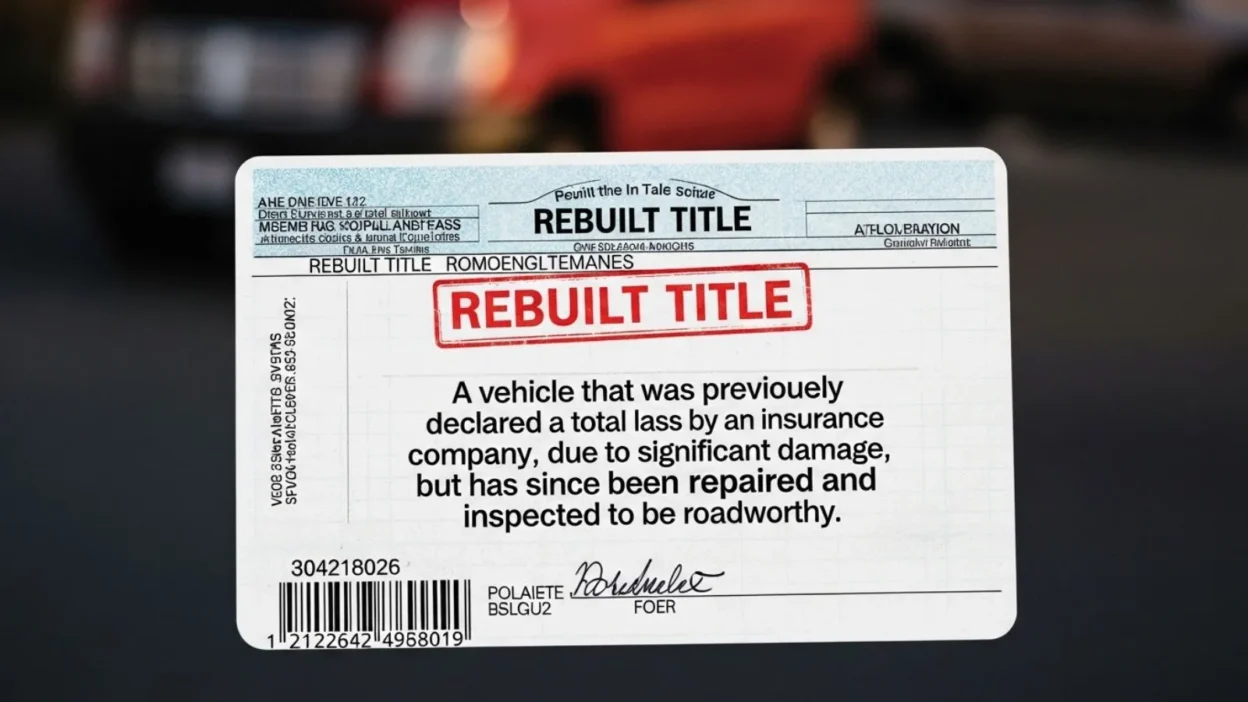
Buying a used car can be exciting, but it can also be confusing, especially when you encounter terms like Rebuilt Title.
If you’ve ever seen this phrase on a vehicle’s paperwork, you might wonder, what does a rebuilt title mean? Simply put, a rebuilt title indicates that a car was once declared a total loss often due to a serious accident, flood, or other major damage but has since been repaired and inspected to meet roadworthy standards.
While a rebuilt title car can be significantly cheaper than a clean title vehicle, it comes with unique considerations for safety, insurance, and resale value.
Understanding the implications of a rebuilt title is crucial for making a smart purchase and avoiding potential pitfalls.
In this article, we’ll break down everything you need to know about rebuilt title cars, from legal definitions to practical buying tips, so you can confidently decide whether one is right for you.
What Causes a Vehicle to Get a Rebuilt Title
A vehicle typically receives a rebuilt title after it has suffered significant damage and was previously declared a total loss by an insurance company. This total loss designation often occurs when the cost of repairing the car exceeds a certain percentage of its market value—commonly 70% to 80%, depending on the state. The damage that leads to a total loss can vary widely, but the most common causes include severe accidents, flooding, fire, or vandalism.
Once a car is declared a total loss, it usually receives a salvage title, which marks it as unfit for regular road use. If the car is repaired properly and passes a state inspection, it can then be reclassified with a rebuilt title, signaling that it has been restored to a roadworthy condition. This repair process often involves replacing or restoring major components such as the frame, engine, transmission, or body panels, and ensuring all safety features like airbags, brakes, and seatbelts function correctly.
It’s important to note that the rules and requirements for obtaining a rebuilt title differ by state. Some states require detailed documentation of repairs, receipts for parts, and inspection reports before reissuing the title. Understanding how a vehicle earned its rebuilt title can give buyers valuable insight into its history, quality of repairs, and potential long-term reliability.
Salvage Title vs. Rebuilt Title
Understanding the difference between a salvage title and a rebuilt title is crucial when buying a used car. Both terms relate to vehicles that have sustained major damage, but they represent different stages in the car’s recovery process.
A salvage title is issued when a car has been declared a total loss by an insurance company due to severe damage, such as a major accident, flood, or fire. This title indicates that the vehicle is not roadworthy and cannot legally be driven until it is repaired and passes inspection. Salvage title cars are often sold at auctions to repair shops or private buyers willing to restore them.
A rebuilt title, on the other hand, is given to a salvage vehicle that has been repaired, restored, and inspected to meet safety and roadworthiness standards. Essentially, it’s a “second chance” for a car that was once considered totaled. A rebuilt title shows that the vehicle is now legally drivable, but it also serves as a permanent record of its prior damage.
While a rebuilt title can make a car more affordable compared to a clean-title vehicle, it also affects its resale value, insurance options, and sometimes financing eligibility. Buyers should carefully review repair documentation and inspection reports before purchasing a rebuilt vehicle. Knowing the distinction between salvage and rebuilt titles ensures that you understand what you’re getting and can make an informed decision when considering a used car.
Legal and Insurance Implications of a Rebuilt Title
Owning or buying a car with a rebuilt title comes with specific legal and insurance considerations that every buyer should understand. Legally, a rebuilt title is a permanent record indicating that the vehicle was once declared a total loss. Each state has its own regulations regarding the registration and inspection of rebuilt vehicles. Most states require a thorough inspection by a licensed mechanic or state agency before the vehicle can be registered for road use. Documentation such as repair receipts and inspection certificates is often mandatory to ensure the car meets safety standards.
From an insurance perspective, rebuilt title cars are treated differently than clean-title vehicles. Many insurance companies offer limited coverage or higher premiums for rebuilt cars because of the potential for hidden damage or higher repair costs in the future. Some insurers may only provide liability coverage rather than full coverage, depending on the car’s history and condition.
For buyers, this means it’s crucial to disclose the rebuilt title when obtaining insurance and to shop around for providers who specialize in insuring rebuilt or salvage-repaired vehicles. Failure to accurately report the title status can result in denied claims or canceled policies.
In addition, selling a rebuilt title car requires full disclosure to potential buyers, as hiding the vehicle’s history can lead to legal consequences. Understanding these legal and insurance implications helps ensure that you remain compliant, protect your investment, and make informed decisions when purchasing a rebuilt title car.
Impact on Vehicle Value
One of the most significant considerations when buying a rebuilt title car is its effect on vehicle value. Cars with rebuilt titles are generally worth 20% to 40% less than comparable vehicles with clean titles, though the exact depreciation varies depending on the make, model, age, and quality of repairs. This lower price can make rebuilt title cars appealing for budget-conscious buyers, but it also means that resale or trade-in value will be substantially reduced compared to a similar car without a damage history.
The impact on value goes beyond just the initial purchase price. Insurance companies often take the rebuilt title into account when determining coverage limits and premiums. Some insurers may limit coverage for rebuilt vehicles or charge higher rates, reflecting the increased risk associated with prior major damage. Additionally, financing a rebuilt title car can be more challenging, as many lenders are hesitant to offer loans for vehicles with this history.
For sellers, a rebuilt title can also affect marketability. Potential buyers may be cautious, even if the car has been fully repaired and inspected. To mitigate this, providing detailed repair documentation, inspection reports, and a complete vehicle history can help reassure buyers and justify the asking price.
Understanding how a rebuilt title affects a car’s value is crucial for both buyers and sellers. While the lower cost can be attractive, it’s essential to weigh the trade-offs in insurance, financing, and long-term resale when considering a rebuilt title vehicle.
How to Check if a Car Has a Rebuilt Title
Before buying a used vehicle, it’s essential to determine whether it has a rebuilt title, as this can significantly impact safety, value, and insurance options. There are several ways to verify a car’s title status and history.
The first step is to obtain a vehicle history report from trusted sources like Carfax or AutoCheck. These reports provide detailed information about past accidents, insurance claims, flood or fire damage, and title changes. Look specifically for mentions of “salvage” or “rebuilt,” which indicate that the vehicle was previously totaled and subsequently repaired.
Another option is to check with your state’s Department of Motor Vehicles (DMV) or equivalent agency. Many states maintain online databases where you can enter the Vehicle Identification Number (VIN) to view title history, including rebuilt or salvage designations. This official documentation is often the most reliable way to confirm a vehicle’s status.
A thorough physical inspection is also critical. Signs of major repairs may include mismatched paint, replaced panels, or uneven gaps between body parts. Consulting a trusted mechanic for a pre-purchase inspection can reveal hidden structural or mechanical issues that might not appear in a history report.
Finally, ask the seller for repair receipts, inspection certificates, and any documentation of the title conversion process. Transparency from the seller is a strong indicator of a well-repaired rebuilt vehicle.
By combining vehicle history checks, DMV verification, and a professional inspection, you can confidently identify a rebuilt title car and make an informed decision before purchasing.
Pros and Cons of Buying a Rebuilt Title Vehicle
Buying a rebuilt title car can offer both advantages and challenges. Understanding these pros and cons helps buyers make an informed decision.
Pros:
One of the main benefits of a rebuilt title vehicle is the lower purchase price. Because the car was previously damaged, it is often significantly cheaper than a comparable clean-title vehicle. For buyers on a budget, this can be an opportunity to get a reliable car at a fraction of the cost. Additionally, if the repairs were done professionally, a rebuilt car can perform just as well as a similar clean-title vehicle. Some buyers also view rebuilt title cars as project vehicles or short-term transportation solutions, where resale value is less important.
Cons:
On the downside, rebuilt title cars come with higher risks. Hidden or future mechanical issues may arise, even if the car appears fully repaired. Insurance coverage can also be limited or more expensive, and some companies may only offer liability coverage. Financing can be challenging as many lenders hesitate to approve loans for rebuilt title vehicles. Additionally, resale value is typically lower, which can be a concern if you plan to sell the car in the future.
Safety considerations are another important factor. While rebuilt cars are legally roadworthy, structural repairs may not always restore the original crashworthiness of the vehicle, making thorough inspections essential.
Ultimately, the decision to buy a rebuilt title car comes down to weighing cost savings against potential risks and ensuring that proper inspections and documentation are in place before purchase.
Practical Tips for Buyers
Purchasing a rebuilt title car requires careful research and preparation to avoid costly mistakes. Here are some practical tips to help you make a safe and informed decision.
1. Review Vehicle History Reports:
Start by obtaining a report from services like Carfax or AutoCheck. These reports provide details about past accidents, insurance claims, flood damage, and title status. Pay close attention to any mention of “salvage” or “rebuilt,” and verify that the repairs were documented.
2. Inspect Documentation:
Ask the seller for all relevant repair receipts, inspection certificates, and title conversion records. Detailed documentation shows that the vehicle was repaired professionally and inspected by state authorities.
3. Conduct a Thorough Inspection:
Even with documentation, a rebuilt vehicle can have hidden issues. Have a trusted mechanic check the frame, engine, suspension, brakes, airbags, and other critical systems. Look for signs of body work, paint inconsistencies, or misaligned panels.
4. Ask the Right Questions:
Inquire about the extent of the damage, parts replaced, and how the vehicle performed after repairs. Honest sellers will provide clear answers and supporting evidence.
5. Consider Insurance and Financing:
Check with multiple insurers to understand coverage options and premiums for rebuilt title cars. If you require financing, confirm that lenders accept rebuilt vehicles.
6. Evaluate Value vs. Risk:
Compare the rebuilt vehicle’s price with similar clean-title cars. Factor in potential maintenance costs and resale value to ensure the deal is worthwhile.
Common Myths About Rebuilt Titles
When it comes to rebuilt title cars, many misconceptions can make buyers hesitant. Understanding the truth behind these myths can help you make a well-informed decision.
Myth 1: Rebuilt Title Cars Are Always Unsafe
While rebuilt vehicles have a history of major damage, a properly repaired car that passes state inspections can be as safe as a clean-title vehicle. Safety depends largely on the quality of repairs and thorough inspections, not just the title itself.
Myth 2: You Can’t Get Insurance for a Rebuilt Title Vehicle
Although some insurers limit coverage options or charge higher premiums, many companies offer liability, collision, and comprehensive coverage for rebuilt cars. It’s important to shop around and disclose the vehicle’s title accurately to ensure proper protection.
Myth 3: Rebuilt Title Means You’re Getting a Bad Deal
Rebuilt title vehicles are often priced lower, which can be a benefit for budget-conscious buyers. With proper inspection and documentation, a rebuilt car can provide reliable transportation at a fraction of the cost of a comparable clean-title vehicle.
Myth 4: Rebuilt Title Cars Cannot Be Resold
While resale value is typically lower than that of clean-title cars, rebuilt vehicles can still be sold. Full documentation of repairs and inspections improves marketability and reassures potential buyers about the car’s condition.
Frequently Asked Questions (FAQs)
1. What does a rebuilt title mean?
A rebuilt title indicates that a vehicle was previously declared a total loss due to major damage but has since been repaired and passed a state inspection to be considered roadworthy.
2. How is a rebuilt title different from a salvage title?
A salvage title is given to a car that has been damaged and is not legally drivable. A rebuilt title is issued after the car is repaired and deemed safe to operate.
3. Are rebuilt title cars safe to drive?
Yes, if properly repaired and inspected, rebuilt title vehicles can be safe. However, it’s important to have a trusted mechanic inspect the car before purchase.
4. Does a rebuilt title affect insurance?
Yes, insurance for rebuilt title cars may be limited or more expensive. Some insurers provide liability coverage only, while others offer full coverage depending on the vehicle’s condition and history.
5. How much is a rebuilt title car worth?
Rebuilt title cars are generally worth 20–40% less than comparable clean-title vehicles due to their damage history and potential resale challenges.
6. Can I finance a rebuilt title car?
Financing can be more difficult, as some lenders hesitate to approve loans for rebuilt title vehicles. It’s best to confirm with your lender before purchasing.
7. How can I verify a car has a rebuilt title?
Check the vehicle history report (Carfax or AutoCheck), consult your state DMV, and review repair documentation and inspection certificates provided by the seller.
Conclusion:
A Rebuilt Title car offers a unique opportunity for buyers to purchase a vehicle at a lower price, but it comes with specific considerations.
Understanding what a rebuilt title means, how it differs from a salvage title, and the impact on safety, insurance, and resale value is essential before making a purchase.
While these vehicles can be reliable and roadworthy when repaired properly, thorough inspections, detailed documentation, and professional assessments are crucial to ensure quality.
Buyers should also be aware of potential limitations in insurance coverage and financing options.
By doing your research, checking the vehicle history, and asking the right questions, you can make an informed decision that balances cost savings with long term reliability and safety.
Ultimately, a rebuilt title car can be a smart choice if approached carefully, offering a budget friendly option without compromising on informed, responsible car ownership.