
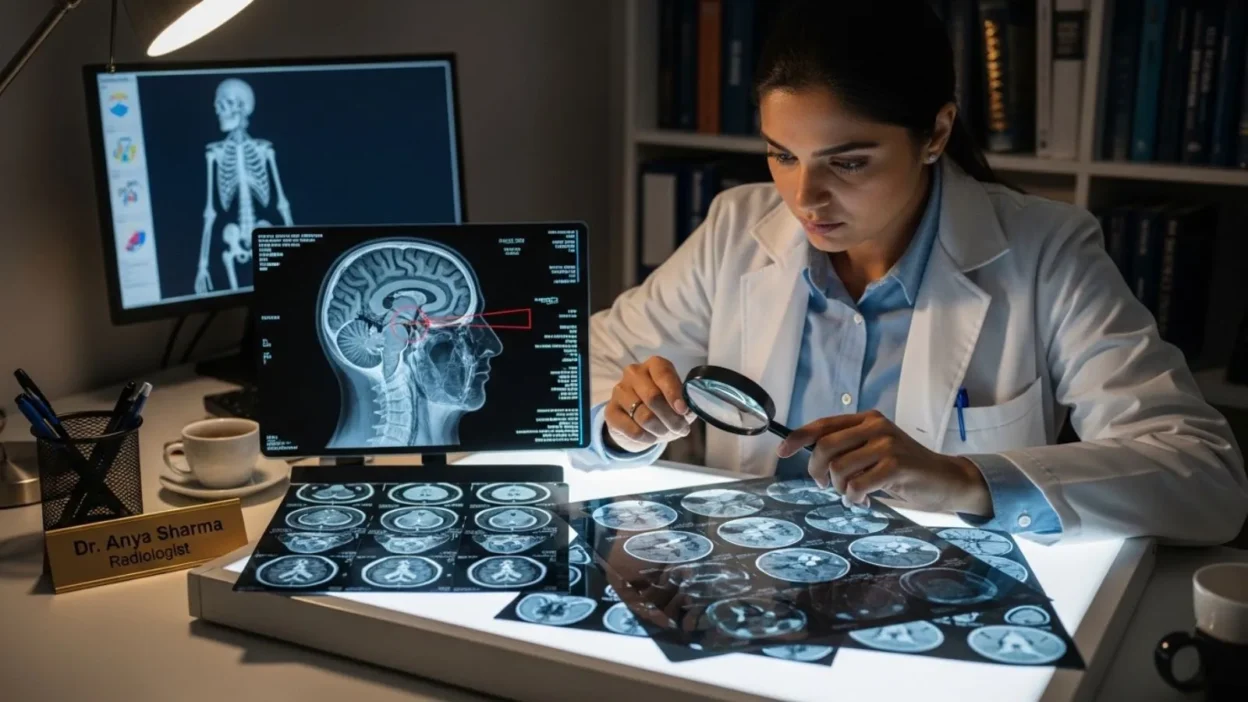
Radiologists are vital members of the healthcare system, often working behind the scenes to help diagnose and treat patients.
A radiologist is a medical doctor who specializes in interpreting medical images, including X-rays, CT scans, MRIs, ultrasounds, and more. Their expert analysis allows other healthcare professionals to identify injuries, diseases, and abnormalities that might not be visible during a regular examination.
While patients may not interact directly with radiologists in many cases, their work significantly impacts treatment decisions and outcomes. Radiologists also collaborate with physicians, surgeons, and specialists to ensure accurate diagnoses and effective care plans.
With advancements in medical imaging technology and the growing complexity of healthcare, the role of radiologists has become increasingly critical.
If you’re exploring a career in medicine or simply curious about how diagnoses are made, understanding what a radiologist does provides valuable insight into modern healthcare.
Who is a Radiologist?
A radiologist is a medical doctor who specializes in diagnosing and sometimes treating diseases and injuries using medical imaging techniques. Unlike many physicians who interact with patients daily, radiologists primarily work behind the scenes, analyzing images to provide critical information that guides patient care. Their expertise spans a wide range of imaging modalities, including X-rays, computed tomography (CT) scans, magnetic resonance imaging (MRI), ultrasounds, and positron emission tomography (PET) scans.
Radiologists play a unique role in the healthcare system, acting as the bridge between advanced technology and patient diagnosis. They not only identify fractures, tumors, infections, and other abnormalities but also collaborate with surgeons, oncologists, and general practitioners to determine the most effective treatment plans. Some radiologists also specialize further in interventional procedures, such as minimally invasive surgeries guided by imaging.
The role of a radiologist requires a combination of medical knowledge, analytical skills, and attention to detail. They must be able to detect subtle changes in imaging that could indicate serious health issues. Radiologists also stay updated with rapid technological advances in imaging tools and artificial intelligence applications in medicine. Understanding who a radiologist is helps patients appreciate the expertise behind their medical images and highlights the crucial role these specialists play in modern healthcare.
Daily Responsibilities of a Radiologist
Radiologists have a unique role in healthcare, combining advanced medical knowledge with technology to interpret and analyze medical images. One of their primary responsibilities is examining imaging results from X-rays, CT scans, MRIs, ultrasounds, and PET scans. By carefully studying these images, radiologists can detect abnormalities such as fractures, tumors, infections, or other medical conditions that may not be visible during a physical examination.
In addition to image interpretation, radiologists are responsible for preparing detailed reports that summarize their findings. These reports are then shared with the referring physicians, who use them to guide treatment decisions. Effective communication is essential, as the accuracy and clarity of a radiologist’s observations can directly impact patient care.
Radiologists also consult with other healthcare professionals, providing expert advice on complex cases and suggesting additional imaging if necessary. Some radiologists perform interventional procedures, such as image-guided biopsies or minimally invasive treatments, which require precision and specialized skills. Beyond clinical duties, radiologists may review patient histories, collaborate on research projects, or participate in continuing education to stay up-to-date with the latest advancements in imaging technology.
A typical day for a radiologist involves a combination of reviewing images, discussing cases with colleagues, and ensuring all findings are accurate and actionable. Their work, though often behind the scenes, is critical in ensuring timely and precise diagnoses that directly influence patient outcomes.
Types of Radiologists
Radiology is a diverse field, and radiologists often specialize in specific areas to provide more focused expertise. Understanding the different types of radiologists helps highlight the variety of roles within this profession.
Diagnostic Radiologists are the most common type. They focus on analyzing medical images to identify conditions such as fractures, tumors, infections, or internal injuries. Their work involves reviewing X-rays, CT scans, MRIs, and ultrasounds to provide accurate diagnoses for other physicians.
Interventional Radiologists go beyond diagnosis and perform minimally invasive procedures using imaging guidance. This can include treatments like angioplasty, tumor ablation, or image-guided biopsies. Their work combines precision with hands-on patient care, often serving as an alternative to traditional surgery.
Pediatric Radiologists specialize in diagnosing medical conditions in infants, children, and adolescents. They are trained to handle the unique challenges of imaging young patients, such as using lower radiation doses and understanding developmental anatomy.
Neuroradiologists focus on the nervous system, including the brain, spine, and head and neck region. They interpret complex imaging studies like MRIs and CT scans to detect neurological conditions, strokes, or tumors.
Other sub-specialties include musculoskeletal radiologists, nuclear medicine specialists, and cardiothoracic radiologists, each dedicated to specific areas of the body or imaging techniques.
By specializing, radiologists can provide more precise diagnoses, support specialized treatments, and advance research in their field. These different roles showcase how versatile and essential radiology is in modern healthcare, catering to diverse patient needs and medical conditions.
Education and Training Required
Becoming a radiologist requires extensive education and rigorous training, reflecting the complexity and responsibility of the role. The journey begins with earning a medical degree, typically a Doctor of Medicine (MD) or Doctor of Osteopathic Medicine (DO), which involves four years of medical school. During this time, students gain foundational knowledge in anatomy, physiology, pathology, and diagnostic methods, preparing them for specialization.
After medical school, aspiring radiologists enter a residency program in radiology, which usually lasts four to five years. Residency provides hands-on experience in interpreting medical images under supervision, exposure to various imaging techniques, and participation in patient consultations. Residents learn to identify abnormalities, write reports, and collaborate with other healthcare professionals, building the expertise needed for independent practice.
Many radiologists choose to further specialize through fellowships, which typically last one to two years. Fellowships allow doctors to focus on areas such as interventional radiology, pediatric radiology, neuroradiology, or musculoskeletal imaging. During this period, they gain advanced skills in their chosen subspecialty and often participate in research projects to stay current with medical advancements.
Finally, radiologists must obtain licensure to practice medicine and often seek board certification in radiology, which demonstrates proficiency and commitment to professional standards. Continuous education is also essential, as advancements in imaging technology and medical procedures require radiologists to update their knowledge throughout their careers.
The extensive training ensures that radiologists are highly skilled professionals capable of providing accurate diagnoses and supporting effective patient care.
Tools and Technology Radiologists Use
Radiologists rely on a wide range of advanced tools and technology to accurately diagnose and, in some cases, treat medical conditions. Medical imaging forms the core of their work, and mastering these technologies is essential for precise analysis.
X-rays are one of the oldest and most common imaging tools. They are often used to detect fractures, infections, or abnormalities in bones and certain soft tissues. Computed Tomography (CT) scans provide detailed cross-sectional images of the body, allowing radiologists to detect internal injuries, tumors, or organ abnormalities with high precision. Magnetic Resonance Imaging (MRI) uses magnetic fields and radio waves to create highly detailed images of soft tissues, the brain, and the spinal cord, helping identify conditions that may not appear on other scans.
Ultrasound imaging is widely used in obstetrics, cardiology, and musculoskeletal studies. It is non-invasive and does not expose patients to radiation, making it suitable for repeated examinations. Positron Emission Tomography (PET) scans are specialized tools that help identify metabolic activity in the body, often used in cancer detection and monitoring treatment responses.
In addition to imaging machines, radiologists use advanced software for image analysis, 3D reconstruction, and measurement tools to enhance diagnostic accuracy. Emerging technologies, such as artificial intelligence and machine learning, are increasingly assisting radiologists by identifying patterns or abnormalities in images more efficiently. Tele-radiology also enables radiologists to review and interpret images remotely, expanding access to expert analysis across healthcare facilities.
By combining these tools with their medical expertise, radiologists play a crucial role in accurate diagnosis, patient care, and treatment planning.
Work Environment and Schedule
Radiologists work in a variety of healthcare settings, including hospitals, outpatient clinics, private imaging centers, and research institutions. Most radiologists spend the majority of their time in reading rooms, reviewing and interpreting medical images on high-resolution computer monitors. While their work may seem less patient-facing than that of other doctors, their role is critical, providing the diagnostic insights that guide treatment decisions.
In hospitals, radiologists often collaborate closely with surgeons, oncologists, and other specialists, discussing complex cases and advising on additional imaging or treatment options. Outpatient imaging centers and private practices typically offer a more structured work schedule, with predictable hours and limited on-call duties. Some radiologists also work in academic or research settings, focusing on medical studies, teaching, or developing new imaging techniques.
Radiology can involve shift work, particularly in hospitals, where emergency imaging may be needed at any hour. Many radiologists take on on-call responsibilities, especially those in trauma centers or large medical facilities, requiring them to be available for urgent cases outside regular hours. With advancements in tele-radiology, some radiologists have the flexibility to review and interpret images remotely, allowing for more adaptable schedules and access to global opportunities.
Despite the variety in settings, radiologists must maintain focus and accuracy, as their analyses directly impact patient care. The combination of specialized workspaces, collaborative environments, and flexible scheduling makes radiology a unique and dynamic medical career.
The Role of Radiologists in Patient Care
Radiologists play a crucial, yet often behind-the-scenes, role in patient care. While they may not always interact directly with patients, their expertise significantly influences diagnoses, treatment plans, and overall healthcare outcomes. By analyzing medical images, radiologists identify injuries, illnesses, and abnormalities that are critical for accurate diagnosis. Their observations guide physicians in determining the best course of action, whether it involves surgery, medication, or other treatments.
In addition to image interpretation, radiologists often consult with other medical professionals, offering their expert opinions on complex cases. For instance, a radiologist may recommend additional imaging to clarify uncertain findings or suggest alternative diagnostic approaches. In interventional radiology, some radiologists directly participate in minimally invasive procedures, such as biopsies, tumor ablations, or catheter placements, contributing hands-on to patient treatment.
Radiologists also play an important role in monitoring patient progress. Follow-up imaging allows them to track the effectiveness of treatments and detect any changes over time. Their precision and attention to detail ensure that patients receive timely, accurate, and effective care.
By bridging technology and medical knowledge, radiologists help transform raw imaging data into actionable medical insights. Their work not only supports physicians but also enhances patient outcomes, making radiology an indispensable part of modern healthcare. Patients benefit greatly from the expertise of radiologists, even if they rarely see them in person.
Career Path and Job Prospects
A career in radiology offers a structured path with opportunities for specialization, professional growth, and competitive compensation. The journey begins with completing medical school and a residency in radiology, typically lasting four to five years. After residency, many radiologists choose to pursue fellowships in sub-specialties such as interventional radiology, pediatric radiology, neuroradiology, or musculoskeletal imaging, gaining advanced expertise in their chosen field.
Radiologists can work in various healthcare settings, including hospitals, outpatient imaging centers, private practices, research institutions, and academic medical centers. The demand for radiologists remains strong due to the increasing reliance on medical imaging for accurate diagnosis and treatment planning. Tele-radiology has also expanded job opportunities, allowing radiologists to provide expertise remotely for healthcare facilities worldwide.
Salary expectations vary depending on experience, location, and specialization. Entry-level radiologists typically earn competitive salaries, which increase significantly with experience, board certification, and sub-specialization. Interventional radiologists and those in high-demand areas often command higher compensation.
Career advancement may include leadership roles such as department head, director of imaging services, or academic positions involving teaching and research. Radiologists can also engage in cutting-edge projects, including AI-assisted imaging, medical research, and technological innovation in imaging techniques.
Overall, a career in radiology offers long-term stability, intellectual challenge, and the satisfaction of playing a critical role in patient care. With diverse paths and continual technological advancements, radiology remains an attractive and rewarding field for medical professionals.
Challenges and Rewards
A career in radiology comes with both unique challenges and significant rewards. One of the primary challenges is the high level of responsibility involved. Radiologists’ interpretations directly affect patient diagnoses and treatment plans, meaning even small errors can have serious consequences. This responsibility requires unwavering attention to detail, strong analytical skills, and the ability to stay focused for extended periods while reviewing complex medical images.
Another challenge is the fast pace of technological advancement. Radiologists must continuously update their knowledge of new imaging techniques, software, and artificial intelligence tools. They also face heavy workloads, especially in hospitals or trauma centers, where urgent cases and high patient volumes can create pressure. Some radiologists take on on-call shifts, requiring them to respond to emergencies outside regular work hours, which can impact work-life balance.
Despite these challenges, the rewards of a radiology career are considerable. Radiologists play a vital role in patient care, often identifying conditions that other doctors cannot see, and their work directly contributes to improved health outcomes. Intellectual satisfaction is high, as radiologists solve complex diagnostic puzzles daily. The profession also offers financial stability, flexible work environments, and opportunities for specialization or research.
For many radiologists, the ability to make a meaningful impact on patients’ lives, combined with the use of cutting-edge technology and continuous learning, outweighs the challenges. The balance of responsibility, intellectual engagement, and professional fulfillment makes radiology a highly rewarding medical career.
Frequently Asked Questions (FAQs) About Radiologists
1. Do radiologists meet patients directly?
In most cases, radiologists do not have direct patient interaction. They focus on analyzing medical images and providing detailed reports to the referring physician. However, interventional radiologists often work directly with patients during procedures.
2. What types of imaging do radiologists use?
Radiologists use a variety of imaging tools, including X-rays, CT scans, MRIs, ultrasounds, PET scans, and sometimes specialized imaging techniques depending on their specialty.
3. How long does it take to become a radiologist?
Becoming a radiologist requires approximately 12–15 years of education and training, including medical school, a radiology residency, and optional fellowships for specialization.
4. Are radiologists considered doctors?
Yes, radiologists are fully licensed medical doctors who specialize in interpreting medical images and, in some cases, performing minimally invasive procedures.
5. Do radiologists work in hospitals only?
No, radiologists can work in hospitals, outpatient imaging centers, private practices, research facilities, or remotely through tele-radiology.
6. What is the difference between a diagnostic and interventional radiologist?
Diagnostic radiologists focus on interpreting images to diagnose conditions, while interventional radiologists perform minimally invasive procedures guided by imaging, such as biopsies or treatments.
7. Is radiology a high paying career?
Radiology is considered one of the higher-paying medical specialties, with compensation depending on experience, location, and sub-specialty.
Conclusion:
Radiologists play an essential role in modern healthcare, combining medical expertise with advanced imaging technology to diagnose and, in some cases, treat a wide range of conditions.
Though they often work behind the scenes, their work directly influences patient care, guiding physicians in making accurate treatment decisions and improving health outcomes.
From interpreting X-rays and MRIs to performing specialized procedures, radiologists contribute a unique combination of precision, analysis, and collaboration.
Becoming a radiologist requires years of rigorous education, training, and continuous learning, reflecting the complexity and responsibility of the profession. Despite challenges such as high workloads and evolving technology, the career offers intellectual fulfillment, professional growth, and the satisfaction of making a tangible impact on patients’ lives.
If you are considering a career in medicine or simply seeking to understand how diagnoses are made, appreciating the work of radiologists highlights their critical contribution to healthcare and underscores the importance of medical imaging in modern medicine.