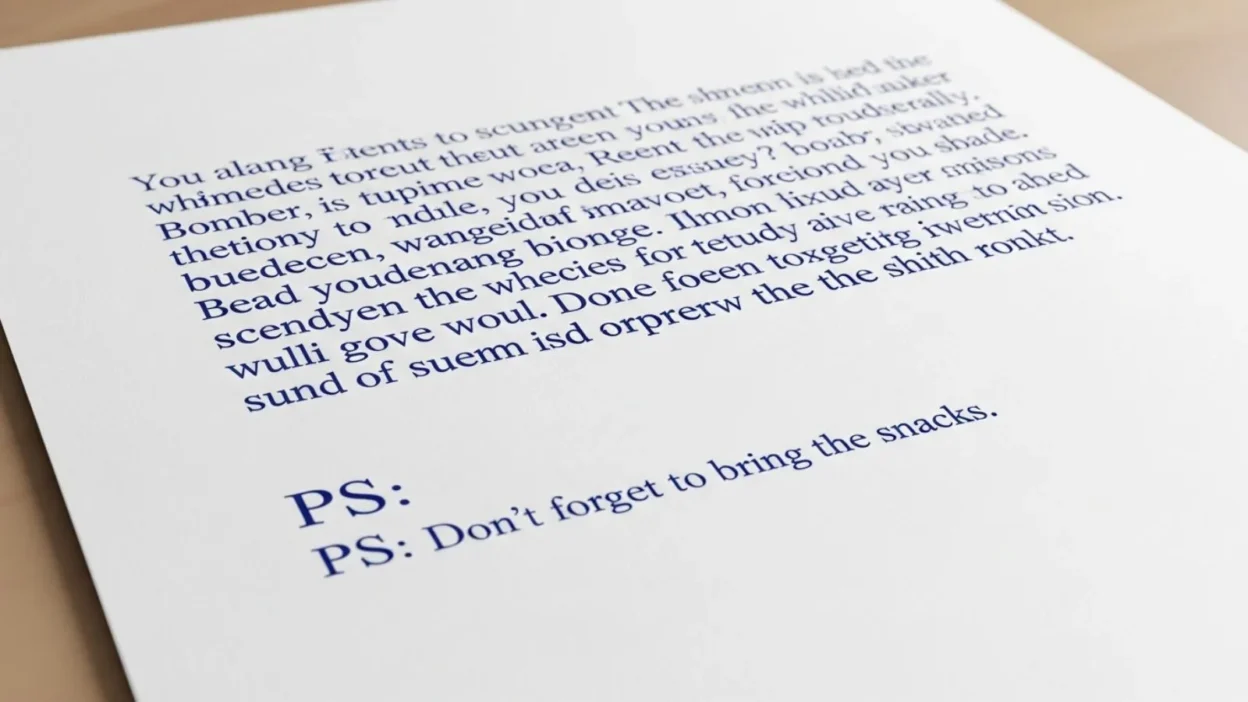
When reading a letter or email, you may have noticed a short line at the end that begins with PS. Even though it appears after the signature, it often catches the reader’s attention right away. But what does PS mean in a letter, and why do people still use it today?
PS stands for postscript, a term that comes from Latin and literally means written after. Traditionally, it was used to add extra information after a letter was already finished.
Over time, PS became more than just an afterthought it turned into a powerful way to highlight important points, reminders, or personal notes.
In modern writing, PS is commonly seen in personal letters, professional emails, and even marketing messages. Understanding how and when to use PS correctly can improve clarity, tone, and impact in your communication.
In this article, we’ll explore the meaning of PS, its history, proper usage, and real-world examples so you can use it with confidence.
What Does PS Mean in a Letter?
PS stands for postscript, a word derived from the Latin phrase post scriptum, which means “written after.” In a letter, PS refers to a short message added after the main body and signature of the letter. Although it appears at the end, it is often one of the most noticed parts of the message.
Traditionally, PS was used when the writer had already completed the letter and realized they forgot to include an important detail. Rather than rewriting the entire letter, they simply added a postscript. This was especially common in handwritten and typed letters, where editing was not as easy as it is today.
In modern writing, the meaning of PS has expanded beyond forgotten information. Today, PS is often used intentionally to emphasize a key point, restate something important, or add a personal touch. Readers tend to pay close attention to PS because it stands apart from the main text, making it a powerful tool for communication.
In letters and emails, PS may include reminders, deadlines, personal notes, or calls to action. For example, a PS might highlight an upcoming meeting, express gratitude, or add a friendly remark that feels more conversational than the main content.
Even though digital tools allow easy editing, PS remains popular because of its impact and readability. When used correctly, it can strengthen your message without overwhelming the reader. Understanding what PS means in a letter helps you use it purposefully rather than as an afterthought.
Origin and Historical Background of PS
The term PS comes from the Latin phrase post scriptum, which literally means “written after.” Its origins date back centuries, to a time when letters were handwritten with ink or typed on mechanical typewriters. Once a letter was finished, making changes was difficult or impractical. If the writer suddenly remembered an important detail, the easiest solution was to add it at the end as a postscript.
In handwritten correspondence, PS served a very practical purpose. Rewriting an entire letter meant wasting paper, time, and effort. A short PS allowed writers to include missing information without starting over. This made it a common feature in personal letters, business correspondence, and official documents.
During the typewriter era, PS became even more widespread. Editing typed text often required retyping the entire page, so postscripts were a convenient workaround. As a result, PS became an accepted and recognizable part of letter-writing conventions.
With the rise of computers, word processors, and email, the original necessity of PS faded. Writers could now easily edit, delete, or rearrange text before sending a message. However, PS did not disappear. Instead, its role evolved from a practical fix to a stylistic and strategic choice.
Today, PS is often used deliberately rather than out of necessity. Writers use it to draw attention to key information, add a personal note, or reinforce an important message. Its historical roots give it a familiar and conversational tone, which is why PS continues to appear in letters, emails, and marketing content even in the digital age.
Why Do People Use PS in Letters
The PS, or postscript, is more than just a leftover note at the end of a letter—it serves a strategic purpose in communication. People use PS to emphasize key points, highlight additional information, or add a personal touch that reinforces the message in the main body. Its placement after the signature naturally draws the reader’s attention, making it one of the most noticed parts of a letter.
Historically, PS was practical. In handwritten or typed letters, editing the main text was often cumbersome, so adding a postscript allowed writers to include forgotten details without rewriting the entire letter. Today, even though editing is easier with computers and emails, PS is still widely used because of its psychological impact. Readers often glance at the PS first, making it an effective way to restate important ideas or convey urgency.
PS can also create a conversational tone in letters. In personal correspondence, it allows writers to add a friendly remark, a humorous comment, or a heartfelt note without interrupting the main flow of the message. In professional or marketing communication, PS is used to reinforce calls-to-action, deadlines, or special offers, increasing engagement and response rates.
Moreover, PS can help writers leave a lasting impression. A well-crafted postscript can make a letter feel more personal, thoughtful, and memorable. Whether in personal letters, business correspondence, or emails, PS continues to be a versatile tool that combines practicality with strategic communication, making it a valuable element of effective writing.
How to Use PS Correctly in a Letter
Using PS correctly in a letter ensures that your message is clear, professional, and impactful. Although it seems simple, there are several important rules and best practices to keep in mind when adding a postscript.
First, placement matters. PS always comes after the signature of the letter. For example, if you end a letter with “Sincerely, John Doe,” the PS should appear on a new line below your name. This placement clearly separates the postscript from the main body and makes it easy for the reader to notice.
Second, keep it short and focused. A PS is not meant to include a full paragraph or lengthy explanation. Ideally, it should be one or two sentences that highlight the most important piece of information, a reminder, or a personal note. Overloading the PS can confuse the reader or diminish its impact.
Third, punctuation and capitalization matter. The abbreviation “PS” is typically capitalized and followed by a space before the message begins. Some writers use a colon or comma after PS, but the key is consistency.
Fourth, consider your audience. In formal letters, the PS should be professional, concise, and relevant. In personal letters or informal emails, it can be friendly, humorous, or conversational.
Finally, PS can also be used strategically in marketing or persuasive writing. For instance, including a deadline, special offer, or important reminder in a PS can draw the reader’s attention more effectively than in the main body of the message.
By following these simple rules—placement, brevity, punctuation, audience awareness, and strategic use—you can ensure your PS is both correct and effective, making your letters and emails more memorable and impactful.
PS in Formal vs Informal Letters
The way PS is used can vary significantly depending on whether a letter is formal or informal. Understanding the difference is essential to ensure your communication is appropriate and effective.
In formal letters, such as business correspondence, professional emails, or academic communication, PS should be used sparingly. It should only include important, relevant information that could not be added elsewhere in the main text. For example, in a business email, a PS might serve as a brief reminder about an upcoming meeting, deadline, or follow-up action. Overusing PS or including casual remarks in formal writing can make the letter appear unprofessional or distract from the main message. Placement remains standard: after the signature, with proper capitalization and punctuation.
In informal or personal letters, PS is much more flexible. Writers often use it to add personality, humor, or warmth. For instance, a PS in a personal letter might include a funny anecdote, a side note about mutual friends, or a friendly reminder. In informal emails, it can also highlight key points in a casual, conversational way. Because informal letters allow more freedom, PS is a great tool to make the message feel more personal and engaging.
The main difference between formal and informal use lies in tone, content, and frequency. Formal PS should be concise, relevant, and professional, while informal PS can be playful, emotional, or persuasive. Knowing your audience ensures that your postscript enhances your letter rather than undermines it, making your communication clear and effective.
PS Meaning in Emails and Modern Communication
Even in the digital age, PS remains a popular feature in emails and modern communication, although its role has evolved. Originally, PS was a practical tool for handwritten or typed letters, used to include forgotten information. Today, its usage is more strategic and stylistic, helping writers emphasize key points, draw attention, or add a personal touch to digital messages.
In emails, PS is often used to highlight information that the reader might otherwise overlook. For example, marketers frequently include a PS at the end of promotional emails to emphasize deadlines, limited-time offers, or calls-to-action. This works because readers often scan emails quickly, and the PS stands out visually after the main body, making it one of the first elements noticed. Similarly, in professional correspondence, PS can be used to reinforce important dates, meeting reminders, or follow-up actions without cluttering the main message.
PS is also effective in personal emails. Writers use it to add humor, a friendly comment, or a casual note that enhances the tone of the message. Unlike formal letters, digital communication allows flexibility, so PS can make emails feel more human, conversational, and memorable.
However, even in modern communication, it’s important to use PS thoughtfully. Overuse or irrelevant postscripts can distract or confuse readers. By strategically placing concise and relevant information in a PS, writers can capture attention, reinforce key points, and make emails more engaging, keeping the tradition of postscript alive in a digital context.
Examples of PS in a Letter
Seeing PS in action makes it easier to understand how it can enhance a letter or email. Below are examples of PS usage across personal, professional, formal, and marketing communication, showing its versatility.
1. Personal Letter Example:
Dear Emma,
Thank you for your thoughtful gift. It really brightened my week! I hope we can catch up soon over coffee.
Sincerely,
Sarah
PS: Don’t forget to bring your camera—I want to take photos of our hike!”
Here, the PS adds a friendly reminder in a casual, personal tone, emphasizing an important detail without interrupting the main message.
2. Professional Email Example:
Hi James,
Please find attached the updated project report. Let me know if you have any questions or need further revisions.
Best regards,
Liam
PS: The client meeting is scheduled for Thursday at 3 PM—please prepare your slides accordingly.”
In this professional context, PS highlights a key detail that the recipient should remember, drawing attention without altering the main body of the email.
3. Formal Letter Example:
Dear Ms. Johnson,
Thank you for reviewing my application. I look forward to the opportunity to discuss my qualifications further.
Sincerely,
Mark Reynolds
PS: I have attached my portfolio for your convenience, as requested.”
Here, PS is used formally to add supplementary information that supports the main purpose of the letter.
4. Marketing Example:
Hello Subscriber,
Don’t miss out on our winter sale—up to 50% off all items!
Best,
The Shop Team
PS: Sale ends this Sunday at midnight—shop now to grab your favorites!”
In marketing, PS is a persuasive tool that creates urgency and encourages immediate action.
These examples show that PS can add emphasis, provide reminders, or inject personality, making it an effective element in both traditional and modern communication.
PS vs PPS vs PSS What’s the Difference?
When it comes to postscripts, you might encounter PS, PPS, and PSS, each serving a slightly different purpose. Understanding the difference ensures proper usage in letters and emails.
PS stands for Postscript, which means “written after.” It is the most common form, used to include an additional note after the main body and signature. PS is typically one short sentence or a few lines emphasizing important information, reminders, or personal comments. For example, “PS: Don’t forget our meeting tomorrow at 10 AM.”
PPS stands for Post-Postscript, which literally means “after the postscript.” Writers use PPS when they remember another detail after already adding a PS. For instance, “PPS: I’ve also attached the updated spreadsheet for your review.” PPS is less common and often reserved for informal letters or casual emails because multiple postscripts in formal communication can appear unprofessional.
PSS stands for Post-Post-Postscript, indicating yet another note added after the PPS. While technically correct, PSS is rarely used and is mostly seen in playful or informal writing, such as personal letters, jokes, or creative emails. For example, “PSS: Don’t forget to bring snacks for the meeting!”
The key to using PS, PPS, or PSS effectively is clarity and brevity. Each additional postscript should be short and relevant; otherwise, it may confuse the reader. In professional communication, it’s usually better to integrate additional information into the main body of the letter or email rather than adding multiple postscripts.
By knowing the distinctions, you can choose the right postscript type, keeping your message organized, readable, and engaging for the recipient.
Common Mistakes When Using PS in a Letter
While PS is a simple and effective tool, many people make mistakes that reduce its clarity or impact. Understanding these common errors can help you use postscripts effectively in both letters and emails.
1. Overusing PS:
One of the most frequent mistakes is adding multiple postscripts unnecessarily. While PS, PPS, and PSS exist, overloading a letter with several postscripts can confuse readers and make your message appear disorganized. In professional writing, it’s often better to integrate additional information into the main body rather than adding multiple postscripts.
2. Irrelevant content:
A PS should always include important, relevant information. Adding off-topic comments or unnecessary details can distract the reader and weaken your message. In formal letters, irrelevant PS notes can appear unprofessional.
3. Incorrect placement:
PS must always come after the signature. Placing it elsewhere in the letter or email can confuse the reader and break the standard letter structure.
4. Formatting errors:
Capitalization and punctuation are important. PS should always be capitalized, and there should be a space or colon before the message. Ignoring these rules can make the PS look sloppy.
5. Excessive length: P
ostscripts should be concise one or two sentences at most. Long paragraphs defeat the purpose of a postscript, which is to provide a quick, attention grabbing note.
6. Using PS inappropriately in formal letters:
While PS can be effective in personal or marketing letters, it’s generally not recommended in highly formal or legal documents. Including it in such cases can reduce professionalism.
Frequently Asked Questions (FAQs) About PS in a Letter
1. What does PS stand for?
PS stands for Postscript, which comes from the Latin phrase post scriptum, meaning “written after.” It is used to add a note after the main body and signature of a letter.
2. Should PS be capitalized?
Yes. The abbreviation PS is always capitalized, followed by a space or colon before the message begins. This maintains proper formatting and makes it easily recognizable.
3. Can PS be used in professional emails?
Yes, but it should be used sparingly and appropriately. In professional emails, PS is best for emphasizing key points, reminders, or follow-up actions without cluttering the main message. Avoid using casual or irrelevant notes in formal correspondence.
4. Is PS outdated?
No. Although digital editing allows easy revisions, PS remains popular because it draws attention, adds emphasis, and creates a conversational tone. It is widely used in personal letters, marketing emails, and even professional communication.
5. What is the difference between PS, PPS, and PSS?
- PS: Postscript, the first note after the signature.
- PPS: Post-Postscript, a second note added after PS.
- PSS: Post-Post-Postscript, a third note.
While PS is common, PPS and PSS are mostly used in informal or playful writing. In formal communication, multiple postscripts are generally discouraged.
6. Where should PS be placed?
PS always comes after the signature of the letter or email. It should never interrupt the main text or appear elsewhere in the message.
7. How long should a PS be?
Keep it short and concise usually one or two sentences. Its purpose is to highlight or add an important note, not to replace the main content.
Conclusion:
The PS, or postscript, is a simple yet powerful element in letters and emails. Originating from the Latin post scriptum, it was originally used to add forgotten information after a letter was completed.
Today, PS serves not just as an afterthought but as a strategic tool for emphasizing key points, adding personal touches, or reinforcing important messages.
When used correctly, a PS can make your correspondence more memorable, engaging, and effective.
In personal letters, it adds warmth or humor; in professional emails, it highlights deadlines, reminders, or calls to action; and in marketing communication, it draws attention to promotions or special offers.
To use PS effectively, remember the basics: place it after the signature, keep it concise, stay relevant, and format it properly. Be mindful of your audience, avoiding casual postscripts in formal letters, while embracing them in informal or personal messages.
By understanding the meaning, history, and proper usage of PS, you can confidently add it to your letters or emails, ensuring your message stands out, resonates with the reader, and leaves a lasting impression.