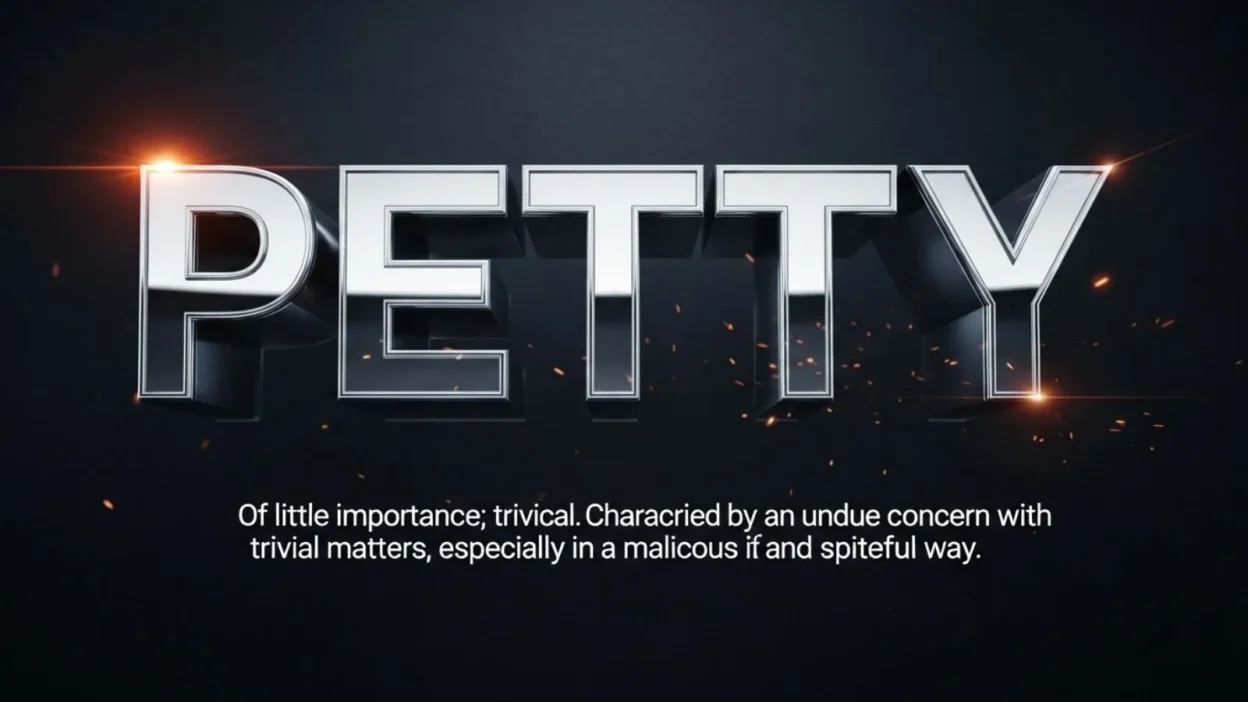
The word petty has become increasingly common in conversations, social media, and even pop culture.
But what does it really mean when someone calls a person or behavior petty? At its core, petty refers to something trivial, minor, or insignificant, but over time, it has also taken on a more personal meaning describing someone who is small minded, spiteful, or overly concerned with minor details.
Understanding the term is important because it can be used in both neutral and negative contexts.
For example, petty cash or petty details are harmless, everyday terms, while describing a person as petty can hint at negative traits. In modern slang, petty is often used playfully to tease someone for overreacting to small matters.
This article will explore the full meaning of petty, its origins, how it’s used in language and culture, and how to recognize and respond to petty behavior in daily life.
Origin and Etymology of Petty
The word “petty” has a long history, dating back several centuries. Its roots lie in the Old French word “petit”, which literally means “small” or “little.” The term entered the English language around the 14th century, initially used to describe objects or matters of minor importance. Over time, its use expanded beyond size or significance to include behavior and personality traits.
In historical English literature, “petty” was often used to describe trivial matters, small crimes, or minor financial dealings. For instance, terms like petty cash or petty theft highlighted things that were small in scale but still noteworthy. The focus was on the insignificance rather than moral judgment.
By the 17th and 18th centuries, “petty” had begun to take on a more personal dimension, describing people who were narrow-minded, spiteful, or overly concerned with insignificant details. This evolution mirrors how language naturally shifts, adapting words from literal descriptions to more figurative, behavioral meanings.
Today, “petty” retains both its original and evolved meanings. While it can still refer to minor or insignificant things, it is also widely used in social interactions to describe behavior that is unnecessarily small-minded or spiteful. Understanding this origin helps clarify why “petty” can be both neutral and negative, depending on the context.
Core Definition of Petty
At its most basic level, “petty” refers to something trivial, minor, or of little importance. This can apply to situations, objects, or matters that are insignificant in the bigger picture. For example, people often use the term in phrases like “petty details” or “petty disagreement”, highlighting that the matter is not worth major concern or attention. In this sense, the word is largely neutral, simply describing something small or minor.
However, the meaning of “petty” expands when applied to people or behavior. A petty person is someone who tends to overemphasize minor issues, hold grudges over small slights, or react disproportionately to trivial matters. In this context, the term carries a negative connotation, suggesting small-mindedness or pettiness. For instance, if someone repeatedly brings up minor mistakes or criticizes insignificant details, they might be called petty.
It’s also important to distinguish between being petty and being careful or detail-oriented. While attention to detail is generally positive, petty behavior focuses on insignificant matters to belittle, criticize, or control others, rather than for constructive purposes.
In modern language, both the neutral and negative meanings of petty coexist. It can describe minor issues, like petty cash or petty tasks, or negative personality traits, like jealousy or spitefulness over trivial matters. Understanding the context is key to interpreting whether “petty” is being used descriptively or critically.
Petty as a Personality Trait
When describing a person, “petty” takes on a more negative meaning, referring to someone who is small-minded, vindictive, or overly concerned with trivial matters. A petty person often focuses on minor slights, perceived insults, or insignificant details, blowing them out of proportion. This behavior can make social interactions tense, as petty individuals may hold grudges, criticize unnecessarily, or engage in passive-aggressive actions.
Petty behavior often appears in personal relationships, workplaces, and social settings. For example, someone who constantly brings up a tiny mistake from years ago, or complains about inconsequential details in a group project, may be described as petty. Similarly, in friendships or romantic relationships, a petty individual might react negatively to small disagreements, creating conflict over things most people would consider insignificant.
It’s important to recognize that petty traits exist on a spectrum. Some people may display minor pettiness occasionally, often in playful or humorous ways, while others consistently exhibit behaviors that are manipulative, jealous, or controlling. Understanding this spectrum helps differentiate harmless teasing from genuinely harmful behavior.
Petty behavior is often fueled by insecurity, jealousy, or a desire for control. Recognizing it can help you respond more effectively, whether by setting boundaries, choosing not to engage, or addressing the behavior calmly. By understanding petty traits, we can better navigate social situations and maintain healthier relationships without getting dragged into unnecessary conflicts.
Petty in Modern Slang and Pop Culture
In recent years, the word “petty” has taken on a new life in modern slang and pop culture, especially on social media platforms like Twitter, Instagram, and TikTok. Today, it is often used to describe someone who overreacts to minor issues, teases others over small matters, or displays playful competitiveness. Unlike the traditional negative connotation, this usage can be humorous or lighthearted, depending on the context.
For example, someone might post, “I’m so petty—I’m not talking to him just because he didn’t text back right away.” In this sense, “petty” highlights minor, self-indulgent behavior that may be relatable or funny, rather than truly harmful. This modern interpretation has made the word popular in memes, tweets, and casual conversations, often emphasizing playful spite or minor revenge in everyday life.
Despite its playful use, “petty” can still carry negative implications when describing persistent behavior. In pop culture, characters in movies, TV shows, or reality shows are often labeled as petty when they overemphasize trivial conflicts, criticize small mistakes, or engage in gossip over minor issues. Recognizing this usage helps people understand whether the behavior is lighthearted teasing or genuine small-mindedness.
Ultimately, the rise of “petty” in modern slang shows how language evolves. A word once strictly describing trivial matters or small-mindedness now blends humor, sarcasm, and social commentary, reflecting how people interact online and in real life.
Synonyms and Antonyms of Petty
Understanding the synonyms and antonyms of “petty” can help clarify its meaning and improve communication. Depending on context, “petty” can describe trivial matters or negative personality traits, and selecting the right alternative word is important.
Synonyms for petty often emphasize triviality or small-mindedness. Common examples include trivial, insignificant, minor, narrow-minded, mean-spirited, spiteful, pettifogging, or small-minded. For instance, you might say, “He held a petty grudge over something insignificant,” or, “Her petty criticisms made the team uncomfortable.” These words convey a sense of unnecessary focus on minor details or negative behavior, mirroring the nuances of “petty.”
On the other hand, antonyms of petty emphasize generosity, broad-mindedness, or significance. Words like considerate, generous, big-hearted, important, meaningful, or significant contrast sharply with pettiness. For example, a big-hearted person overlooks minor slights and focuses on the bigger picture, while someone petty dwells on them.
Choosing the correct synonym or antonym depends on context. If you’re referring to a trivial matter, words like “minor” or “insignificant” fit best. If you’re describing a person’s negative behavior, “mean-spirited” or “small-minded” is more appropriate. Conversely, when describing positive traits or significance, antonyms like “generous” or “meaningful” clarify the opposite of petty.
Recognizing these variations ensures that your writing or speech accurately reflects whether you are discussing trivial matters or small-minded behavior, helping to avoid misunderstandings.
Common Misconceptions about Petty
The word “petty” is often misunderstood, leading to confusion about its true meaning. One common misconception is that being petty is the same as being careful or detail-oriented. While paying attention to details is generally a positive trait, petty behavior focuses on minor issues in a way that is judgmental, vindictive, or small-minded, rather than constructive. For example, a coworker who insists on correcting every tiny error just to make others feel bad is being petty, whereas someone who checks details to ensure quality is not.
Another misconception is that petty behavior is always harmful or malicious. In modern slang and casual social interactions, people may describe themselves as petty in a playful or humorous way, such as teasing a friend over a small oversight. In these cases, being petty is often harmless and even relatable, showing personality quirks rather than true negativity.
People also confuse petty with trivial or insignificant things. While the word can describe minor matters (like petty cash or petty disagreements), calling a person petty implies a behavioral trait, not just the size of the issue. Context is crucial to understand whether “petty” refers to something minor or a small-minded personality.
Finally, some assume that pettiness is universal, but cultural and social norms affect how minor behaviors are perceived. What one group sees as petty, another may consider normal attention to detail. Understanding these misconceptions helps us use and interpret the word accurately in everyday communication.
Examples in Literature, Movies, and Media
The concept of pettiness has been widely portrayed in literature, movies, and media, often highlighting small-minded behavior, jealousy, or trivial disputes. Writers and creators use petty characters to add conflict, humor, or realism, showing how minor issues can escalate into larger problems.
In literature, classic novels often feature petty characters who create tension through small grievances or trivial concerns. For example, characters who obsess over minor slights or personal pride are labeled petty because they let insignificant issues dominate their behavior, affecting their relationships with others. This use helps readers understand the negative impact of focusing on trivial matters.
In movies and TV shows, petty behavior is frequently used for comedic or dramatic effect. Reality TV often showcases contestants who engage in petty arguments over minor conflicts, highlighting both humorous and frustrating aspects of small-mindedness. Similarly, sitcoms frequently include characters who are petty about small inconveniences, creating relatable and entertaining scenarios.
Even in social media, petty behavior is a common theme. Memes, tweets, and viral posts often humorously depict people being petty about relationships, food, or pop culture events. These examples illustrate how pettiness can be both playful and exasperating, reflecting real-life social dynamics.
Overall, examples in literature and media show that pettiness is universally recognizable, whether as a source of conflict, humor, or social commentary. By observing these portrayals, readers can better understand the traits and consequences of petty behavior in everyday life.
How to Deal with Petty Behavior
Dealing with petty behavior can be challenging, whether it comes from friends, family members, colleagues, or even strangers. Understanding the root of pettiness—often insecurity, jealousy, or a desire for control—can help you respond effectively and maintain your own peace of mind.
The first step is recognition. Identify when behavior is truly petty versus minor or accidental. If someone repeatedly focuses on insignificant details, criticizes unnecessarily, or holds grudges over small matters, it’s likely pettiness. Recognizing it early allows you to choose an appropriate response rather than reacting emotionally.
Next, consider setting boundaries. Politely but firmly limiting interactions with petty individuals can prevent unnecessary stress. For example, avoid engaging in arguments over trivial matters or redirect conversations to more meaningful topics.
Another strategy is not taking it personally. Pettiness often reflects the other person’s issues, not your own. Maintaining emotional distance and keeping a level-headed approach helps reduce the impact of their behavior.
In some cases, addressing the behavior calmly can be effective. Explaining how petty actions affect you or the group can encourage reflection, especially in workplaces or long-term relationships.
Finally, practice self-awareness to ensure you’re not displaying petty tendencies yourself. Avoid overreacting to minor slights and focus on the bigger picture. By combining recognition, boundaries, and calm responses, you can navigate petty behavior while preserving your own mental well-being and healthy relationships.
Frequently Asked Questions (FAQs)
1. What does it mean when someone is petty?
Being petty means focusing on trivial matters or small slights, often reacting disproportionately. It can describe minor behavior or small-minded personality traits, depending on context.
2. Is being petty always negative?
Not always. In traditional contexts, petty refers to minor or insignificant matters, which is neutral. However, when describing a person, it usually has a negative connotation, implying spitefulness or narrow-mindedness.
3. How do you deal with petty behavior?
You can deal with petty behavior by recognizing it, setting boundaries, not taking it personally, and addressing it calmly if necessary. Maintaining emotional distance helps protect your well-being.
4. Can petty behavior ever be harmless or playful?
Yes. In modern slang and social media, being petty is often humorous or teasing, such as joking about small oversights or playful competitiveness among friends.
5. What is the difference between petty and trivial?
“Trivial” describes something insignificant or unimportant, while “petty” can describe both minor matters and small-minded or spiteful behavior. Context determines whether it’s neutral or negative.
6. Are there synonyms for petty?
Yes. Synonyms include trivial, insignificant, narrow-minded, mean-spirited, or small-minded, depending on whether you refer to matters or behavior.
7. Can culture affect what is considered petty?
Absolutely. Cultural and social norms influence perceptions of petty behavior. What one group sees as petty may be considered normal or acceptable in another.
Conclusion:
The word petty is more than just a simple term; it carries nuances that range from trivial matters to small minded behavior. Its origins trace back to the Old French word petit, meaning small, and over time it has evolved to describe both minor issues and negative personality traits.
Understanding the difference between harmless triviality and true pettiness is key to interpreting the word accurately in daily life.
In modern contexts, especially on social media and in pop culture, “petty” often takes on a playful or humorous tone, highlighting minor grudges or playful competitiveness.
Yet, when describing behavior or personality, it usually signals narrow-mindedness, spite, or obsession over insignificant details. Recognizing petty tendencies in others or even in ourselves can help us navigate social interactions more effectively, avoid unnecessary conflicts, and maintain healthier relationships.
By learning to identify, understand, and respond to petty behavior, we gain perspective on what truly matters and what is worth letting go. Ultimately, knowing what petty means allows us to distinguish between trivial issues and meaningful concerns, promoting better communication and emotional intelligence in everyday life.