Head lice are a common problem that affects millions of people every year, especially children and families. One of the first questions people ask when they suspect an infestation is.
What does lice look like in hair?
Quick Answer:
Because lice are very small and move quickly, they can be difficult to spot without knowing exactly what to look for. Many people also confuse lice with dandruff, dirt, or small flakes on the scalp, which makes identification even harder.
Understanding what lice look like in hair is important for early detection and proper treatment. Adult lice, baby lice, and lice eggs often called nits each have a slightly different appearance.
They may appear as tiny brown or gray insects crawling near the scalp, while nits look like small white or yellow oval dots attached to hair strands.
In this guide, you will learn how to identify lice in hair, recognize their eggs, and understand the key signs of a head lice infestation.
What Are Head Lice?
Head lice are tiny parasitic insects that live on the human scalp and feed on small amounts of blood. Their scientific name is Pediculus humanus capitis, and they survive by staying close to the scalp where they can easily access warmth and food. Although lice are very small, they can cause noticeable discomfort, especially itching and irritation on the scalp.
Head lice are most commonly found in children between the ages of 3 and 12, but anyone can get them. They spread mainly through direct head-to-head contact, which is why lice outbreaks often occur in schools, daycare centers, and households. Sharing personal items like hats, hairbrushes, pillows, or headphones can also contribute to the spread, although direct contact remains the most common way lice move from one person to another.
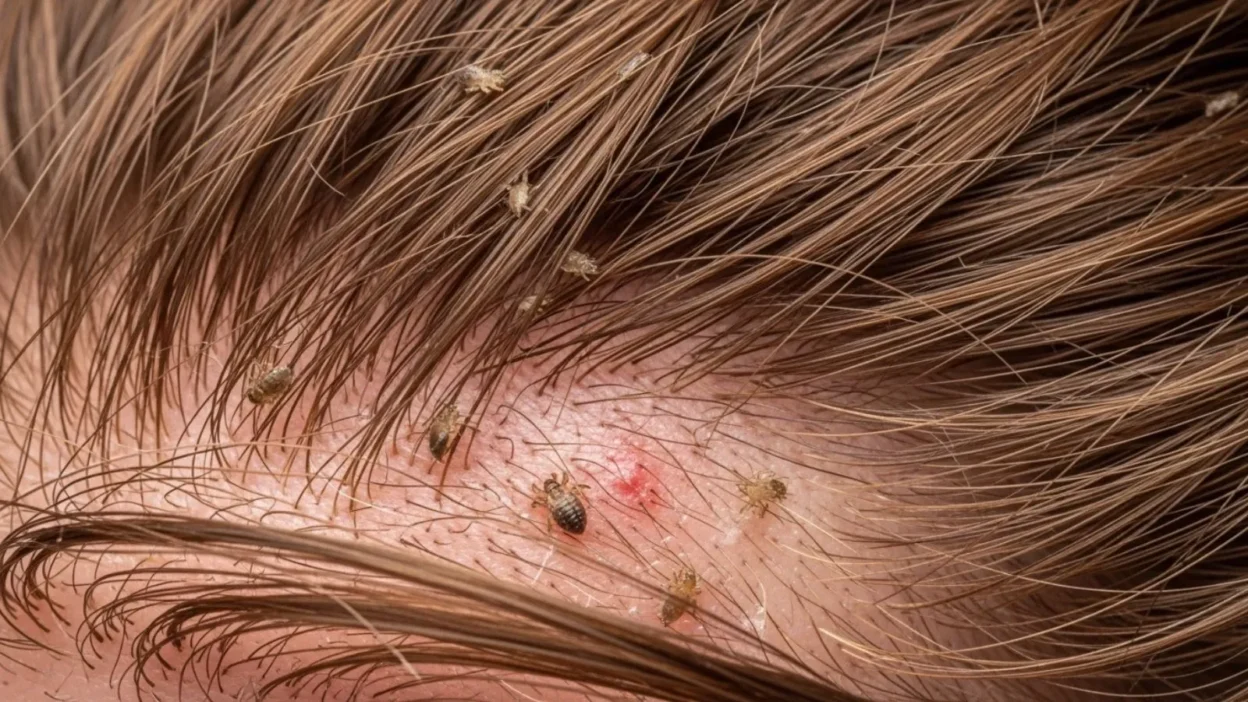
Many people wonder what does lice look like in hair because the insects are difficult to see at first glance. Adult lice are about the size of a sesame seed and usually appear gray, tan, or brown. They move quickly through the hair and tend to stay very close to the scalp to avoid light and maintain warmth. Because they crawl fast, spotting a live louse in hair can be challenging.
Lice cannot jump or fly like some insects. Instead, they crawl from one strand of hair to another using small claws on their legs that help them grip the hair shaft. Understanding these basic characteristics can make it easier to recognize lice and identify a potential infestation early.
What Does Lice Look Like in Hair?
Understanding what does lice look like in hair can help you identify an infestation early and take the right steps to treat it. Adult head lice are very small insects, usually about 2 to 3 millimeters long, which is roughly the size of a sesame seed. Because of their small size and quick movement, they can be difficult to spot unless you look closely at the scalp and hair strands.
Head lice typically have an oval-shaped body with six legs. Each leg has tiny claw-like structures that allow the lice to firmly grip hair strands and move easily through the hair. Their bodies are flat, which helps them hide close to the scalp and avoid being noticed. Lice do not have wings, so they cannot fly, and they also cannot jump. Instead, they crawl quickly from one strand of hair to another.
The color of lice can vary depending on several factors, including lighting and whether the lice have recently fed. Most adult lice appear grayish, tan, or light brown, but after feeding on blood they may look slightly darker or reddish. This color change can sometimes make them easier to identify against lighter hair.
When looking for lice, they are usually found very close to the scalp, especially in warm areas of the head. Common places include behind the ears, around the neck hairline, and near the crown of the head. Carefully checking these areas can help you detect lice earlier and prevent them from spreading further.
What Do Lice Eggs (Nits) Look Like?
When learning what does lice look like in hair, it is also important to understand the appearance of lice eggs, commonly known as nits. Nits are tiny eggs laid by adult female lice and are usually found attached firmly to individual hair strands close to the scalp. Because they are so small, many people mistake them for dandruff or small flakes of skin.
Lice eggs are oval-shaped and extremely tiny, often smaller than a grain of sand. They are usually yellow, tan, or white in color, depending on their stage of development. Fresh or live nits often appear slightly darker or yellowish, while empty eggshells may look white or transparent after the baby lice have hatched.
One of the key characteristics of nits is that they are firmly glued to the hair shaft by a sticky substance produced by the female louse. This makes them very difficult to remove by simply brushing or shaking the hair. Unlike dandruff, which easily falls off the scalp, lice eggs stay attached and move with the hair strand.
Nits are most commonly found within a few millimeters of the scalp, because the warmth from the scalp helps the eggs develop and hatch. As the hair grows, older or empty nits may appear farther away from the scalp. Carefully examining the hair under bright light or using a fine-toothed lice comb can help you spot these tiny eggs more easily.
Where Lice Are Usually Found on the Head
Knowing where lice are usually found in hair is key to spotting an infestation early. Head lice prefer warm, moist areas of the scalp because these locations provide the optimal environment for feeding and laying eggs. While lice can technically move anywhere on the scalp, they are not evenly distributed and tend to congregate in specific regions.
The most common areas to check are behind the ears and at the nape of the neck. These spots are often overlooked but are warm, hidden, and easy for lice to cling to. Lice also tend to stay close to the crown of the head and along the hairline, where hair is thick and less exposed to light. These areas make it easier for lice to avoid detection and ensure that their eggs stay close to the scalp.
Adult lice and nymphs move quickly but are more likely to be near the scalp because they feed every few hours. Lice eggs, on the other hand, are always glued to the hair strands near the scalp, usually within 1–2 centimeters of the root. This proximity ensures that the warmth from the scalp helps the eggs develop and hatch successfully.
When checking for lice, it is important to part the hair in small sections and look carefully at the scalp in these common areas. Using a bright light or magnifying glass can make the tiny insects and their eggs more visible. By knowing where lice are most likely to hide, parents, caregivers, and individuals can identify infestations earlier and take prompt action to remove lice before they spread.
Lice vs Dandruff How to Tell the Difference
One of the most common questions when people are learning what does lice look like in hair is how to tell lice or nits apart from dandruff. Both can appear as small white or light-colored particles in the hair, but there are clear differences that can help you identify a true lice infestation.
Attachment:
The biggest difference is that lice eggs, or nits, are firmly attached to hair strands. They are glued close to the scalp by a sticky substance produced by the female louse. In contrast, dandruff flakes are loose and can be easily brushed off or fall naturally from the scalp. If a particle moves or falls when you gently shake the hair, it is likely dandruff, not lice.
Movement:
Live lice are small insects that crawl quickly through the hair, whereas dandruff is completely stationary. You might notice a tickling sensation or see tiny moving specks when lice are present, which never happens with dandruff.
Location:
Lice are usually found close to the scalp, behind the ears, and at the nape of the neck. Dandruff can be scattered all over the scalp, especially on top of the head, and does not cluster in specific areas.
Appearance: Nits are tiny oval shapes that can be yellow, white, or tan, and they remain attached to the hair. Dandruff flakes are irregular, flaky, and often larger than nits.
By understanding these differences, you can avoid confusion and identify a lice infestation accurately. Proper detection ensures that treatment begins promptly, preventing the lice from spreading to others in the household or school.
Signs You May Have Lice
Recognizing the signs of a lice infestation is just as important as knowing what lice look like in hair. While seeing the insects or eggs directly is the most obvious confirmation, there are several symptoms that often indicate lice are present, even before you spot them.
The most common sign is an itchy scalp. Lice feed on blood, and their bites can cause an allergic reaction that leads to persistent itching. This itching is often worse at night because lice are more active in the dark. People with lice may also feel a tickling or crawling sensation on their scalp, as though something is moving through their hair. This sensation is caused by the lice crawling across the scalp and hair strands.
Another noticeable symptom is the presence of small red bumps or sores on the scalp, neck, or behind the ears. These result from repeated scratching and can sometimes become irritated or infected if not properly treated. Some individuals may also experience difficulty sleeping due to the constant itching and discomfort caused by lice activity.
Of course, the most direct sign is actually seeing lice or their eggs (nits) in the hair. Adult lice are small, tan, or grayish insects that move quickly, while nits are tiny, oval-shaped eggs attached firmly to hair strands near the scalp. Detecting these early allows for prompt treatment and prevents the lice from spreading to others.
By paying attention to these signs, parents, caregivers, and individuals can identify a lice infestation early and take the necessary steps for effective removal and treatment.
How to Check Hair for Lice
Knowing what does lice look like in hair is important, but properly checking hair for lice ensures you can detect an infestation early. A careful inspection is the most effective way to confirm whether lice or nits are present.
First, gather the right tools. You will need bright lighting, a fine-toothed lice comb, and optionally a magnifying glass to spot tiny eggs or moving lice. Lice are very small and can hide close to the scalp, so proper visibility is crucial.
Start by sectioning the hair into small parts. This makes it easier to see each strand and ensures you do not miss lice hiding in thicker areas. Focus on common hiding spots, including behind the ears, the nape of the neck, and around the crown of the head.
Use the lice comb to carefully comb through each section of hair from root to tip. After each pass, wipe the comb on a white tissue or paper towel to check for lice or nits. Adult lice will move quickly and may be tan, gray, or brown, while nits appear as tiny oval shapes attached firmly to hair strands.
When inspecting, also look for small red bumps or irritation on the scalp, which can indicate bites. Repeat the process daily if an infestation is suspected, as lice can be hard to catch on the first inspection.
By following this systematic approach, you can accurately detect lice in hair, distinguish them from dandruff, and take immediate action to prevent further spreading. Early detection is key to effective treatment.
How Lice Spread From Person to Person
Understanding how lice spread is important for preventing infestations and controlling outbreaks. Head lice are highly contagious insects, and they primarily move from one person’s hair to another through direct head-to-head contact. This is why lice are most commonly found in schools, daycare centers, and households where children or family members spend a lot of time in close proximity.
Sharing personal items like hats, hairbrushes, combs, headphones, or hair accessories can also contribute to the spread, though this is less common than direct contact. Lice cannot jump or fly, so they cannot move independently over long distances. Instead, they rely on physical transfer from one head to another.
Certain environments increase the risk of transmission. Crowded places such as classrooms, sleepovers, or summer camps make it easier for lice to crawl from one scalp to another. Close physical activities, including hugging, playing, or sleeping in the same bed, also provide opportunities for lice to move between people.
Lice infestations are not a sign of poor hygiene. In fact, lice prefer clean hair because it allows them to move more easily and cling to strands securely. Once lice are present on one person, they can quickly spread to family members or classmates if proper precautions are not taken.
Life Cycle of Head Lice
To fully understand what does lice look like in hair, it’s helpful to know the life cycle of head lice, which explains how infestations develop and persist. Head lice go through three main stages: egg (nit), nymph, and adult.
The cycle begins when an adult female louse lays eggs, known as nits, which are firmly attached to hair strands close to the scalp. Nits are tiny, oval, and usually yellow or white. The warmth from the scalp allows these eggs to develop and hatch in about 7–10 days.
Once hatched, the lice enter the nymph stage. Nymphs are immature lice that look like smaller versions of adults but are lighter in color and slightly translucent. During this stage, they are already feeding on blood and gradually grow in size over another 7–10 days while molting three times before becoming fully mature.
Finally, lice reach the adult stage around 10–12 days after hatching. Adults are about 2–3 millimeters long, oval-shaped, and can be tan, gray, or brown. Adult lice continue to feed on the scalp and reproduce, with females laying up to 6–10 eggs per day. The average lifespan of an adult louse is approximately 30 days, but they cannot survive long off the human scalp—usually less than 24–48 hours.
How to Treat Head Lice
Once you’ve identified what lice look like in hair, it’s important to act quickly to treat the infestation and prevent it from spreading. There are several effective treatment methods, ranging from over-the-counter products to manual removal techniques.
Over-the-counter (OTC) lice shampoos are the most common first-line treatment. These products usually contain insecticides such as permethrin or pyrethrin, which kill adult lice. When using these shampoos, it’s important to follow the instructions carefully and repeat the treatment after 7–10 days to kill any newly hatched lice that were not affected by the first application.
Another effective approach is the wet combing method, which involves combing damp hair with a fine-toothed lice comb. This technique can physically remove both lice and nits from hair strands. To maximize effectiveness, divide hair into small sections and comb slowly from the scalp to the ends of the hair, wiping the comb on a white tissue after each pass. Repeating this process every few days for at least two weeks ensures that newly hatched lice are removed before they mature.
In some cases, prescription treatments may be required if OTC products are ineffective. These may include stronger topical medications or oral medications prescribed by a doctor.
Home remedies, such as applying oils or mayonnaise, are sometimes suggested, but their effectiveness is not scientifically proven.
Along with treating the hair, it is essential to wash bedding, clothing, hats, and hair accessories in hot water and vacuum furniture to prevent re-infestation. Prompt and thorough treatment helps stop the spread of lice to others.
FAQs About Head Lice
1. What color are head lice in hair?
Head lice are usually gray, tan, or light brown. After feeding on blood, they may appear slightly darker or reddish.
2. Can you see lice moving in hair?
Yes, adult lice crawl quickly along hair strands, but they do not jump or fly. Detecting movement often requires careful inspection with bright light or a magnifying glass.
3. What do lice eggs (nits) look like?
Nits are tiny oval-shaped eggs that can be yellow, white, or tan. They are firmly glued to the hair strand, usually close to the scalp.
4. How big are head lice?
Adult head lice are approximately 2–3 millimeters long, about the size of a sesame seed. Nymphs are smaller, and eggs are even tinier, almost like a pinhead.
5. Where do lice hide in hair?
Lice prefer warm, hidden areas close to the scalp, such as behind the ears, the nape of the neck, and around the crown of the head.
6. How long do lice live in hair?
Adult lice can live on the scalp for about 30 days if untreated. Lice cannot survive off the scalp for more than 24–48 hours.
7. How can you prevent getting lice?
Avoid sharing hats, brushes, and hair accessories, check children’s hair regularly, and tie long hair during group activities.
8. Are lice a sign of poor hygiene?
No. Lice infest clean or dirty hair equally. They are spread through head-to-head contact, not by cleanliness.
9. How do you remove lice eggs from hair?
Use a fine-toothed lice comb on wet hair, section by section, and repeat every few days until all nits are removed.
Conclusion:
Recognizing what lice look like in hair is the first step in identifying and treating a head lice infestation. Adult lice are small, oval shaped insects that move quickly through the hair, while nits lice eggs are tiny, oval, and firmly attached to hair strands near the scalp.
They are usually found in warm, hidden areas, such as behind the ears, the nape of the neck, and around the crown of the head.
Early detection is key to preventing the spread of lice to family members, classmates, and friends.
Careful inspection using a bright light and fine toothed comb, along with awareness of symptoms like itching or crawling sensations, can help identify an infestation before it becomes severe.
Treatment options include over the counter medicated shampoos, wet combing, and in some cases, prescription medications, along with cleaning bedding and personal items.
By understanding how lice look, where they hide, and how they spread, individuals can take timely action to eliminate lice and prevent re-infestation effectively.

The author behind RiddleBurst.com loves creating fun, clever, and unique riddles for all ages. Their goal is to challenge minds, bring smiles, and make learning through riddles both engaging and enjoyable.