
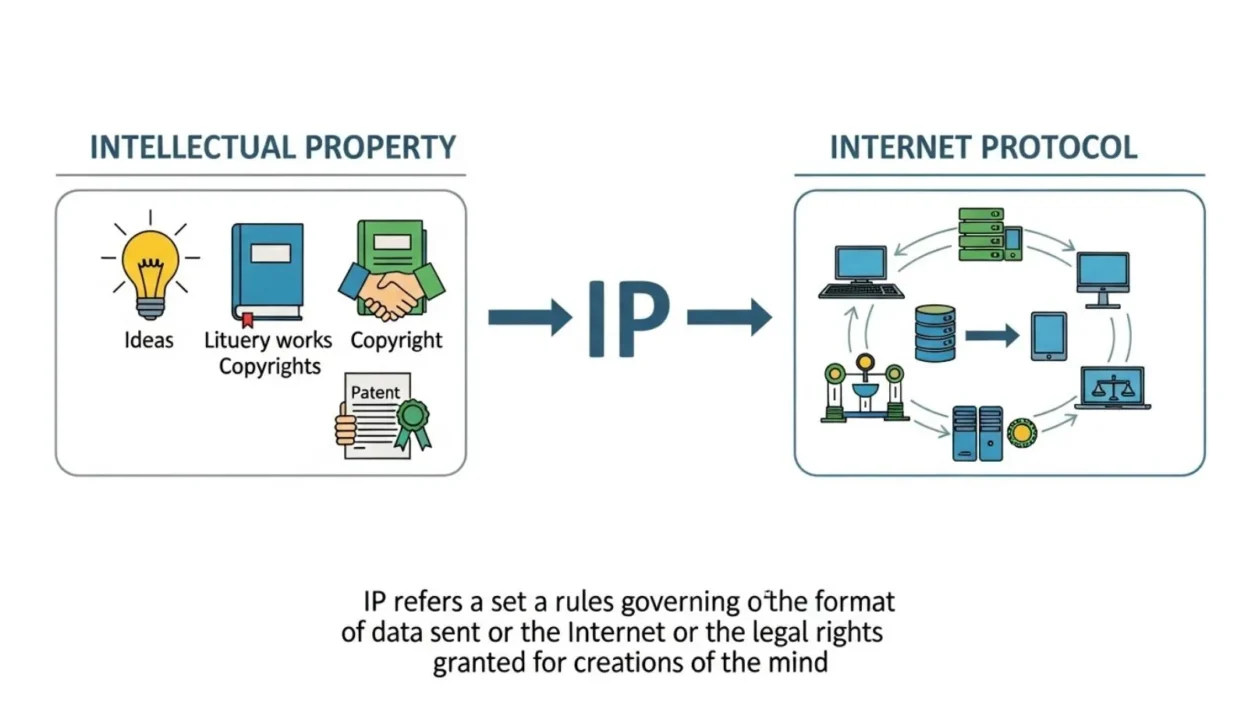
The term IP is one of those abbreviations that appears everywhere, from technology articles to legal documents, and even in business conversations.
But what exactly does IP stand for? The answer isn’t always straightforward, because IP can have multiple meanings depending on the context.
In technology, IP usually refers to Internet Protocol, the system that allows computers and devices to communicate over the internet. In legal and business contexts, IP often stands for Intellectual Property, which protects creative works, inventions, and brand assets.
Beyond these, there are even more niche uses, such as Ingress Protection in electronics or Investment Property in real estate. Understanding the correct meaning of IP is crucial whether you’re setting up a network, running a business, or studying law.
In this guide, we’ll explore all the major definitions of IP, how they are used, and why context is key to interpreting them correctly.
IP in Technology Internet Protocol
In the world of technology, IP stands for Internet Protocol, a fundamental system that enables devices to communicate across networks, including the internet. Every device connected to a network, from computers and smartphones to servers and routers, requires an IP address, a unique numerical identifier, to send and receive data. Think of an IP address like a home address: it tells information where to go and ensures it reaches the correct destination.
There are two main types of IP addresses: IPv4 and IPv6. IPv4 addresses are the most common and consist of four sets of numbers separated by periods (e.g., 192.168.1.1). However, with the growing number of internet-connected devices, IPv6 was introduced, offering a much larger address range to accommodate future demand. IP addresses can also be classified as public or private. Public IPs are visible on the internet and assigned by internet service providers, while private IPs are used within local networks, such as in homes or offices.
Additionally, IP addresses can be static or dynamic. Static IPs remain constant, making them ideal for hosting websites or servers, while dynamic IPs change over time, which is common for most home networks. Understanding IP in technology is essential for networking, cybersecurity, and internet troubleshooting. Without IP, the internet as we know it wouldn’t function, as data packets would have no way to navigate from one device to another.
IP in Law Intellectual Property
In a legal and business context, IP stands for Intellectual Property, which refers to creations of the mind that are protected by law. Intellectual Property allows creators, inventors, and businesses to safeguard their ideas, inventions, and creative works from unauthorized use or copying. It plays a critical role in encouraging innovation, supporting economic growth, and maintaining competitive advantage.
There are several types of intellectual property, each serving a unique purpose. Copyright protects original works such as books, music, films, and software. Patents cover inventions and technical solutions, giving the inventor exclusive rights to produce and sell the invention for a limited period. Trademarks safeguard brand names, logos, and slogans, helping businesses establish identity and reputation. Trade secrets include confidential business information like formulas, strategies, or customer lists that provide a competitive edge.
The importance of IP cannot be overstated. For businesses, strong intellectual property rights help protect brands and products, attract investors, and prevent competitors from copying innovations. For creators and inventors, IP ensures recognition and potential financial reward for their work. Global organizations, like the World Intellectual Property Organization (WIPO), provide frameworks to protect IP internationally, ensuring that rights are upheld across borders.
Understanding IP in law is essential not just for legal professionals but for anyone involved in creating, innovating, or running a business. Recognizing the value of intellectual property helps individuals and companies protect their work and maximize its potential.
Other Meanings of IP
While the most common meanings of IP are Internet Protocol and Intellectual Property, the abbreviation has several other uses depending on the context. Being aware of these lesser-known meanings can help avoid confusion.
In electronics and engineering, IP often refers to Ingress Protection. This is a rating system that measures how well a device, such as a smartphone or electrical appliance, is protected against dust and water. For example, a device with an IP67 rating is dust-tight and can withstand immersion in water up to a certain depth. Understanding IP ratings is important when choosing durable and reliable electronic products.
In real estate, IP can mean Investment Property, which is any property purchased primarily to generate income through renting or resale. Investors use IP to build wealth and diversify their financial portfolio.
IP also appears in fields like surveying, where it can stand for Initial Point, the starting reference for mapping and land measurement. In informal tech contexts, some people use IP to refer to an Internet Provider, the company that supplies internet access to homes and businesses.
These examples show that IP is a versatile abbreviation whose meaning changes with the industry and context. When encountering IP in a document or conversation, it is important to analyze the surrounding context to determine whether it refers to technology, law, real estate, electronics, or another specialized field. Recognizing the correct meaning ensures accurate understanding and communication.
IP vs IP Comparing Technology and Legal Meanings
The term IP can refer to both Internet Protocol in technology and Intellectual Property in law, but these two meanings are entirely different in purpose, application, and audience. Understanding the distinction is crucial to avoid confusion, especially in professional or educational settings.
In technology, IP (Internet Protocol) is a numerical system that identifies devices on a network. Its primary function is technical: routing data between computers, smartphones, servers, and other devices so they can communicate effectively. Terms like IP address, IPv4 vs IPv6, and static vs dynamic IP are all related to this context. Here, IP deals with connectivity, networking, and internet infrastructure.
In contrast, IP (Intellectual Property) is legal and business-focused. It protects the creations of the mind, such as inventions, artworks, brands, and confidential business information. Terms like copyright, patent, and trademark fall under this category. This form of IP ensures creators receive recognition and financial benefits for their work while preventing unauthorized use by others.
A simple way to distinguish them is by context: if the discussion involves networks, computers, or devices, it likely refers to Internet Protocol. If the topic is creativity, inventions, or business assets, it is Intellectual Property.
Although they share the same abbreviation, these two forms of IP serve entirely different purposes. Being aware of the context and audience ensures correct interpretation, which is essential for clear communication in technology, law, and business environments.
How to Determine the Meaning of IP in Different Contexts
Because IP has multiple meanings, determining which definition applies in any given situation is essential. Context clues in sentences, conversations, or documents usually indicate whether IP refers to Internet Protocol, Intellectual Property, or another specialized meaning.
When IP is mentioned in a technology or networking context, it almost always refers to Internet Protocol. Indicators include discussions about computers, servers, networks, routers, or IP addresses. Words like “IPv4,” “IPv6,” “static IP,” or “dynamic IP” also signal that IP is being used in a technical sense. For example, a sentence like “The server’s IP must be updated” clearly refers to Internet Protocol.
On the other hand, when IP appears in legal, business, or creative contexts, it usually stands for Intellectual Property. Look for surrounding terms such as copyright, trademark, patent, or trade secret. For instance, “Protecting your IP is vital for startups” clearly points to Intellectual Property rather than Internet Protocol.
In other industries, IP can mean Ingress Protection in electronics or Investment Property in real estate. Here, industry-specific words—like “dust-proof,” “water-resistant,” or “rental income”—provide the necessary context to identify the correct meaning.
Ultimately, the key to understanding IP is paying attention to the context, associated keywords, and the field being discussed. By analyzing these clues, readers can confidently interpret the intended meaning and avoid confusion, whether they are navigating technology, business, or legal discussions.
FAQs About IP
1. What does an IP address look like?
An IP address is a unique numerical label assigned to devices on a network. IPv4 addresses have four sets of numbers separated by periods, like 192.168.1.1. IPv6 addresses are longer and use colons,
For example:
2001:0db8:85a3:0000:0000:8a2e:0370:7334.
2. Can IP refer to both technology and legal terms at the same time?
Technically, yes, but context matters. In technology discussions, IP almost always means Internet Protocol, while in business or law, it usually refers to Intellectual Property. Always check surrounding words to determine the intended meaning.
3. How do I find my IP address?
On most devices, you can find your IP address through network settings. For example, on Windows, use ipconfig in Command Prompt; on smartphones, check Wi-Fi settings. Websites like “whatismyip.com” also display your public IP.
4. How can I protect my intellectual property?
Intellectual property protection depends on the type. Patents, copyrights, and trademarks should be registered through official channels. Confidential information can be protected as trade secrets. Consulting legal experts ensures proper IP protection.
5. What are other common meanings of IP?
Besides Internet Protocol and Intellectual Property, IP can mean Ingress Protection (electronics), Investment Property (real estate), Initial Point (surveying), or Internet Provider in informal tech use. Context helps identify the correct definition.
Conclusion:
The abbreviation IP is one of the most versatile terms you’ll encounter, appearing in technology, law, business, and even electronics or real estate. Its meaning depends entirely on the context, which is why understanding surrounding clues is crucial.
In technology, IP stands for Internet Protocol, the backbone of internet communication that allows devices to identify and exchange data through unique addresses. Without IP addresses, computers, smartphones, and servers would not be able to communicate, making modern networking impossible.
In legal and business contexts, IP stands for Intellectual Property, which protects creations of the mind, such as inventions, brand logos, music, and software.
Intellectual property ensures creators receive recognition and financial benefits for their work while helping businesses maintain competitive advantages.
Beyond these, IP can also refer to Ingress Protection in electronics, Investment Property in real estate, or other industry-specific terms, each with its own significance.
By paying attention to context and associated keywords, you can easily determine which meaning of IP is intended.
Understanding IP not only clarifies conversations but also highlights the importance of technology, law, and innovation in our daily lives. Next time you encounter the term IP, you’ll know exactly what it stands for and why it matters.

The author behind RiddleBurst.com loves creating fun, clever, and unique riddles for all ages. Their goal is to challenge minds, bring smiles, and make learning through riddles both engaging and enjoyable.