If you’ve ever shopped for sneakers online or browsed popular shoe releases, you’ve probably noticed the abbreviation GS listed next to certain models.
For many buyers, this small label can create big confusion especially when trying to choose the right size or understand, why some shoes look identical but cost less?
In the sneaker world, brands use specific sizing terms to categorize footwear by age group and fit, and GS is one of the most common yet misunderstood labels.
IF you’re buying shoes for a child, looking for smaller sizes as an adult, or simply trying to avoid ordering the wrong pair, understanding what GS means is essential.
This guide will clearly explain the meaning of GS in shoes, how GS sizing works, how it compares to men’s and women’s sizes, and whether adults can comfortably wear GS sneakers, helping you shop with confidence.
What Does GS Stand for in Shoes?
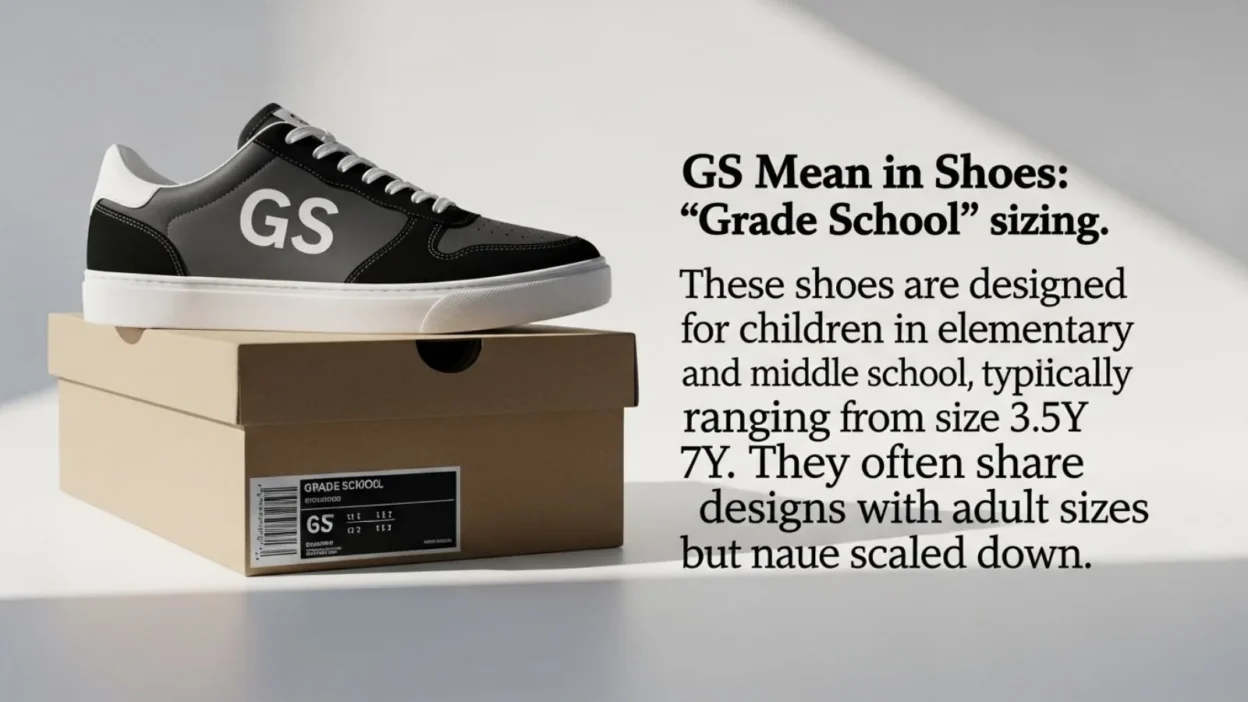
In the footwear industry, GS stands for Grade School, a sizing category used by major sneaker brands to identify shoes designed for older kids and young teenagers. The GS label helps manufacturers separate youth footwear from toddler, preschool, and adult sizes, making it easier for shoppers to understand who the shoe is intended for. Typically, Grade School sizes are made for children between the ages of about 6 and 12 years old, although the sizing is actually based on foot length rather than age.
When you see GS listed in a product name or shoe box label, it means the shoe follows the youth sizing system, often marked with a “Y” after the number (for example, 5Y or 6.5Y). These sizes usually range from 3.5Y to 7Y, which conveniently overlap with smaller adult shoe sizes. Because of this overlap, many adults with smaller feet can also wear GS shoes comfortably.
Brands use the GS category not only for sizing clarity but also for pricing and production purposes. Since Grade School shoes are intended for younger wearers, they are often priced lower than adult versions, even when the design looks nearly identical. This is why shoppers frequently notice the same sneaker model available in both GS and adult versions at different price points.
Understanding that GS means Grade School is the first step toward avoiding sizing mistakes. Once you know what the label represents, it becomes much easier to compare sizes, understand fit differences, and confidently choose the right pair when shopping online or in stores.
Understanding Grade School Shoe Sizes
Grade School (GS) shoe sizes follow a youth sizing system specifically created for growing children whose feet are larger than preschool sizes but not yet fully developed like adult feet. Unlike toddler or preschool categories, GS sizes are designed to bridge the gap between kids’ footwear and adult shoe sizing, offering a wider range of fits suitable for older children and even some adults.
Typically, GS sizes range from 3.5Y to 7Y, with the letter “Y” standing for Youth. These sizes are measured using the same basic length scale as adult shoes, which is why they often overlap with smaller men’s and women’s sizes. For example, a 6Y shoe is roughly equivalent in length to a men’s size 6 or a women’s size 7.5. This overlap makes GS shoes especially popular among adults who wear smaller sizes and want access to youth sneaker releases at lower prices.
Although GS sizing is associated with a certain age group, it is important to understand that shoe size is determined by foot measurement rather than age. Some children may move into GS sizes earlier, while others may remain in them longer depending on growth patterns. Brands design these shoes with developing feet in mind, often balancing comfort, flexibility, and durability for daily activity.
Another key feature of Grade School sizing is consistency across major sneaker brands. While slight variations can exist, most companies follow similar measurement standards, making it easier for buyers to compare sizes once they understand how GS sizing works. Knowing this system helps shoppers confidently choose the correct size and avoid common ordering mistakes.
GS vs Men’s vs Women’s Shoe Sizes
One of the biggest reasons people search for the meaning of GS in shoes is to understand how Grade School sizes compare to men’s and women’s footwear. Since GS sizes overlap with smaller adult sizes, knowing the conversion differences is essential to avoid buying shoes that don’t fit properly.
GS sizing uses the youth scale, but the actual foot length measurements are very close to men’s sizing. In most cases, a GS size converts directly to the same number in men’s shoes. For example, a 5Y (GS) is approximately equal to a men’s size 5. This makes conversions simple for buyers who already know their men’s size.
Women’s sizing, however, follows a different scale. Generally, women’s shoes are about 1.5 sizes larger than men’s or GS sizes. This means you can estimate your women’s size by adding 1.5 to the GS number. For instance, a 6Y GS usually equals a women’s size 7.5. Because of this easy conversion, many women purchase GS sneakers to save money while still getting the same popular styles.
It’s important to remember that while length conversions are similar, fit can sometimes vary slightly. GS shoes may feel a bit narrower because they are designed for younger feet. Trying on shoes when possible or checking brand-specific size charts can help ensure accuracy.
Can Adults Wear GS Shoes?
Yes, adults can absolutely wear GS (Grade School) shoes — and many do. Because GS sizes overlap with smaller adult shoe sizes, they have become a popular option for adults with smaller feet, especially women and teenagers transitioning into adult sizing. Typically, anyone who wears a men’s size 7 or smaller (or roughly a women’s size 8.5 or below) may be able to fit comfortably into GS sneakers.
One of the main reasons adults choose GS shoes is affordability. Grade School versions of popular sneakers are usually priced lower than adult models, even though they often look nearly identical in design and colorway. This allows buyers to enjoy the same trendy styles while spending less money. For sneaker enthusiasts, this can be a smart way to expand a collection without exceeding a budget.
Comfort is another important consideration. GS shoes are designed for younger wearers, so they may feel slightly lighter and sometimes narrower compared to adult versions. For adults with slim or narrow feet, this can actually improve fit and comfort. However, individuals with wider feet might find GS shoes a bit tight, depending on the brand and model.
It’s also worth noting that while many GS sneakers share the same appearance as adult pairs, certain performance features — such as advanced cushioning or premium materials — may occasionally differ. For everyday casual wear, though, most adults notice little to no difference.
GS Shoes vs Adult Shoes Key Differences
While GS (Grade School) shoes are designed to closely resemble adult versions, there are some subtle differences between the two that buyers should know before making a purchase. Understanding these distinctions can help shoppers make informed decisions, especially when choosing between youth and adult sneakers.
1. Materials and Construction:
GS shoes often use slightly less expensive materials compared to adult versions. While the design looks nearly identical, premium leathers or advanced textiles found in adult releases may be simplified in GS editions. This doesn’t necessarily affect durability for everyday wear, but it’s something collectors and sneaker enthusiasts might notice.
2. Cushioning and Technology:
Many GS shoes include the same core technology as adult versions, such as foam midsoles or air cushioning. However, in some cases, brands may reduce certain performance features since GS sneakers are primarily intended for casual or youth athletic use. For instance, high-end cushioning systems in adult models may be simplified in GS releases.
3. Fit and Sizing:
GS shoes are designed for younger, narrower feet, which can make them slightly slimmer than adult counterparts. Adults with wider feet should check fit carefully, as the narrower construction could feel snug. Conversely, smaller-footed adults often find GS sneakers more comfortable than the adult version.
4. Price Differences:
One of the most noticeable differences is cost. GS versions are typically cheaper than adult shoes, even when the design is nearly identical. This is largely due to manufacturing adjustments and the target audience.
Why Are GS Shoes Usually Cheaper?
One of the first things buyers notice when comparing GS (Grade School) shoes to adult versions is the price difference. GS shoes are typically more affordable, even when the design looks identical to adult models. Understanding why can help shoppers make smarter purchasing decisions.
The primary reason GS shoes are cheaper is production cost. Since GS shoes are intended for children and young teens, manufacturers often use slightly less expensive materials, such as synthetic leather or simplified textiles, instead of premium materials found in adult models. While these changes are subtle, they help reduce overall manufacturing expenses.
Another factor is target audience pricing. Children’s shoes are generally expected to cost less, as parents and guardians are the primary buyers. Brands adjust prices to make footwear accessible for this demographic without compromising style or basic functionality. This pricing strategy also encourages parents to purchase multiple pairs as children grow.
Additionally, the sneaker market demand plays a role. Adult releases often attract collectors and enthusiasts willing to pay higher prices, while GS shoes cater more to practical use. Even popular GS releases rarely reach the same resale premiums as adult-sized shoes, keeping the retail price lower.
Finally, the smaller size of GS shoes reduces material usage and shipping costs. Less material per shoe means lower production expenses, which translates to a lower retail price.
GS vs PS vs TD Understanding Shoe Labels
When shopping for sneakers, it’s common to see abbreviations like GS, PS, and TD on shoe labels. Understanding these labels can prevent confusion and ensure you select the correct size, especially when buying for kids or smaller-footed adults.
GS (Grade School), as we’ve discussed, refers to shoes designed for older children, typically between ages 6 and 12. The size range usually runs from 3.5Y to 7Y, where the “Y” indicates Youth. GS shoes often overlap with smaller adult sizes, making them popular for budget-conscious adults as well.
PS (Preschool) shoes are for younger children who have outgrown toddler sizes but are not yet ready for grade school footwear. The typical size range for PS shoes is 10C to 3Y. These shoes are designed to support smaller, growing feet while providing durability and comfort for everyday activity.
TD (Toddler) shoes are intended for very young children who are just starting to walk. Sizes usually range from 4C to 10C, with “C” standing for Children. TD shoes focus heavily on support, flexibility, and safety for early walkers.
Understanding these distinctions is important because shoe sizing is not just about numbers—it’s about the intended foot size, age group, and level of activity. Buying the wrong category can lead to poor fit, discomfort, or even difficulty walking.
A quick comparison table can help:
| Label | Age Group | Size Range | Notes |
|---|---|---|---|
| TD | Toddlers | 4C–10C | Early walkers |
| PS | Preschool | 10C–3Y | Young children |
| GS | Grade School | 3.5Y–7Y | Older kids & small adults |
Which Brands Use GS Sizing?
GS, or Grade School sizing, is a standard used by most major sneaker brands to label shoes designed for older kids and young teens. Understanding which brands use this sizing system can help shoppers navigate the market and avoid confusion when purchasing sneakers online or in stores.
Nike is one of the most well-known brands that uses GS sizing. Popular models like the Air Jordan, Nike Dunk, and Air Force 1 often have GS versions. These shoes are typically priced lower than adult models but maintain the same style, making them a favorite among kids and adults with smaller feet.
Jordan Brand, a subsidiary of Nike, also releases many GS sizes, especially in coveted Air Jordan colorways. Sneaker collectors often notice that GS Jordans can be more affordable than adult releases, offering the same design in smaller sizes.
Adidas follows a similar approach, providing youth sizing for models like the Ultraboost, Superstar, and NMD lines. Their GS shoes allow kids to enjoy the latest sneaker trends while ensuring proper fit and comfort for growing feet.
New Balance and other brands also adopt GS sizing for popular athletic shoes and casual sneakers. While less common than Nike and Adidas, these brands ensure consistent youth sizing across their lines, making it easier for parents and small-footed adults to shop confidently.
How to Choose the Right GS Shoe Size
Choosing the right GS (Grade School) shoe size is essential to ensure comfort, proper fit, and long-term wear. Unlike adult shoes, GS sizes are designed for growing children, which means foot length, width, and growth potential must all be considered when selecting the correct pair.
The first step is measuring the foot accurately. Use a ruler or measuring tape to determine the length of the foot from heel to the tip of the longest toe. It’s best to measure the foot while standing, as this accounts for natural weight distribution and slight stretching of the foot. For children, measure both feet, since one foot may be slightly larger than the other, and always choose the larger measurement.
Once you have the measurement, consult the brand specific GS size chart. Each sneaker brand may have slight variations in sizing, so relying solely on general size conversions can lead to a poor fit. Most charts will provide the corresponding GS size, along with the equivalent men’s or women’s size if needed.
Consider width and fit as well. While GS shoes generally fit narrower feet, some children or adults may require a wider option. Checking reviews and product descriptions can help identify models that run narrow or wide.
For online shoppers, it’s also important to read return and exchange policies. Even with careful measurement, fit may vary slightly between models. Buying from retailers with flexible return options ensures that you can exchange shoes if they don’t fit comfortably.
When Should You Buy GS Shoes Instead of Adult Sizes?
GS (Grade School) shoes aren’t just for children — there are several situations where buying GS shoes instead of adult sizes can be a smart choice. Understanding when to opt for GS sneakers can help shoppers save money, find exclusive styles, and ensure a proper fit.
One of the main reasons to buy GS shoes is budget-friendliness. GS models are usually priced lower than adult versions, even for the same sneaker design. This makes them ideal for buyers who want the latest releases without paying full adult prices. For collectors or casual buyers alike, GS shoes provide access to high-demand sneakers at a more affordable cost.
Another reason is size availability. Adults with smaller feet, particularly women or teenagers, may find GS sizes more suitable than adult options. For example, a woman who wears a US size 7 may find that a GS 5.5Y fits better than a narrow adult size 7. This overlap in sizing makes GS shoes a practical alternative for adults who struggle to find their size in adult releases.
GS shoes also offer access to exclusive colorways and styles. Some popular sneaker models release special editions only in GS sizing. Buying GS shoes ensures that both kids and adults can enjoy designs that may not be available in adult sizes.
Lastly, GS sneakers are perfect for parents shopping for growing children. They provide a range of sizes that accommodate children’s rapidly changing feet without compromising style or comfort.
Common Myths About GS Shoes
Despite their popularity, GS (Grade School) shoes are surrounded by several myths that can confuse buyers. Separating fact from fiction helps shoppers make informed decisions and avoid unnecessary hesitation when purchasing GS sneakers.
Myth 1: GS shoes are low quality.
Many people assume that because GS shoes are designed for kids, they are made with inferior materials. In reality, most GS sneakers use the same design and construction as adult versions. While there may be minor differences in materials or cushioning, the overall build quality is comparable, and they are perfectly durable for everyday wear.
Myth 2: Adults shouldn’t wear GS shoes.
This is false. Adults with smaller feet can comfortably wear GS sneakers. Since GS sizes overlap with smaller adult sizes, women and teens often find GS shoes to be a better fit than some narrow adult models. Many sneaker enthusiasts even prefer GS versions for certain designs.
Myth 3: GS sizes run smaller than advertised.
GS shoes are designed according to the youth sizing system, which uses the “Y” designation (e.g., 5Y). While fit may feel slightly narrower than adult shoes, the length matches the indicated size, and using a size chart ensures accuracy.
Myth 4: GS shoes are just for children.
While primarily intended for kids, GS shoes are versatile. Adults, collectors, and resellers often purchase them due to lower prices, exclusive colorways, and limited editions.
Popular GS Sneakers (Examples Buyers Often See)
GS (Grade School) sneakers are widely available across major brands, often mirroring the designs and colorways of adult releases. Many shoppers are drawn to GS shoes because they offer the same trendy styles at smaller sizes and lower prices. Knowing which models commonly come in GS sizing helps buyers find the right pair quickly.
Nike GS Shoes:
Nike produces GS versions of its most popular lines, including the Air Jordan, Air Force 1, and Nike Dunk. These sneakers often look identical to adult releases but come in youth sizes ranging from 3.5Y to 7Y. GS Air Jordans, in particular, are highly sought after for their iconic designs and more affordable pricing.
Jordan Brand GS Sneakers:
Jordan Brand frequently releases coveted GS sizes for many Air Jordan models. Limited editions and special colorways sometimes appear exclusively in GS sizing, giving young sneaker enthusiasts and adults with smaller feet the chance to own rare releases without paying adult resale prices.
Adidas GS Shoes:
Adidas offers GS sizes for popular lines like the Ultraboost, Superstar, and NMD. These sneakers provide the same comfort and style as adult versions while being tailored to youth foot dimensions.
New Balance and Other Brands:
While less common, New Balance and other athletic brands also produce GS sizes for their kids’ lines. This ensures consistency in sizing across different styles, making shopping easier for parents and small-footed adults alike.
Expert Tips for Buying GS Shoes Online
Buying GS (Grade School) shoes online can be convenient, but it requires careful attention to sizing and fit. Unlike adult sneakers, GS shoes follow the youth sizing system, and even minor mistakes in choosing a size can lead to discomfort or the need for returns. Here are some expert tips to help buyers shop confidently.
1. Measure the Feet Accurately:
Always measure the foot length before buying. Use a ruler or measuring tape from the heel to the longest toe while standing. For children, measure both feet and select the larger size. Accurate measurement is the first step to finding the perfect GS fit.
2. Consult Brand Size Charts:
Different brands may have slight variations in their GS sizing. Always refer to the specific brand’s size chart instead of relying solely on general conversions. Many websites provide a detailed chart that maps foot length to the corresponding GS, men’s, and women’s sizes.
3. Consider Width and Fit:
GS shoes are designed for narrower feet, so buyers with wider feet may need to go up half a size or choose a model known for a roomier fit. Reading product descriptions and customer reviews can provide insights into whether a sneaker runs narrow or true to size.
4. Check Return Policies:
Even with careful measurement, fit may vary slightly between models. Choose retailers that offer free returns or exchanges to ensure you can swap the shoes if they don’t fit properly.
5. Compare Prices and Styles:
GS shoes are often cheaper than adult versions, but prices can vary across stores. Comparing multiple retailers can help secure the best deal, especially for popular releases.
FAQs About GS Shoes
1. What does GS mean in Nike shoes?
GS stands for Grade School, indicating shoes designed for older kids, usually between ages 6 and 12. These sizes often overlap with smaller adult sizes.
2. Is GS the same as youth size?
Yes. GS is part of the youth sizing system, which also includes PS (Preschool) and TD (Toddler) sizes. GS sizes are typically larger than PS and TD.
3. Can men wear GS shoes?
Absolutely. Men with smaller feet generally US size 7 or below can wear GS shoes comfortably. Many women and teens also prefer GS sizes for fit and affordability.
4. Are GS shoes unisex?
Yes, GS shoes are usually unisex, designed to fit both kids. The main consideration is foot length and width rather than gender.
5. Do GS shoes run smaller than adult sizes?
GS shoes match the indicated length but may feel slightly narrower because they are designed for younger feet. Checking the size chart helps avoid surprises.
6. Why are GS Jordans cheaper than adult sizes?
GS Jordans use slightly fewer materials and are targeted at children, which lowers production costs. They are priced lower than adult versions while maintaining the same style.
7. What size GS equals women’s size?
Generally, add 1.5 sizes to the GS number to find the equivalent women’s size. For example, a 6Y GS is roughly a women’s 7.5.
Conclusion:
Understanding what GS means in shoes is essential for anyone shopping for sneakers, whether for children, teenagers, or adults with smaller feet.
GS stands for Grade School, a sizing category designed for older kids, typically between ages 6 and 12.
These shoes follow the youth sizing system, marked with a “Y” (for example, 5Y or 6.5Y), and often overlap with smaller men’s and women’s sizes.
GS shoes offer several advantages. They are usually more affordable than adult versions while maintaining nearly identical designs and colorways.
Many popular brands, including Nike, Jordan, Adidas, and New Balance, produce GS versions of their top selling models, making these sneakers accessible to younger buyers and adults alike.
Adults with smaller feet often find GS shoes fit better than narrow adult sizes, providing both comfort and style.
When buying GS sneakers, it’s important to measure feet accurately, consult brand specific size charts, and consider width and fit.
Understanding GS sizing also helps avoid confusion between other youth categories like PS (Preschool) and TD (Toddler).
Additionally, knowing how GS sizes convert to men’s and women’s sizes can help shoppers choose the right pair confidently.

The author behind RiddleBurst.com loves creating fun, clever, and unique riddles for all ages. Their goal is to challenge minds, bring smiles, and make learning through riddles both engaging and enjoyable.