Music fans often come across terms like single, album, and EP, but not everyone knows exactly what they mean. An EP, short for Extended Play, is a type of music release that sits somewhere between a single and a full length album.
Typically containing 3 to 6 tracks and running around 15 to 30 minutes, EPs give artists the chance to showcase new music without the commitment of a full album.
For listeners, EPs are a perfect way to explore an artist’s style, discover new sounds, or enjoy exclusive tracks that might not appear on albums.
From the early days of vinyl to the modern digital era of streaming, EPs have remained an essential format in the music industry.
Understanding what an EP is and how it differs from singles and albums can help both fans and aspiring musicians navigate the world of music releases with confidence.
What Does EP Stand For?
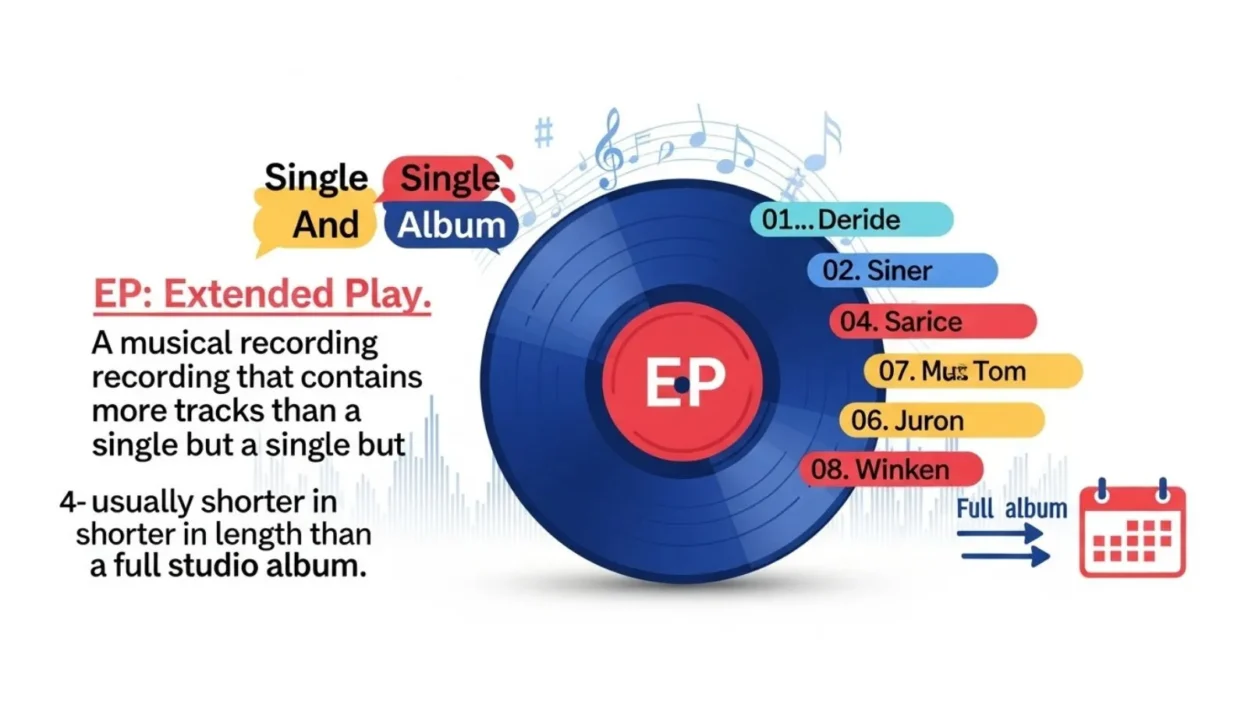
In the music world, EP stands for Extended Play, a format that is longer than a single but shorter than a full album. Unlike singles, which usually feature one or two songs, an EP typically contains 3 to 6 tracks, offering more content for listeners without the length of a full album. The total runtime of an EP generally ranges from 15 to 30 minutes, making it a concise but substantial way to experience an artist’s music.
The concept of the EP originated during the vinyl era. Record companies needed a way to release multiple songs without the cost and effort of producing a full-length album. Early EPs were often pressed on 7-inch or 12-inch records, giving fans more music than a single but keeping production affordable. Over time, EPs became a standard tool for new and independent artists to introduce their music to audiences, test new sounds, or maintain visibility between major releases.
EPs differ from LPs (Long Play albums) not only in length but also in purpose. While albums are typically a full artistic statement, EPs allow for experimentation, a sneak peek at an upcoming album, or a collection of songs that don’t quite fit elsewhere. Today, EPs are common in both physical formats and digital platforms like Spotify, Apple Music, and Bandcamp, continuing to play a vital role in how music is shared and consumed.
Difference Between EP, Album, and Single
Understanding the difference between an EP, an album, and a single helps music fans and aspiring artists navigate the world of music releases. A single is the shortest format, usually consisting of one main track, sometimes accompanied by a B-side or remix. Singles are often released to promote an upcoming album or highlight a specific song that might perform well on the charts.
An EP (Extended Play) falls in between a single and an album. Typically containing 3 to 6 tracks and lasting 15 to 30 minutes, EPs give artists the flexibility to showcase a collection of songs without committing to a full album. EPs are often used to experiment with new sounds, release music in smaller batches, or provide a teaser for a full-length album. For fans, EPs offer a chance to explore an artist’s style more deeply than a single would allow.
A full-length album (LP or Long Play) usually contains 7 or more tracks and can run anywhere from 30 minutes to over an hour. Albums are often seen as a complete artistic statement, with a cohesive theme or story connecting the tracks. Unlike EPs, albums require more production time, promotion, and investment from both the artist and the record label.
In short, the main differences are track count, duration, and purpose: singles deliver one standout song, EPs provide a compact collection, and albums present a full artistic vision. This distinction is important for fans, collectors, and artists alike.
History of the EP in Music
The EP (Extended Play) has a rich history that stretches back to the early days of recorded music. In the 1940s and 1950s, record labels needed a format that could offer more music than a single without the cost of a full-length album. Early EPs were typically pressed on 7-inch or 10-inch vinyl records and often featured two songs on each side. This allowed fans to enjoy several tracks at an affordable price.
During the 1960s and 1970s, EPs became a popular tool for both established and emerging artists. In the rock and pop scenes, bands used EPs to release experimental tracks, live recordings, or previews of upcoming albums. For new artists, EPs were an accessible way to introduce their music to the public without committing to a full album, which could be expensive and risky.
The 1980s and 1990s saw EPs continue their role as a bridge between singles and albums. With the rise of cassette tapes and CDs, EPs became easier to distribute and allowed artists to maintain momentum between major releases. EPs also gained popularity in genres like punk, indie, and electronic music, where shorter, focused releases suited the fast-moving underground scenes.
Today, EPs remain a key part of the music industry. With digital streaming platforms like Spotify, Apple Music, and Bandcamp, artists can release EPs quickly, experiment with new sounds, and connect with fans more directly than ever. From vinyl to digital, EPs have consistently offered artists and listeners a flexible, creative format.
EPs in the Digital Age
In today’s digital era, the EP (Extended Play) has taken on a new level of importance for both artists and listeners. Unlike the vinyl and CD eras, where physical production limited how quickly music could be released, digital platforms allow musicians to share EPs almost instantly with a global audience. Services like Spotify, Apple Music, SoundCloud, and Bandcamp have made it easier than ever for artists to distribute short collections of music without the costs and logistics of physical production.
Modern EPs are also more flexible in terms of track length and format. While traditional EPs were limited by vinyl or CD capacity, digital EPs can range anywhere from three tracks to even eight or nine, depending on the artist’s goals. This flexibility allows musicians to experiment with different sounds, release thematic collections, or preview an upcoming album while keeping listeners engaged.
For emerging artists, digital EPs have become a powerful marketing tool. They provide a low-cost way to build an audience, showcase talent, and maintain visibility between larger projects. Established artists also use EPs to release bonus content, collaborations, or experimental tracks that might not fit into a standard album.
Additionally, streaming platforms allow fans to discover EPs easily, often through curated playlists or algorithmic recommendations. This has helped EPs gain new relevance, making them not just a stepping stone between singles and albums, but a fully recognized format in modern music consumption.
Why Artists Release EPs
Artists release EPs (Extended Plays) for a variety of strategic and creative reasons. One of the main advantages is cost-effectiveness. Producing a full-length album can be expensive and time-consuming, while an EP allows artists to release music quickly without a large budget. This makes EPs particularly appealing for emerging musicians who want to share their work and grow a fan base without significant financial risk.
Another key reason is artistic experimentation. EPs give musicians the freedom to test new sounds, styles, or themes without the pressure of a full album. For example, an artist might release an EP featuring collaborations, acoustic versions, or electronic remixes to see how fans respond before committing to a larger project.
EPs are also an effective way to build anticipation for upcoming albums. By releasing a handful of songs in advance, artists can generate buzz, maintain audience engagement, and offer listeners a glimpse of their evolving sound. This strategy works well in today’s fast-paced music industry, where fans expect regular content.
Additionally, EPs help artists stay connected with their audience between major releases. They can bridge the gap during long breaks, keeping fans engaged and maintaining relevance in the industry.
Finally, certain genres, such as indie, electronic, and punk, often rely on EPs as a primary format. EPs provide a concise, focused listening experience that suits these styles, offering both fans and artists a practical and creative way to share music.
Notable EPs in Music History
Throughout music history, EPs (Extended Plays) have played a significant role in shaping artists’ careers and influencing genres. Many iconic EPs have left a lasting impact, proving that shorter releases can be just as memorable as full-length albums.
One classic example is The Beatles’ early EPs in the 1960s. These collections helped introduce the band to a wider audience, featuring hit tracks alongside lesser-known songs. EPs like these allowed fans to enjoy multiple tracks at an affordable price, fueling the band’s early success.
In the 1970s and 1980s, punk and indie bands relied heavily on EPs to share their music quickly and directly with fans. Groups like The Clash and Joy Division released EPs that showcased raw, experimental sounds, often before signing major record deals. These EPs helped build underground followings and shaped the identity of entire genres.
More recently, in the digital era, EPs have continued to be influential. Artists like The Weeknd, Billie Eilish, and Arctic Monkeys released EPs that generated buzz and critical acclaim before their first full albums. For example, Billie Eilish’s early EP helped establish her unique style and attracted millions of listeners, setting the stage for her later global success.
EPs are particularly valuable in genres like electronic, alternative, and hip-hop, where experimentation and short-form releases thrive. By offering a concise but impactful listening experience, notable EPs have often become fan favorites, sometimes rivaling full albums in cultural significance.
How Fans Should Approach EPs
For music fans, EPs (Extended Plays) offer a unique listening experience that differs from singles or full-length albums. Understanding how to approach EPs can help fans fully appreciate the music and discover new artists.
First, recognize that EPs are often curated collections of songs rather than complete albums. While an album may tell a cohesive story or explore a theme in depth, an EP typically presents a snapshot of an artist’s style or experimentation. This means fans should approach EPs with an open mind, appreciating each track on its own merits rather than expecting a traditional album experience.
EPs can also be a gateway to discovering emerging artists. Many new musicians release EPs to introduce themselves to the public, so exploring these shorter releases can help fans find fresh sounds before artists achieve mainstream success. Additionally, EPs often feature exclusive tracks, remixes, or alternate versions that aren’t available on albums, making them valuable for collectors and devoted fans.
Another tip is to pay attention to release patterns and context. Artists may release EPs to preview an upcoming album, experiment with a new genre, or bridge the gap between major releases. Understanding this context can enhance appreciation for the songs and the artist’s creative process.
Finally, don’t overlook EPs in digital streaming platforms or physical collections. Whether it’s a vinyl EP, a digital download, or a streaming playlist, these releases offer concise, focused, and often innovative music experiences that are worth exploring.
FAQs About EPs in Music
1. What is the difference between an EP and a mini-album?
An EP (Extended Play) usually contains 3 to 6 tracks and lasts 15–30 minutes. A mini-album may have slightly more tracks, often 6–8, and can approach album length, but it’s still shorter than a full LP. The distinction is mainly in marketing and track count rather than strict rules.
2. Can an EP chart on Billboard or streaming platforms?
Yes. EPs can appear on charts like the Billboard 200 or streaming charts if they meet the minimum track and runtime requirements. Many successful artists have had EPs chart alongside albums.
3. Are EPs more common for new or established artists?
Both. New artists often release EPs to introduce their music without investing in a full album. Established artists may release EPs to experiment with new sounds, share collaborations, or maintain engagement between major releases.
4. How many tracks does an EP usually have?
Typically, an EP has 3 to 6 tracks. The runtime usually ranges from 15 to 30 minutes, although digital platforms sometimes allow slightly longer collections to be called EPs.
5. Can a single track release be considered an EP?
No. A single is usually one main track, possibly with a remix or B-side. An EP requires multiple tracks to qualify as a short-form release.
6. Why do artists release EPs instead of albums?
EPs are cost-effective, faster to produce, and allow for creative experimentation. They are also a tool to build hype, test new music, or maintain fan engagement between album releases.
Conclusion:
EPs, or Extended Plays, are an essential part of the music industry, offering a unique format that sits between singles and full length albums.
With 3 to 6 tracks and a runtime of roughly 15 to 30 minutes, EPs allow artists to share music efficiently, experiment creatively, and connect with fans in ways that singles or albums alone often cannot.
If in the vinyl era, the CD age, or today’s digital streaming platforms, EPs have consistently provided musicians with a flexible format to release music on their own terms.
For fans, EPs are more than just shorter releases they are opportunities to discover emerging artists, enjoy exclusive tracks, and experience musical experimentation.
Many iconic EPs in history have influenced genres, introduced groundbreaking sounds, and even outshined some albums in terms of cultural impact.
From The Beatles’ early EPs to modern digital releases by artists like Billie Eilish or Arctic Monkeys, EPs continue to play a significant role in shaping how music is created, shared, and appreciated.
In summary, understanding EPs helps fans, collectors, and aspiring musicians navigate the music world with greater insight. By exploring EPs, listeners gain access to unique content, while artists gain a versatile tool for expression, promotion, and experimentation.
If you are a casual listener or a devoted fan, EPs remain an exciting and influential part of the musical landscape, bridging the gap between singles and albums while offering something fresh with every release.