
If you’re starting a business, filling out legal paperwork, or researching company structures, you’ve probably come across the term DBA and wondered what it actually means.
Many entrepreneurs, freelancers, and small business owners encounter this abbreviation when choosing a business name or registering their operations. Simply put, DBA is a common business term that allows individuals or companies to operate under a name different from their official legal name.
But its purpose goes far beyond just branding. Understanding what DBA stands for and how it works can help you make smarter decisions about business identity, legal compliance, and professional credibility.
If you’re launching an online store, offering freelance services, or expanding an existing company, knowing how a DBA functions is essential.
In this guide, we’ll break down the full meaning of DBA, explain its legal and practical uses, and help you decide whether a DBA is the right choice for your business goals.
What Does DBA Stand For? (Quick Definition)
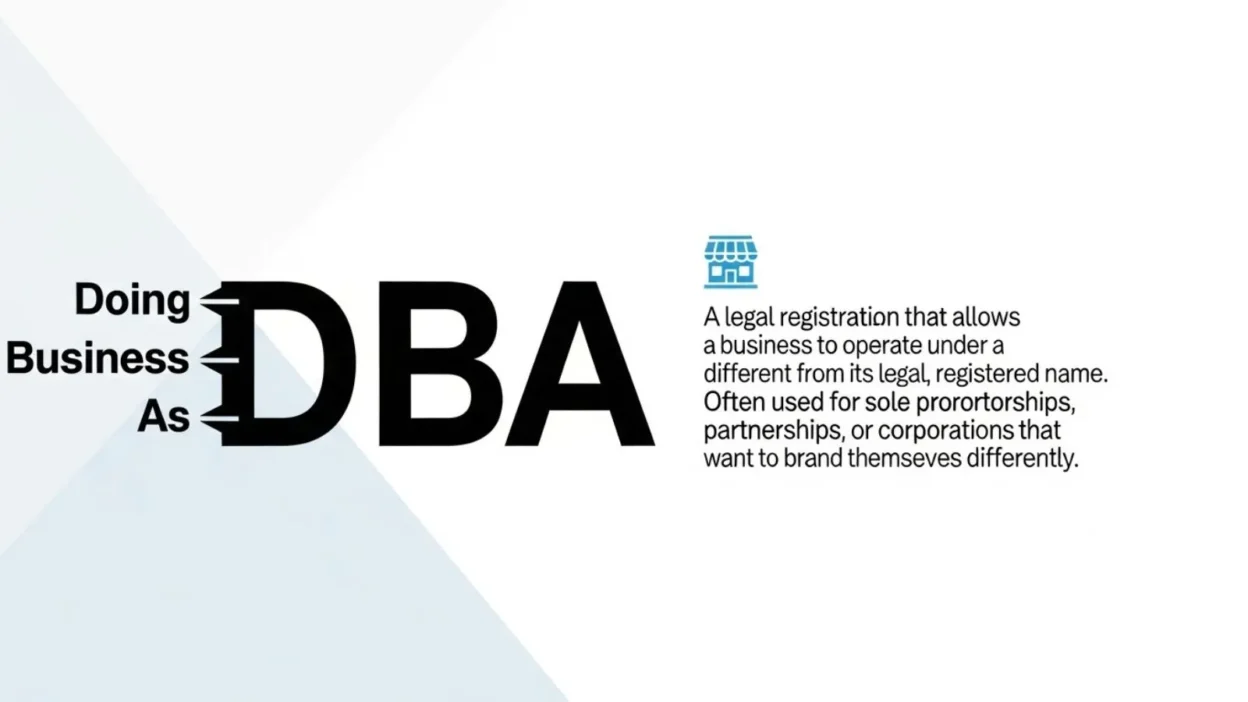
DBA stands for “Doing Business As.” It is a legal term used when a person or company operates a business under a name that is different from its official legal name. In simple terms, a DBA allows a business to create and use a public-facing brand name without forming a completely new legal entity. This is why a DBA is often called a trade name, assumed name, or fictitious business name in many regions.
For example, if a sole proprietor named Ahmed Khan runs a graphic design business called “Creative Pixel Studio,” the business legally belongs to Ahmed Khan, but it operates publicly under the DBA name “Creative Pixel Studio.” The DBA helps customers recognize the brand while maintaining the original legal ownership behind the scenes.
It’s important to understand that a DBA does not create a separate company. Instead, it simply registers a different business name with local or state authorities so the public knows who owns and operates the business. Governments require DBA registration mainly for transparency and consumer protection, ensuring customers can identify the real entity behind a business name.
DBAs are commonly used by freelancers, small business owners, partnerships, LLCs, and even corporations that want to run multiple brands under one organization. Because of its flexibility and relatively low cost, a DBA is often one of the first legal steps entrepreneurs take when building a professional business presence. Understanding this basic definition is the foundation for learning how DBAs work in real-world business situations.
Understanding the Meaning of DBA
To fully understand a DBA, it’s helpful to look beyond the abbreviation and explore how it functions in everyday business operations. A DBA, or “Doing Business As,” represents the name a business uses publicly while its legal name remains unchanged. This distinction allows business owners to separate their legal identity from their brand identity, which is especially useful for marketing and professional presentation.
Every registered business has a legal name tied to its owner or formation documents. For sole proprietors, this is usually the owner’s personal name. For LLCs and corporations, it is the officially registered company name. However, these legal names are not always suitable for branding or customer recognition. A DBA bridges this gap by allowing businesses to operate under a more appealing or descriptive name without creating a new legal structure.
For example, a company legally registered as “Khan Digital Solutions LLC” might operate several services such as “FastWeb Marketing” or “SEO Growth Hub” using different DBA names. Each DBA represents a brand customers interact with, while the legal company remains the same behind the scenes.
DBAs are also important for transparency. When a business registers a DBA, government records connect the trade name to the real owner, helping customers know who they are dealing with. This reduces confusion and prevents businesses from operating anonymously under misleading names.
What Is a DBA in Business?
In a business context, a DBA refers to the official permission for a business owner or company to operate under a name different from its registered legal name. It functions as a public business identity that customers see on storefronts, websites, advertisements, invoices, and marketing materials. While the legal owner remains the same, the DBA allows the business to present itself professionally under a brand that better reflects its products or services.
A DBA is especially useful because many legal business names are not ideal for branding. Sole proprietors often operate under their personal names by default, which may not sound professional or memorable to customers. By filing a DBA, they can create a business identity that feels more established and marketable without forming a new company. For instance, a freelance photographer named Sara Ali can legally operate as “Golden Lens Photography” through a DBA registration.
Businesses also use DBAs to expand into new markets or offer multiple services under different brand names. An LLC or corporation may run several product lines, each with its own DBA, allowing the company to target different audiences while keeping administration centralized under one legal entity.
Another practical benefit is financial organization. Many banks require a registered DBA before allowing businesses to open accounts or accept payments under a business name. This makes transactions appear more professional and builds customer trust.
Why Do Businesses Use a DBA Name?
Businesses choose to use a DBA name for several practical and strategic reasons, most of which relate to branding, flexibility, and professionalism. One of the biggest advantages is the ability to create a business identity that is easier for customers to recognize and remember. Legal business names are often formal or limited, while a DBA allows owners to select a name that better reflects their services, values, or target audience.
Branding flexibility is another major reason businesses file for a DBA. Entrepreneurs may want to test new products or services without forming a completely new company. Instead of registering multiple legal entities, a single business can operate several brands under different DBA names. This approach saves time, reduces administrative work, and lowers costs while still allowing business expansion.
A DBA also helps businesses appear more professional. Customers are generally more comfortable working with a clearly branded company name rather than an individual’s personal name. For freelancers and sole proprietors, this can significantly improve credibility and marketing effectiveness.
In addition, financial institutions often require a DBA registration before allowing businesses to open accounts, accept payments, or issue invoices under a business name. This makes transactions smoother and strengthens customer trust.
Who Needs a DBA?
A DBA, or “Doing Business As” name, is useful for a variety of business owners, from solo entrepreneurs to large companies. Understanding who needs a DBA helps clarify when registering one is necessary and when it might be optional.
Sole Proprietors: The most common users of DBAs are sole proprietors. Since a sole proprietor’s legal name is automatically the business name, any operation under a different name requires a DBA. For example, if Maria Khan wants to sell handmade jewelry under the name “Elegant Trinkets,” she must register a DBA to make that name official.
Partnerships: Partnerships often operate under the combined legal names of the partners, which can be cumbersome or confusing for customers. Registering a DBA allows the business to have a simpler, more memorable brand name that represents the partnership as a single entity.
LLC and Corporation Owners: Even established businesses like LLCs and corporations sometimes need DBAs when they want to operate multiple brands or offer different product lines. A single LLC can register multiple DBAs, each representing a distinct brand, without forming additional legal entities.
Freelancers and Online Entrepreneurs: Freelancers and online business owners also benefit from a DBA. Operating under a professional brand name helps them appear credible, attract clients, and manage finances more efficiently through business banking accounts.
How a DBA Works Legally
A DBA, or “Doing Business As,” is primarily a tool for branding and public identity, but it also carries legal implications that business owners must understand. Legally, a DBA does not create a separate business entity. The person or company registering the DBA remains fully responsible for all business obligations, debts, and liabilities. This means that while the DBA provides a recognizable business name for customers, it does not provide liability protection like an LLC or corporation does.
When a business registers a DBA, the government links the trade name to the actual owner in official records. This ensures transparency, allowing customers, suppliers, and authorities to identify who is behind the business. It also helps prevent fraudulent use of misleading names, which is why most states and counties require DBA registration before a business can operate publicly under a different name.
DBA regulations vary by location. Some states require DBAs to be filed at the county level, while others manage them at the state level. In certain areas, businesses must also publish a notice in a local newspaper to inform the public about the new trade name. Filing fees, renewal periods, and documentation requirements differ depending on local laws.
For Example:
A sole proprietor named Ali Ahmed might register the DBA BrightTech Solutions. While the public interacts with Bright Tech Solutions, Ali Ahmed is legally responsible for contracts, taxes, and any legal matters.
How to Register a DBA (Step by Step Guide)
Registering a DBA is a relatively straightforward process, but it requires careful attention to local rules and regulations to ensure your business name is legally recognized. Here’s a step-by-step guide to help you understand how to file a DBA.
1. Choose Your Business Name: Start by selecting a name that reflects your brand while complying with your state or county’s naming rules. Avoid names that are already in use or too similar to existing businesses.
2. Conduct a Name Search: Most states or counties require a search to confirm that your chosen DBA name is unique. This prevents confusion with other businesses and ensures compliance with trademark laws.
3. File Your DBA Registration: Once the name is cleared, file your DBA with the appropriate government office. This is typically the county clerk’s office for small local businesses or the state’s business registration agency for larger entities. You will need to complete forms and pay a filing fee, which varies by location.
4. Publish a Notice (If Required): Some jurisdictions require businesses to publish a notice of their new DBA in a local newspaper. This step helps notify the public and fulfills legal transparency requirements.
5. Receive Confirmation: After your application is processed, you will receive official confirmation or a certificate of registration. This document proves that your DBA is legally recognized.
Requirements for Filing a DBA
1. Legal Name of the Owner or Business:
To file a DBA, you must provide the legal name of the person or entity that owns the business. For sole proprietors, this is usually the individual’s full name. For LLCs or corporations, it’s the registered company name. This ensures that the public can identify who is responsible for the business.
2. Business Address:
Most jurisdictions require a physical address where the business operates. This may be your home address for small businesses or the company’s office location. PO boxes are often not accepted as the primary business address.
3. Chosen DBA Name:
You must submit the exact trade name you intend to use. It should be unique and comply with naming rules, such as avoiding words restricted to certain business types (like “bank” or “insurance”) or names already in use.
4. Filing Forms:
The specific forms required differ by location. County clerks or state agencies usually provide online or paper forms for DBA registration. You will need to fill them accurately to avoid delays.
5. Fees:
Filing fees vary by state and county, ranging typically from $10 to $100. Additional fees may apply if publishing a notice in a local newspaper is required.
How Much Does a DBA Cost?
The cost of registering a DBA varies depending on your location, the type of business, and any additional legal requirements. While DBAs are generally considered an affordable way to establish a business identity, it’s important to understand all the potential expenses involved.
1. Filing Fees: The primary cost is the filing fee charged by the state, county, or city where you register the DBA. These fees typically range from $10 to $100, depending on the jurisdiction. Some states have a flat fee, while others charge based on the number of business names being registered or the type of business entity.
2. Publication Fees: In certain jurisdictions, you are required to publish a notice of your new DBA in a local newspaper. This publication step can cost anywhere from $20 to several hundred dollars depending on the newspaper’s circulation and the length of the notice.
3. Renewal Fees: A DBA is not permanent. Most jurisdictions require renewal every 1–5 years. Renewal fees are usually similar to the original filing fee and must be paid on time to maintain the legal right to use the name.
4. Additional Costs: While optional, some business owners may choose to consult a lawyer or use a service to help with registration, which can add $50–$200 or more. Additionally, if you plan to trademark the DBA name for extra protection, that process involves separate costs.
Overall, a DBA is one of the most cost-effective ways to legally operate under a different business name. By planning for filing, publication, and renewal expenses, you can ensure your business maintains a professional and compliant public identity without breaking the budget.
Benefits of Using a DBA
Using a DBA, or “Doing Business As” name, provides several advantages for business owners, particularly when it comes to branding, flexibility, and professional credibility. One of the most significant benefits is branding flexibility. A DBA allows a business to operate under a public-facing name that is different from its legal name. This is especially useful for sole proprietors whose legal name may not be ideal for marketing. A memorable and descriptive DBA name can help attract customers and build a recognizable brand.
Professionalism is another key advantage. Operating under a DBA gives a business a polished, official identity, which can increase trust with clients, suppliers, and partners. Customers are more likely to engage with a business that presents itself under a professional brand name rather than an individual’s personal name.
A DBA also enables business expansion. Companies, including LLCs and corporations, can use multiple DBAs to manage different product lines or brands under a single legal entity. This allows for targeting various markets without creating new businesses, saving both time and money.
Financial benefits include the ability to open business bank accounts and accept payments under the DBA name, which helps organize finances and simplifies accounting.
Finally, DBAs offer privacy benefits, allowing business owners to keep their personal names off public-facing materials, which can be particularly helpful for home based or freelance businesses.
Disadvantages and Limitations of a DBA
While a DBA (Doing Business As) offers several advantages, it also comes with certain limitations that business owners should carefully consider before filing. One of the primary drawbacks is that a DBA does not provide liability protection. The legal owner of the business remains personally responsible for debts, lawsuits, and other obligations. For example, a sole proprietor using a DBA is still personally liable if the business is sued or cannot pay its bills. Unlike an LLC or corporation, the DBA does not create a separate legal entity to shield personal assets.
Another limitation is that a DBA does not grant exclusive ownership of the business name. While it legally registers the name for use within a particular jurisdiction, it does not prevent someone else from using the same or a similar name in another state or securing a trademark. If brand protection is important, a separate trademark registration may be necessary.
DBAs also require periodic renewal, and failing to renew on time can result in losing the right to use the business name. This adds a recurring administrative responsibility.
Additionally, a DBA does not affect tax obligations. Business owners must still report income under their legal name and remain responsible for all tax filings.
DBA vs LLC Key Differences
Understanding the differences between a DBA (Doing Business As) and an LLC (Limited Liability Company) is crucial for business owners who want to make informed decisions about legal structure, branding, and liability protection. While both are tools used in business operations, they serve very different purposes.
A DBA is not a legal entity. It simply allows a business to operate under a name that is different from the owner’s legal name. The individual or company registering the DBA remains fully responsible for all debts, contracts, and legal obligations. In contrast, an LLC is a legally recognized entity that separates personal assets from business liabilities. This provides significant legal protection, shielding the owner’s personal property from lawsuits or business debts.
Another key difference lies in taxation. A DBA does not change how a business is taxed. Income is reported under the owner’s personal or business tax ID, depending on the legal structure of the underlying entity. An LLC, however, offers flexible tax options, allowing owners to choose pass-through taxation or elect to be taxed as a corporation.
Cost and complexity also differ. Registering a DBA is generally inexpensive and straightforward, requiring minimal paperwork and fees. Forming an LLC involves more paperwork, higher fees, and ongoing compliance requirements such as annual reports.
DBA vs Business Name vs Trademark
Many business owners confuse DBAs with general business names or trademarks, but these three serve different purposes and provide varying levels of legal protection. Understanding the distinctions is essential for proper branding and legal compliance.
A DBA (Doing Business As) is a registered name that allows a business to operate under a name different from its legal owner or company name. It is primarily for public identification and branding, enabling businesses to present a professional or marketable name. However, a DBA does not create a separate legal entity, nor does it provide exclusive rights to the name beyond the jurisdiction in which it is registered.
A business name generally refers to the legal name of a company or individual. For a sole proprietor, this is typically the owner’s personal name. For LLCs and corporations, it is the name registered with the state during formation. This legal name is used for official documents, contracts, and tax filings. Unlike a DBA, the business name represents the legal entity itself.
A trademark offers the strongest protection for a brand name, logo, or slogan. Registering a trademark with the United States Patent and Trademark Office (USPTO) or a relevant authority grants exclusive rights nationwide and allows legal action against anyone using a confusingly similar mark.
Other Meanings of DBA (Important for Search Coverage)
While the most common meaning of DBA is “Doing Business As” in a business context, the abbreviation DBA can also have other interpretations depending on the industry. Covering these alternative meanings is important for providing a complete understanding and capturing broader search traffic.
1. Database Administrator (IT/Technology):
In the technology sector, DBA often refers to a Database Administrator. This is a professional responsible for managing, maintaining, and securing databases within an organization. Database Administrators ensure data integrity, optimize database performance, and handle backup and recovery processes. This meaning of DBA is entirely unrelated to business trade names but is widely used in IT job descriptions, certifications, and corporate environments.
2. Doctor of Business Administration (Academic Degree):
DBA can also stand for Doctor of Business Administration, which is an advanced doctoral-level degree focused on applied business research and management practices. Individuals pursuing a DBA typically aim for executive-level roles, academic careers, or specialized consulting positions. This meaning is relevant in educational and professional contexts rather than legal or small business operations.
3. Other Niche Uses:
Depending on the context, DBA may occasionally appear in other industries or organizations with unique interpretations. However, these are less common and typically not related to general business usage.
Real World Examples of DBA Names
Seeing how DBAs are used in real-life businesses can help clarify their purpose and demonstrate their practical benefits. A DBA allows a business to operate under a public-facing name that differs from its legal entity, making branding and marketing easier while maintaining legal compliance.
For example, a sole proprietor named Ali Raza might run a catering service under the name Delicious Bites Catering. Legally, Ali Raza owns the business, but customers recognize and interact with the DBA name. This branding choice helps the business appear professional and marketable.
Corporations and LLCs often use DBAs to manage multiple brands under a single legal entity.
For Example:
GreenTech Solutions LLC might operate two distinct services: EcoEnergy Consulting and SolarSmart Installations. Both DBAs target different customer segments, yet the underlying legal entity remains the same, simplifying accounting, taxes, and administrative responsibilities.
Retail businesses frequently rely on DBAs to create more memorable storefront names. A business legally registered as Khan Enterprises LLC could operate a retail store under the DBA Urban Style Apparel to appeal to fashion-conscious consumers.
Freelancers and online entrepreneurs also benefit from DBAs. For instance, a freelance graphic designer named Sara Ali might brand her services as PixelCraft Designs to build a distinct identity and attract clients while maintaining sole proprietorship status.
Common Mistakes to Avoid When Filing a DBA
Filing a DBA may seem straightforward, but many business owners make avoidable mistakes that can create legal or operational issues. Understanding these pitfalls ensures your business remains compliant and protected.
1. Skipping the Name Search: One of the most common mistakes is failing to check whether your desired DBA name is already in use. Registering a name that conflicts with an existing business can lead to legal disputes, fines, or the need to rebrand. Always conduct a thorough search at the state and county level before filing.
2. Assuming Liability Protection: Some business owners mistakenly believe a DBA shields them from personal liability. In reality, a DBA does not create a separate legal entity. Sole proprietors and partnerships remain fully responsible for business debts and legal obligations.
3. Ignoring Renewal Requirements: DBAs have expiration periods, usually ranging from one to five years, depending on the jurisdiction. Failing to renew a DBA on time can result in losing the legal right to use the name and may disrupt business operations.
4. Neglecting Publication Rules: Certain jurisdictions require public notice of a new DBA in a local newspaper. Ignoring this step can lead to incomplete registration and potential compliance issues.
5. Overlooking Trademark Conflicts: A DBA registration does not guarantee nationwide exclusivity. If you plan to expand or build a strong brand, failing to check trademark conflicts could result in infringement disputes.
6. Incorrect Filing: Errors on registration forms, such as misspelled names or incomplete information, can delay approval or invalidate your DBA.
FAQs About DBA
When starting a business or considering a DBA, many common questions arise. Addressing these FAQs can help clarify misunderstandings and guide business owners in making informed decisions.
1. Is a DBA a legal entity?
No. A DBA does not create a separate legal entity. The owner or company behind the DBA remains fully responsible for all legal obligations, debts, and contracts.
2. Can an LLC have multiple DBAs?
Yes. An LLC can register multiple DBAs to operate different brands or product lines under the same legal entity. Each DBA represents a separate public-facing name but shares the same legal owner.
3. Do I need a DBA for an online business?
It depends. If you want to operate under a name different from your legal business or personal name, a DBA is required in most jurisdictions. This helps with branding, banking, and customer recognition.
4. Does a DBA affect taxes?
No. A DBA does not change how a business is taxed. Income and expenses are reported under the legal entity’s tax identification number, whether it’s a sole proprietor, partnership, LLC, or corporation.
5. How long does a DBA last?
DBAs usually have an expiration period set by the state or county, often ranging from one to five years. Timely renewal is required to maintain legal use of the name.
Conclusion:
A DBA, or Doing Business As, is a valuable tool for business owners seeking a professional, marketable name without forming a new legal entity.
It allows sole proprietors, partnerships, LLCs, and corporations to operate under a public facing brand that resonates with customers while maintaining compliance with local and state regulations.
From enhancing branding and credibility to enabling multiple business ventures under one entity, DBAs offer flexibility and practical advantages for both small and growing businesses.
However, it’s important to understand that a DBA does not provide liability protection, legal exclusivity, or tax benefits.
Business owners must follow proper registration procedures, conduct name searches, meet publication requirements, and renew their DBAs on time to maintain compliance.
By weighing the benefits and limitations, and considering how a DBA fits into your broader business strategy, you can make informed decisions that strengthen your brand, streamline operations, and position your business for long term success.

The author behind RiddleBurst.com loves creating fun, clever, and unique riddles for all ages. Their goal is to challenge minds, bring smiles, and make learning through riddles both engaging and enjoyable.