
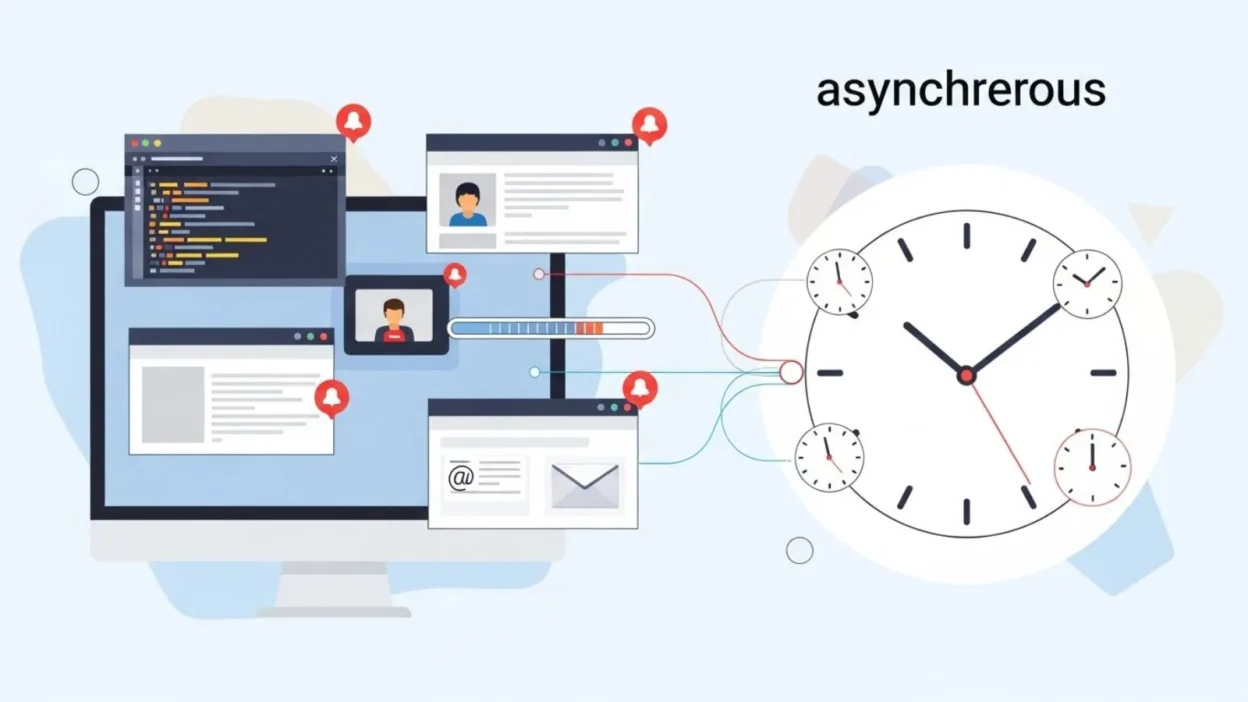
In today’s fast-paced world, the term asynchronous has become increasingly common, appearing in technology, education, and workplace communication.
But what does asynchronous really mean? At its core, asynchronous refers to processes or communication that do not happen at the same time.
Unlike synchronous activities, where interaction occurs in real-time like a live meeting or phone call asynchronous interactions allow participants to engage at different times.
This concept has transformed the way we work, learn, and communicate. From programming and online classes to emails and remote work collaboration, understanding asynchronous systems can improve efficiency, flexibility, and productivity.
If you’re a developer managing non-blocking code, a student attending a recorded lecture, or a professional navigating time zone differences, grasping the meaning of asynchronous is essential.
In this article, we’ll explore the definition, examples, advantages, and challenges of asynchronous systems across various fields.
Definition of Asynchronous
The term asynchronous simply means “not happening at the same time”. It is the opposite of synchronous, where events occur simultaneously, requiring immediate participation or response. Understanding this distinction is key because asynchronous processes are everywhere in our daily lives, from technology and education to workplace communication.
In simple terms, asynchronous allows tasks, messages, or actions to occur independently of real-time interaction. For example, sending an email is asynchronous—you can send a message now, and the recipient can read and reply later. In contrast, a phone call is synchronous because both parties must be present at the same time.
The concept also applies beyond communication. In technology, asynchronous programming allows a computer to execute multiple tasks without waiting for one task to finish before starting another. In education, asynchronous learning includes pre-recorded lectures or discussion boards, allowing students to engage at their own pace rather than attending live sessions.
The major benefit of asynchronous systems is flexibility. They enable people to work, learn, or communicate on their own schedule, making them ideal for remote work, online classes, and global collaboration. However, asynchronous communication also requires self-discipline and clear messaging to avoid delays or misunderstandings.
In short, asynchronous is about independence of time—doing or interacting without needing everyone involved to be present simultaneously.
Asynchronous in Technology
In the world of technology, the term asynchronous plays a crucial role, especially in programming and digital communication. Asynchronous programming allows a system to perform multiple tasks simultaneously without waiting for one to finish before starting another. This contrasts with synchronous programming, where tasks are executed in sequence, often causing delays if one task takes longer.
For example, in JavaScript, asynchronous operations like async/await or promises allow a website to load data from a server while still letting users interact with the page. Similarly, Python’s asyncio library enables non-blocking execution, making applications faster and more efficient. By handling tasks asynchronously, developers ensure that programs remain responsive, even under heavy workloads.
Asynchronous concepts also apply to networking and digital communication. When your device sends an API request, it doesn’t pause other operations while waiting for a response. Instead, it continues working, allowing systems to handle multiple requests efficiently. Emails, cloud storage syncing, and notifications are all examples of asynchronous processes in everyday technology.
The key advantage of asynchronous systems in tech is efficiency. Tasks are not held up by slower operations, enabling faster performance and better resource management. However, it requires careful design and error handling to ensure tasks complete correctly and in the intended order.
In short, asynchronous technology allows devices and programs to work smarter, not harder, by performing multiple operations independently and reducing unnecessary delays.
Asynchronous in Education
Asynchronous learning has become a cornerstone of modern education, particularly with the rise of online courses and remote learning platforms. In this context, asynchronous refers to educational activities that do not require students and instructors to participate at the same time. Instead, learners can access materials, complete assignments, and engage in discussions according to their own schedules.
Common examples of asynchronous education include pre-recorded video lectures, discussion forums, online quizzes, and email communication with instructors. Unlike traditional classroom settings or live webinars, students do not have to log in at a specific time, allowing them to balance study with work, family, or personal commitments.
One of the main advantages of asynchronous learning is flexibility. Students can revisit lectures, pause and replay content, and learn at their own pace. It also promotes self-directed learning, encouraging students to take responsibility for their progress. Additionally, asynchronous platforms allow instructors to reach a global audience, accommodating learners in different time zones.
However, asynchronous education also comes with challenges. Delayed feedback can make it harder for students to clarify doubts quickly, and the lack of real-time interaction may reduce peer engagement and motivation. Students must also be disciplined to avoid falling behind, as there is no structured schedule enforcing participation.
Overall, asynchronous learning provides a flexible and accessible alternative to traditional education, allowing students to learn independently while still benefiting from structured resources and guidance.
Asynchronous Communication in the Workplace
In today’s remote and hybrid work environments, asynchronous communication has become essential for productivity and collaboration. Unlike real-time communication, asynchronous methods allow team members to share information and respond at different times, accommodating different schedules and time zones.
Common tools for asynchronous communication include email, project management platforms like Trello or Asana, and messaging apps such as Slack or Microsoft Teams. For example, a manager can assign tasks through a project board, and team members can update progress or ask questions without needing a live meeting. This approach reduces the need for constant interruptions and allows employees to focus on deep work.
The advantages of asynchronous communication in the workplace are significant. It provides flexibility, enabling employees in different locations or time zones to contribute without delay. It also reduces meeting fatigue, as not every discussion requires a live session. Additionally, asynchronous messages create a record of communication, making it easier to track decisions and responsibilities.
However, challenges exist. Delayed responses can slow down decision-making, and messages may be misinterpreted without immediate clarification. To address these issues, teams should follow best practices: provide clear instructions, set expectations for response times, use concise language, and combine asynchronous communication with occasional synchronous meetings for complex discussions.
In summary, asynchronous communication empowers modern workplaces by enhancing flexibility and productivity, while careful planning ensures that tasks are completed efficiently and collaboration remains effective.
Pros and Cons of Asynchronous Systems
Pros of Asynchronous Systems:
- Flexibility: Participants can engage at their own pace, making it ideal for global teams, online learners, or multitasking professionals.
- Efficiency: Tasks can run concurrently without waiting for others, particularly in programming or automated systems.
- Reduced Interruptions: Employees and learners can focus on deep work rather than constant real-time notifications or meetings.
- Accessibility: Asynchronous methods allow people in different time zones or with varying schedules to participate equally.
- Documentation: Communication and tasks often leave a written record, making it easier to track progress and decisions.
Cons of Asynchronous Systems:
- Delayed Responses: Waiting for replies can slow decision-making, especially in urgent situations.
- Miscommunication Risks: Without real-time clarification, messages can be misunderstood or lack context.
- Isolation: Participants may feel disconnected from teams or classmates, affecting engagement and motivation.
- Self-Discipline Required: Individuals must manage their time and responsibilities independently to avoid falling behind.
Real Life Examples of Asynchronous Systems
Understanding asynchronous concepts becomes much easier with real-life examples. Across technology, education, and the workplace, asynchronous systems help people manage tasks efficiently while working or learning on their own schedules.
1. Technology:
In programming, asynchronous operations allow tasks to run simultaneously without blocking other processes. For instance, a web application can fetch data from a server using JavaScript’s async/await feature while allowing users to continue navigating the site. Similarly, email notifications, cloud file syncing, and server requests are all asynchronous, ensuring systems remain responsive even under heavy demand.
2. Education:
Asynchronous learning is common in online courses and universities. Students can watch pre-recorded lectures, participate in discussion boards, and submit assignments at any time. For example, a student in New York can complete a module posted by an instructor in London without needing to attend a live class, making learning flexible and self-paced.
3. Workplace:
Remote teams rely heavily on asynchronous communication. Tools like Slack, Trello, and Microsoft Teams allow employees to send updates, assign tasks, and provide feedback without requiring everyone to be online simultaneously. A manager can post a project update in the morning, and team members across different time zones can respond when convenient.
FAQs About Asynchronous Systems
1. What is the difference between synchronous and asynchronous?
Synchronous activities happen in real-time, requiring all participants to be present at the same moment—like a live meeting or phone call. Asynchronous activities, on the other hand, do not require simultaneous participation, allowing tasks, communication, or learning to occur independently.
2. Can asynchronous communication slow down productivity?
It can if not managed properly. Delayed responses may affect urgent decisions or create misunderstandings. However, when structured with clear deadlines and expectations, asynchronous communication often increases productivity by reducing interruptions and allowing focused work.
3. Which industries use asynchronous work the most?
Asynchronous work is common in technology, remote work, online education, and global businesses. Developers rely on asynchronous programming, educators use pre-recorded lectures, and international companies use tools like Slack or Trello to collaborate across time zones.
4. Is asynchronous learning more effective than live classes?
It depends on the learner. Asynchronous learning offers flexibility, self-paced progress, and access to recorded content, which is ideal for busy or remote students. However, it may reduce real-time interaction and immediate feedback, which some learners prefer.
5. What are the best practices for asynchronous communication?
Clear messaging, defined response times, concise instructions, and combining asynchronous methods with occasional live meetings for complex topics are key. These practices help avoid delays, confusion, and isolation while maximizing efficiency.
Conclusion:
Understanding the concept of asynchronous is increasingly important in today’s fast-paced, digital world.
If in technology, education, or the workplace, asynchronous systems allow tasks, communication, and learning to occur independently of time constraints, offering flexibility and efficiency that synchronous methods cannot always provide.
From programming asynchronous code that keeps applications responsive to online courses that let students learn at their own pace, asynchronous systems have transformed the way we work and interact.
The benefits are clear: asynchronous methods reduce interruptions, allow participants to manage their own schedules, and create a record of communication or progress that can be referenced later.
They also make collaboration across different time zones possible, empowering global teams and online learners alike. However, asynchronous systems are not without challenges.
Delays in response, potential miscommunication, and the need for self-discipline are key considerations for anyone using asynchronous methods.

The author behind RiddleBurst.com loves creating fun, clever, and unique riddles for all ages. Their goal is to challenge minds, bring smiles, and make learning through riddles both engaging and enjoyable.